 TABELIA
AUTHENTIC RECIPE
Vincisgrassi
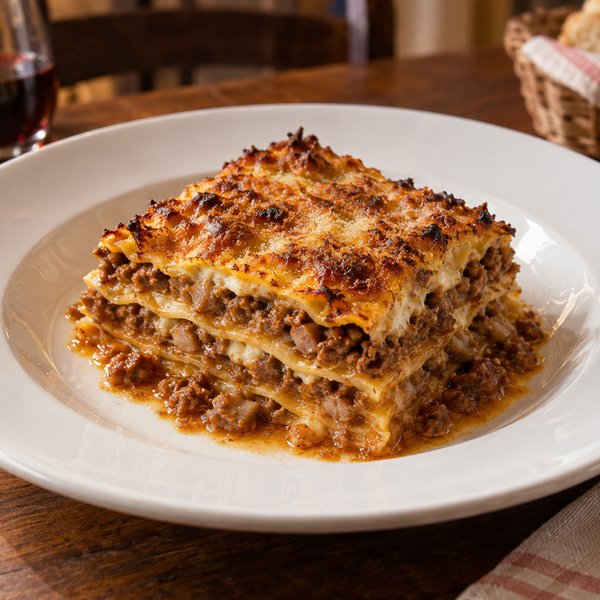
A layered baked pasta from the Marche region. Handmade egg pasta is layered with a ragù of meat, chicken giblets and veal sweetbreads, plus béchamel. Assemble a dish for 4 the day before, then bake and portion it the next day.
AUTHENTICITY SCORE
Authenticity Score
This is the standard recipe, exactly as it’s made where it comes from — the highest Authenticity Score possible. Substituting ingredients changes this score; the app shows exactly how, ingredient by ingredient.
Ingredients (4 servings)
- Soft all-purpose type 00 flour for doughSift before use; weigh separately from dusting flour180 g
- EggsMedium; about 100 g net. Bring to room temperature.2 pieces
- Dry MarsalaFor the dough; some areas traditionally use vin cotto15 ml
- Butter for doughSoften at room temperature10 g
- Semolina for dustingUse between dough and worktop and between cooked sheets30 g
- Chicken liversPrepared for culinary use; see the steps for cleaning40 g
- Chicken gizzardsPrepared for culinary use; see the steps for cleaning40 g
- Chicken heartsPrepared for culinary use; see the steps for cleaning40 g
- Veal sweetbreads (thymus)Soak in cold water for 1 hour, then blanch and remove membrane and blood vessels100 g
- Coarsely ground beefA cut containing fat, such as chuck or brisket; leave out of the refrigerator for 15 minutes150 g
- ProsciuttoCut 1 thick slice into 5 mm dice; use the fat too60 g
- OnionVery finely chop60 g
- CarrotVery finely chop40 g
- CeleryRemove strings and chop very finely30 g
- Extra virgin olive oilFor soffritto and browning meat20 ml
- Butter for ragùAdd when sautéing the giblets20 g
- Dry white wineFor deglazing after browning the meat60 ml
- Tomato passataUsed sparingly in the old Marche style; do not add too much200 g
- Meat brothAdd gradually while warm during simmering250 ml
- Whole milkFor béchamel; warm before use400 ml
- Butter for béchamelMake a roux with the same weight of flour30 g
- Type 00 flour for béchamelSift30 g
- NutmegGrate from a whole nutmeg just before use; divide between béchamel and ragù0.5 tsp
- Grated Parmigiano Reggiano24-month-aged; grate from a piece just before use80 g
- Butter for dish and toppingDivide between greasing the dish and small pieces on top25 g
- LemonJapanese-grown and unwaxed; squeeze into the sweetbread soaking and blanching water1 piece
- Coarse salt for pasta water20 g for 2 L water, 10 g/L20 g
- Fine salt2 g for dough, 4 g for ragù and 2 g for béchamel8 g
- Black pepperCoarsely grind just before use1 tsp
Method
Knead and rest the Marsala sfoglia
- 1 Sift 180 g soft all-purpose type 00 flour into a mound on the worktop and make a well about 12 cm across.
- 2 Add 2 room-temperature eggs, 15 ml dry Marsala, a fortified Sicilian wine, 10 g softened room-temperature butter and 2 g salt. Beat the eggs with a fork while gradually drawing in the flour from the inside.
- 3 When no dry flour remains and the dough comes together, knead for 12–15 minutes by pushing with the heel of the palm and folding back, making dough for sfoglia, very thin handmade pasta.
- 4 Shape into a ball, wrap tightly and rest in the refrigerator. Remove 30 minutes before rolling.
Ready when
The surface should be silky smooth and a finger indentation should return slowly.
The dough should stretch without breaking and feel moist and soft.
Soak the sweetbreads in the refrigerator
- 1 Meanwhile(During the 1-hour soak.) Very finely chop 60 g onion, 40 g carrot and 30 g celery with strings removed.
- 2 Put 1 L cold water and the juice of 1/4 lemon in a bowl. Submerge 100 g veal sweetbreads, the thymus, and soak in the refrigerator for 1 hour. Change the water after 30 minutes and add the juice of 1/8 lemon.
Ready when
After 1 hour, proceed when the surface blood has been removed and the sweetbreads are pale.
Blanch and trim the sweetbreads
- 1 Put 1 L water and the remaining lemon juice, from 1/8 lemon, in a pot. Add the soaked sweetbreads to the cold water and heat over low heat for about 8 minutes until just below boiling.
- 2 Once small bubbles appear, simmer gently for 3 minutes, lift out with a strainer and transfer to ice water.
- 3 Once cooled slightly, carefully remove the membrane, blood vessels and firm fat with fingers and a small knife, then cut into 1.5 cm cubes.
- 4 Arrange flat on a plate, place another plate on top as a light weight and refrigerate for 30 minutes.
Ready when
After blanching, the flesh should be white and firm and the membrane should peel off easily with the fingers.
After removing the weight, the pieces should be flattened, firm and drained.
Caution
The membrane remains tough even after cooking.
Clean and cut the chicken giblets
- 1 Lay the knife almost flat to trim the pale silverskin from 40 g chicken gizzards. Set out 40 g chicken hearts and 40 g chicken livers separately.
- 2 Halve the hearts lengthwise and rinse out blood clots; trim bile ducts, white sinews and greenish parts from the livers.
- 3 Place the cleaned rigaglie, chicken giblets, in 1 L cold water and refrigerate for 30 minutes, changing the water once.
- 4 Drain and press dry thoroughly with paper. Slice gizzards 3 mm thick; dice hearts and livers 1 cm and arrange separately by type.
Ready when
The soaking water should become no darker than pale pink, with no red blood clots remaining.
The cut surfaces should be glossy with no moisture pooling on them.
Build the aromatic base with prosciutto fat and soffritto
- 1 Meanwhile(While the vegetables cook.) Warm 250 ml meat broth in a small pot to about 70°C and keep warm over low heat.
- 2 Put 20 ml extra virgin olive oil in a heavy cast-iron pot, add 60 g prosciutto diced 5 mm and cook over low heat for 5 minutes until the fat is translucent.
- 3 Add the finely chopped 60 g onion, 40 g carrot and 30 g celery; cook over low heat for 15 minutes, stirring occasionally with a wooden spoon, to make the soffritto, the slowly cooked aromatic vegetable base.
Ready when
The vegetables should be softened with rounded edges, and the onion translucent and sweet-smelling.
The bottom should have only a thin pale-golden film, not a dark scorched layer.
Brown the meat and giblets
- 1 Melt 20 g butter in a frying pan over medium heat. Cook the sliced gizzards first for 2 minutes, then add the hearts and finally the livers. Cook over medium-high heat for 2 minutes until colored, then transfer to the soffritto pot.
- 2 Arrange the dried sweetbreads in the same pan and cook over medium heat for 1 minute on each side until lightly colored; transfer to the pot.
- 3 Spread 150 g ground beef in the pan and sear undisturbed over medium-high heat for 3–4 minutes, then turn, break up and cook for another 2 minutes.
- 4 Turn off the heat, pour in 60 ml dry white wine and scrape the bottom with a wooden spoon to deglaze, dissolving the flavorful deposits. Return to medium heat and boil for 2–3 minutes until the sharp alcohol smell is gone, then transfer to the pot.
Ready when
Proceed when the meat and giblets have browned and the wine no longer smells of alcohol.
Caution
Do not ignite the wine.
Simmer the meat and giblets for 2 hours 30 minutes
- 1 Add 200 g tomato passata and 100 ml warm broth to the pot and stir. Set the lid slightly ajar and simmer over very low heat for 2 hours 30 minutes, with only an occasional bubble on the surface.
- 2 Stir the bottom every 20–30 minutes and add the remaining 150 ml warm broth in 50 ml additions. Together with the first 100 ml, use 250 ml total.
Ready when
Proceed when the meat and gizzards are tender and the sauce is deep brick-red.
Reduce, season and cool the ragù
- 1 Meanwhile(While the ragù cools.) Grate 80 g Parmigiano Reggiano from a piece.
- 2 Spoon off excess fat from the surface.
- 3 Remove the lid completely and stir in 4 g salt, 1/2 tsp black pepper and 1/4 tsp freshly grated nutmeg.
- 4 Reduce over medium-low heat for 10 minutes, stirring occasionally.
- 5 Turn off the heat, move the pot onto a damp cloth and cool for 30 minutes until close to room temperature.
Ready when
A wooden spoon drawn across the pot bottom should leave a line for 2–3 seconds.
Taste: the salt should not dominate, and the sweet aroma of nutmeg should emerge afterward.
Cook the nutmeg béchamel
- 1 Warm 400 ml milk in a small pot over low heat to about 60°C, when fine bubbles form at the sides.
- 2 Melt 30 g butter in a heavy pot over low heat, add 30 g sifted type 00 flour all at once and cook for 3 minutes, stirring constantly with a wooden spoon, to make a roux of butter and flour.
- 3 Remove from the heat. Add the warm milk first in 3 additions of 50 ml, whisking each time until completely incorporated and free of lumps.
- 4 Pour in the remaining milk in a thin stream while stirring, return to low heat and cook for 10–12 minutes, stirring constantly. Mix in 2 g salt, 1/4 tsp grated nutmeg and 1/4 tsp black pepper.
- 5 Turn off the heat, press plastic wrap onto the surface to prevent a skin and cool to body temperature.
Ready when
The roux should bubble finely and smell lightly of biscuits.
The béchamel should hold a whisk trail for 2 seconds and coat the back of a spoon.
Caution
Adding the milk all at once tends to leave lumps.
Roll the sfoglia to 0.8 mm and cut
- 1 Meanwhile(While rolling.) Bring 2 L water to a boil in a large pot over high heat.
- 2 Divide the rested dough into 4 portions and keep unused portions wrapped.
- 3 Lightly dust the worktop with semolina. Roll 1 portion from the center outward, rotating as you go, until 0.8 mm thick and the outline of a hand beneath shows through.
- 4 Cut sheets to fit the base of an ovenproof dish about 24 × 18 cm, preparing 5 layers. Patch areas a single sheet does not cover with edge pieces.
- 5 Roll the rest in the same way; cut unused trimmings short and freeze for another dish.
Ready when
The dough should be thin enough for the outline of fingers underneath to show through.
The cut sheets should remain moist, without drying and curling.
Blanch and dry the sfoglia
- 1 Add 20 g coarse salt to 2 L boiling water.
- 2 Prepare a bowl of ice water beside the pot and a work surface covered with 2 dry cloths.
- 3 Boil 2–3 sheets at a time for 40–50 seconds, lift with a strainer and immediately immerse in ice water for 10 seconds.
- 4 Lay the sheets 1 at a time on a cloth without overlapping and press with another cloth to remove water.
- 5 Boil all remaining sheets in the same way.
Ready when
The boiled sheets should be translucent and elastic enough to lift with fingers without tearing.
No water droplets should remain on the sheets on the cloth.
Caution
Boiling too many sheets at once makes them stick and tear.
Build 5 layers with ragù, béchamel and Parmigiano
- 1 Grease the inside of a 24 × 18 cm baking dish with 10 g of the 25 g butter reserved for the dish and surface.
- 2 Weigh all the béchamel and spread 30 g on the bottom. Reserve about 20% of the rest for the top, then divide what remains into 4 portions.
- 3 Lay down a pasta layer, spread 1/4 of the ragù, 1/4 of the béchamel for the layers and 15 g Parmigiano. Repeat to make 4 filled layers total. Divide 1/4 tsp black pepper evenly among these 4 layers.
- 4 Add the 5th pasta layer and cover with the reserved top béchamel and remaining 20 g Parmigiano. Dot with the remaining 15 g butter in small pieces.
Ready when
Ragù and béchamel should reach the edges of every layer, with no dry pasta exposed.
The top should be level and dotted with butter throughout.
Rest overnight before baking
- 1 Cover loosely with tented foil, avoiding contact, and refrigerate for 12 hours, at least 8 hours.
Ready when
It should be cold and firm throughout, with no liquid rising when the surface is pressed.
Bake at two temperatures
- 1 Meanwhile(While baking.) Warm serving plates on a lower shelf or similar place.
- 2 Remove the dish from the refrigerator and leave at room temperature for 30 minutes.
- 3 Preheat the oven to 180°C.
- 4 Tent with foil so it does not touch the surface and bake at 180°C for 30 minutes.
- 5 Remove the foil, raise the oven to 200°C and bake for another 15–20 minutes.
- 6 Measure the center with a thermometer and confirm it stays at 75°C or above for at least 1 minute.
Ready when
The surface should be mottled deep golden and the sauce bubbling at the edges.
Proceed when the center has reached at least 75°C and remained there for 1 minute or longer.
Rest, slice and serve
- 1 Remove from the oven and rest on a rack for 15–20 minutes.
- 2 Cut straight down to the bottom with a sharp knife to make 4 squares measuring 12 × 9 cm.
- 3 Lift with a spatula without disturbing the layers and serve on warm plates.
Ready when
The cut layers should hold, with distinct stripes between the ragù and béchamel.
Caution
Cutting straight from the oven makes the layers run.
About this dish
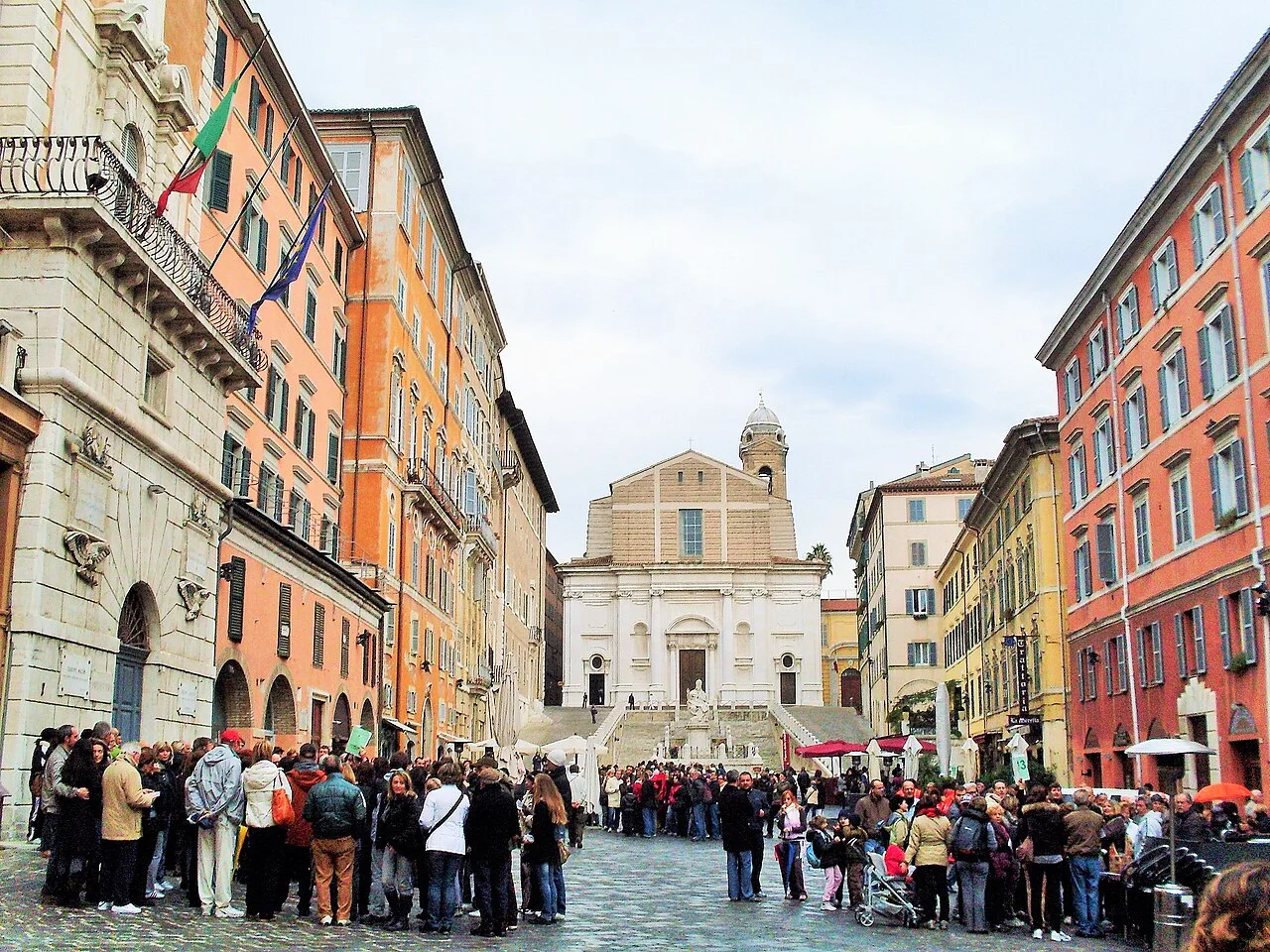
Vincisgrassi is a representative layered baked pasta of the Marche region. It suits a large dish brought to a table of family or guests, cut into portions and shared.
The combinations of meat and offal vary by place and household. On a leisurely autumn holiday, build a gathering’s menu around this dish, choosing starters and something sweet afterward.

Bring the full course home next weekend.
Bring every dish to the table at its best.
Choose the dishes you want to cook, and Chef Authen handles the shopping list and the day-of schedule. The Tabelia app turns everything from starter to main into one coordinated course in your kitchen.
- One shopping listBuilt automatically from your menu and any substitutions, ready to check off.
- One timelineEvery dish’s waiting and cooking time combined into a single schedule.
- Answers beyond the recipeFrom judging the heat to adapting on the fly, Chef Authen answers with concrete criteria, not guesses.