 TABELIA
AUTHENTIC RECIPE
Tarte Meringuée au CitronLemon Meringue Tart
- Total
- 3 hr 25 min
- Difficulty
- ★★★★☆
- Serves
- 8 servings
- Prep 30 min
- Cook 1 hr 55 min
- Rest 1 hr
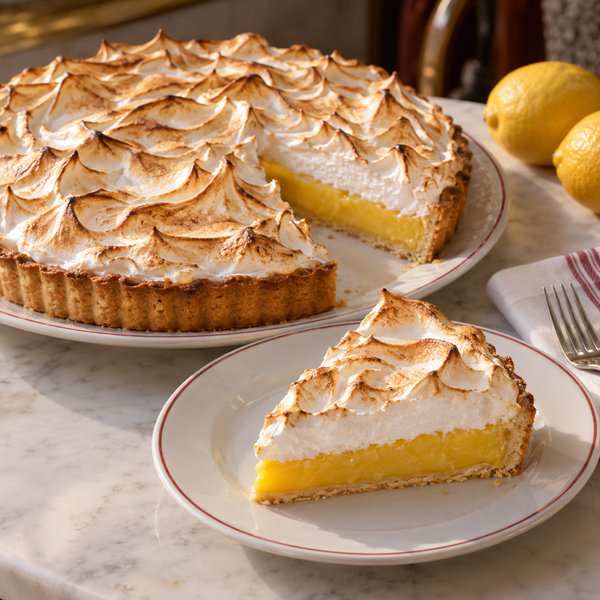
Lemon cream is poured into a blind-baked pâte brisée shell, covered to the edges with meringue and browned in the oven. Serve warm or chilled.
AUTHENTICITY SCORE
Authenticity Score
This is the standard recipe, exactly as it’s made where it comes from — the highest Authenticity Score possible. Substituting ingredients changes this score; the app shows exactly how, ingredient by ingredient.
Ingredients (8 servings)
100Authenticity- Plain cake flour335 g250 g for pastry, 65 g for lemon cream and 20 g for dusting. Use plain soft-wheat cake flour without added starch or leavening.
- Unsalted butter160 g125g cold for pastry, 30g for lemon cream and 5g for the mold
- Granulated sugar395 g20g for pastry, 250g for lemon cream and 125g for meringue
- Powdered sugar20 gFor the meringue
- Salt2 gA pinch for the pastry and a pinch for the meringue
- Eggs5 eggs1 whole egg for pastry and 4 eggs to separate into 4 yolks and 4 whites just before use; use fresh eggs
- Water380 ml30ml for pastry and 350ml boiling water for lemon cream
- Cornstarch65 g
- Lemon3 lemonsZest 2 and squeeze the juice of 3, about 100 ml Use unwaxed fruit when the peel is needed; wash before peeling.
Method
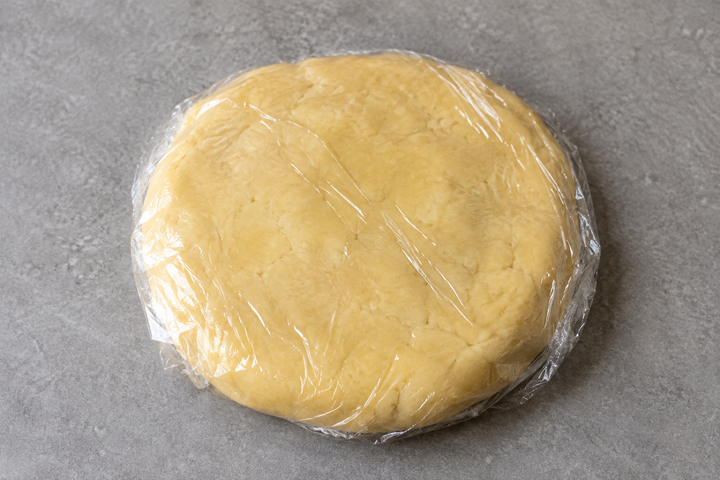
Make the pâte brisée
- 1 Put 250g cake flour, 20g sugar and a pinch of salt in a bowl. Cut 125g cold butter into 1cm cubes, add and rub with your fingertips until sandy.
- 2 Add 1 beaten egg and 30ml water and quickly bring together.
- 3 Shape into a flat disk and wrap in plastic wrap.
Ready when
Continue when no dry flour remains and the dough holds together.
Caution
Overkneading makes the pastry shrink and harden during baking.
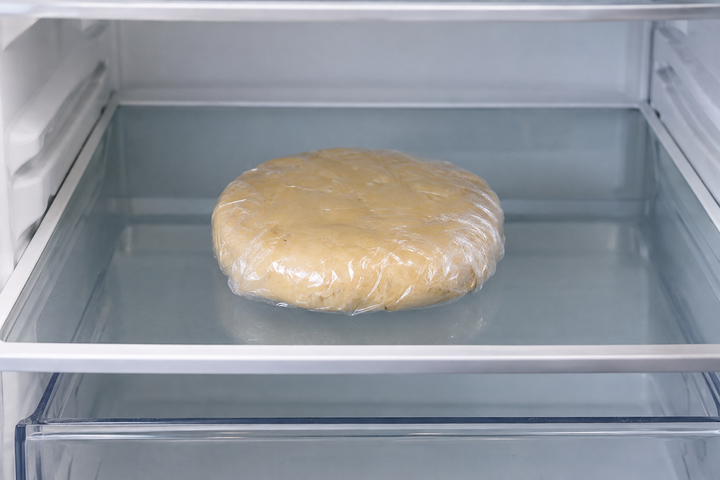
Rest the dough in the refrigerator for 1 hour
- 1 Refrigerate for 1 hour.
- 2 MeanwhileWhile resting, grate only the yellow zest of 2 lemons and squeeze the juice of 3.
Ready when
Continue when the dough is cold and firm.
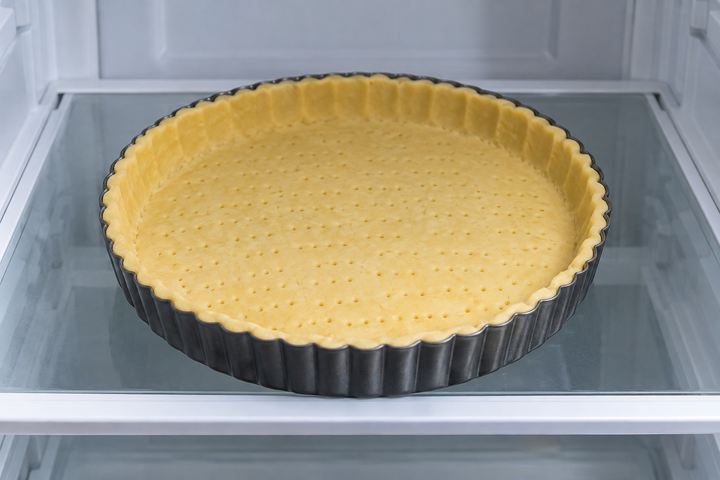
Smear, roll to 3mm, line the mold and chill
- 1 Put the chilled dough on the work surface, push it forward with the heel of your hand, then gather it together again.
- 2 On a floured surface, roll to 3mm thick and about 32cm across.
- 3 Line a buttered 24cm removable-base tart pan, trim excess from the rim and prick the bottom with a fork.
- 4 Refrigerate for 10 minutes.
- 5 MeanwhileWhile chilling, preheat the oven to 200°C.
Ready when
Continue when the pastry fits against the bottom and sides without gaps.
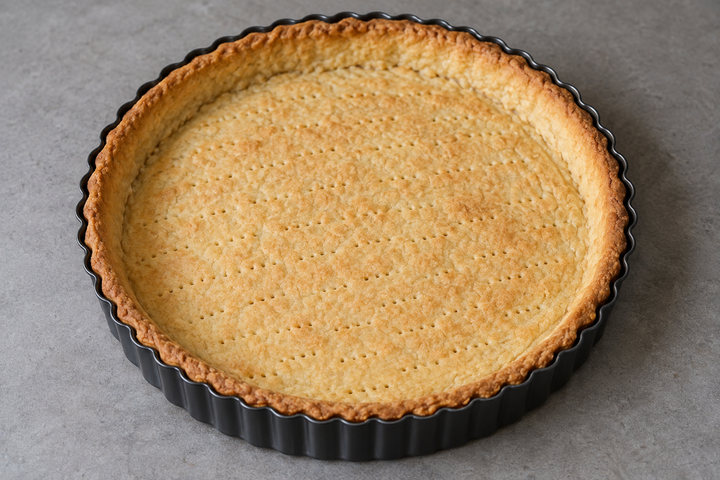
Blind-bake at 200°C for 10 minutes, then dry for 5 minutes
- 1 Line the pastry with parchment, fill with weights to the rim and bake at 200°C for 10 minutes.
- 2 Remove the weights and paper and bake for another 5 minutes to dry the bottom.
- 3 MeanwhileWhile blind-baking, boil 350ml water for the lemon cream.
Ready when
Continue when the bottom is dry with no pale raw appearance and the rim is lightly colored.
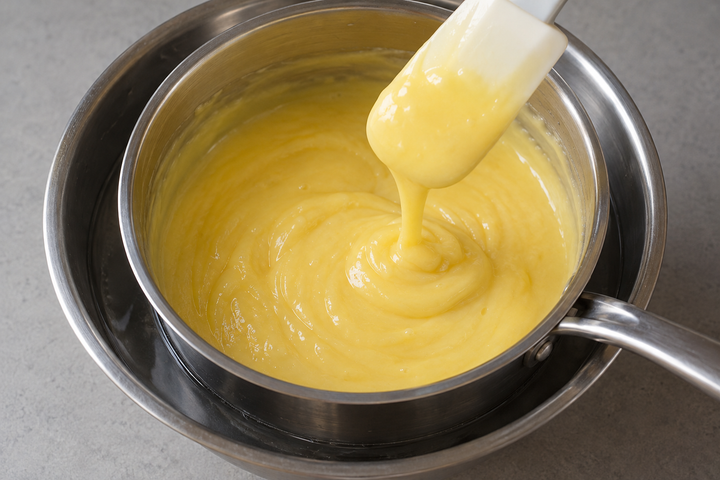
Cook flour and sugar with boiling water, add lemon, yolks and butter, then cook over a water bath for 15 minutes
- 1 Separate 4 eggs into yolks and whites and refrigerate the whites.
- 2 Mix 65g cake flour, 65g cornstarch and 250g sugar in a saucepan, then whisk while pouring in 350ml boiling water.
- 3 Cook over medium heat, stirring constantly. When boiling and thickened, take off the heat for 5 minutes.
- 4 Mix in the lemon zest and juice, 4 yolks and 30g unsalted butter.
- 5 Set the saucepan over a water bath and cook for 15 minutes, stirring occasionally.
- 6 MeanwhileWhile cooking over the water bath, lower the oven to 180°C.
Ready when
Continue when the cream is glossy and falls slowly from a flexible spatula.
Caution
Leaving the flour mixture unstirred can scorch the bottom and create lumps.
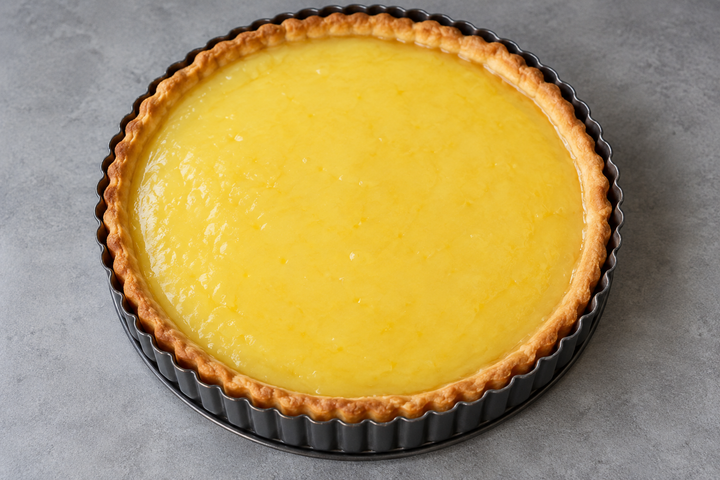
Fill the shell and bake at 180°C for 10 minutes
- 1 Pour the hot lemon cream into the blind-baked shell and level the surface.
- 2 Bake at 180°C for 10 minutes.
- 3 MeanwhileWhile baking, beat the 4 cold whites with a pinch of salt in a bowl. When peaks begin to form, add 125g sugar and 20g powdered sugar in 3 additions and beat to a firm, glossy meringue.
Ready when
Continue when the cream surface is dry with a thin skin and does not ripple when moved.
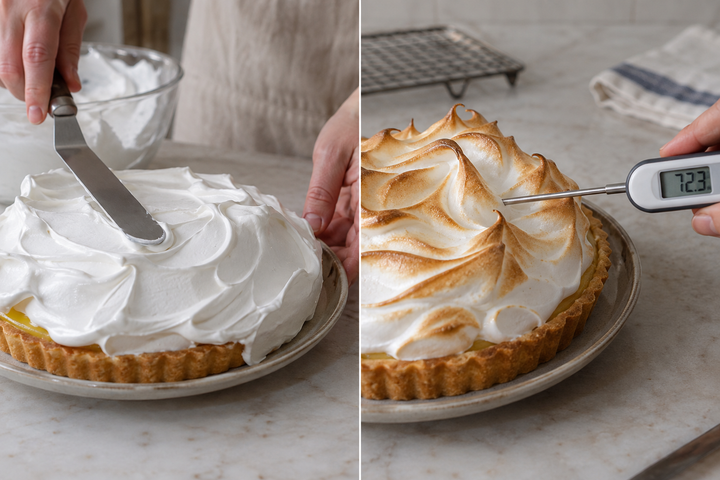
Cover the hot cream to the edges and bake at 160°C for 25–30 minutes
- 1 Lower the oven to 160°C.
- 2 Put the meringue on the hot cream just taken from the oven. Use an offset spatula to cover firmly to the shell edges and make waves on the surface.
- 3 Bake at 160°C for 25–30 minutes.
- 4 If the meringue is not cooked through at the center, bake in additional 3-minute increments.
Ready when
Continue when the peaks are golden and the middle of the thickest meringue is at least 71°C.
Caution
If the meringue is not sealed to the edges, it shrinks away from them during baking.
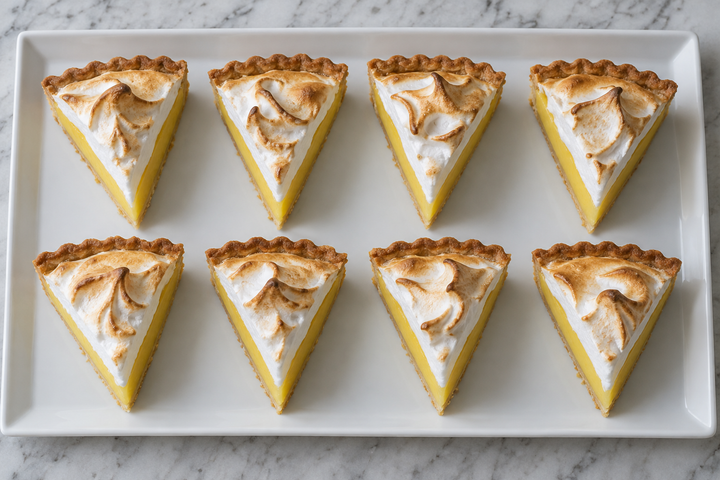
Cool on a rack, unmold and slice
- 1 Cool on a rack for 30 minutes and remove from the pan.
- 2 Cut into 8 slices while warm or after chilling in the refrigerator.
Ready when
The tart is ready when the cream has settled enough not to run from the cut surface.

About this dish
In Paris in 1755, a “crème meringuée” was recorded as a dish for a court supper. Lemon, orange blossom and chopped macarons were added to cream, beaten egg whites were piled in a dome on top, and it was baked for 30 minutes in a low oven, as for biscuits. There was no pastry base yet: the cream was baked in a dish.
Lemons from Menton in southern France received a geographical indication in 2015, with an annual harvest of about 200 metric tons. They are unwaxed and receive no postharvest chemical treatment, making their peel suitable for pastries. Cold winter nights are said to bring out their brightest yellow color. Since 1934, Menton has held a lemon festival in February, displaying large decorations made of lemons and oranges.

Bring the full course home next weekend.
Bring every dish to the table at its best.
Choose the dishes you want to cook, and Chef Authen handles the shopping list and the day-of schedule. The Tabelia app turns everything from starter to main into one coordinated course in your kitchen.
- One shopping listBuilt automatically from your menu and any substitutions, ready to check off.
- One timelineEvery dish’s waiting and cooking time combined into a single schedule.
- Answers beyond the recipeFrom judging the heat to adapting on the fly, Chef Authen answers with concrete criteria, not guesses.