 TABELIA
AUTHENTIC RECIPE
Spaghetti all'AmatricianaSpaghetti all’Amatriciana
- Total
- 35 min
- Difficulty
- ★★☆☆☆
- Serves
- 2 servings
- Prep 10 min
- Cook 25 min
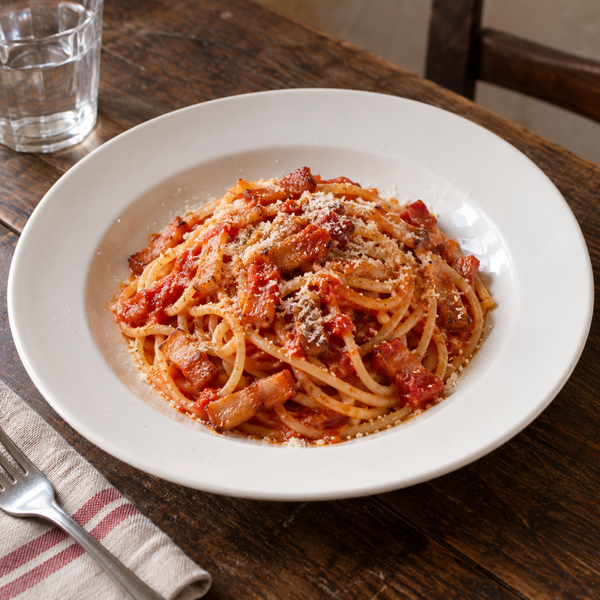
A Roman pasta classic made with guanciale, tomatoes and Pecorino, originating in Amatrice and taking root in Rome.
AUTHENTICITY SCORE
Authenticity Score
This is the standard recipe, exactly as it’s made where it comes from — the highest Authenticity Score possible. Substituting ingredients changes this score; the app shows exactly how, ingredient by ingredient.
Ingredients (2 servings)
100Authenticity- Guanciale120 gCut into 5 mm dice.
- Canned peeled tomatoes400 g
- Spaghetti200 g
- Pecorino Romano40 gCoarsely grate.
- Dried chili pepper1 piece
- Dry white wine50 ml
Method
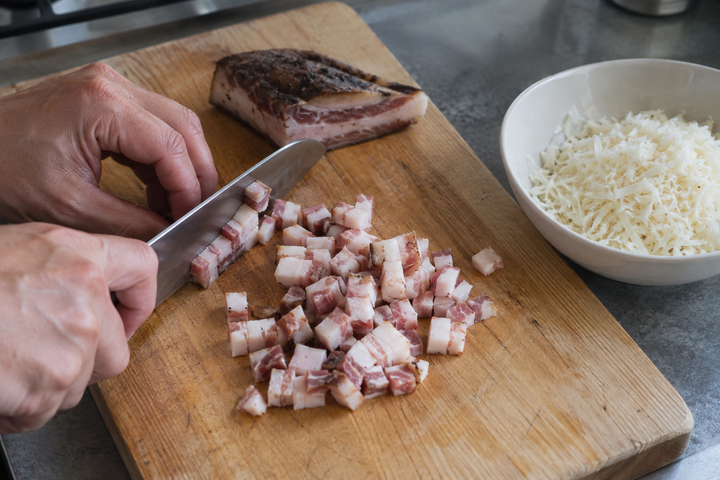
Prepare the ingredients
- 1 Cut 120 g guanciale into 5 mm dice.
- 2 Coarsely grate 40 g Pecorino.
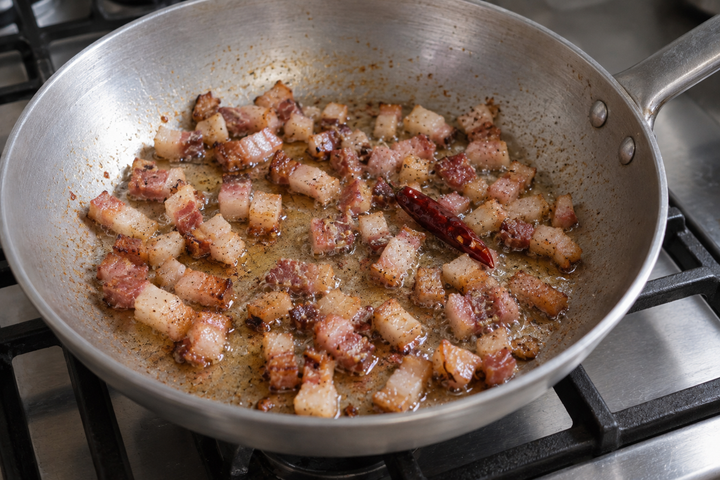
Render the guanciale
- 1 Put 120 g guanciale in 5 mm dice in a frying pan and cook over medium heat.
- 2 When fat begins rendering, add 1 dried chili.
Ready when
After about 5 minutes, continue when the guanciale is crisp with golden edges.
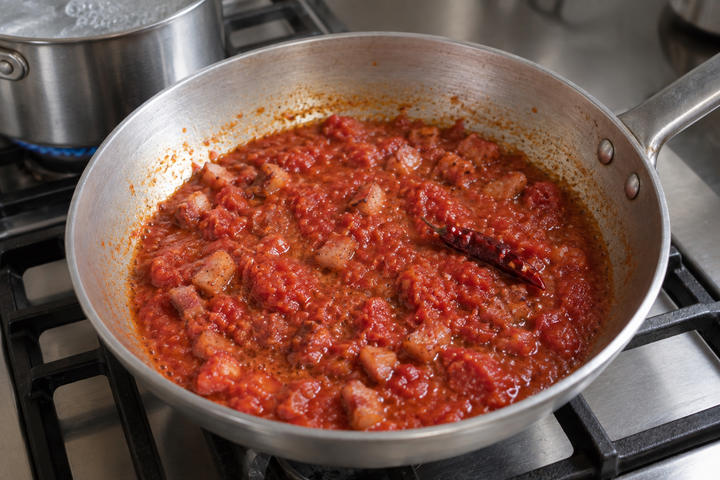
Reduce the tomato sauce
- 1 MeanwhileWhile reducing the sauce, start boiling a large pot of water, with 10 g salt per 1 L.
- 2 Add 50 ml white wine and boil for about 1 minute to evaporate the alcohol.
- 3 Add 400 g canned whole tomatoes, crushing by hand, and reduce over medium heat.
Ready when
After about 15 minutes, continue when thickened and a wooden spoon briefly leaves a trail across the pan bottom.
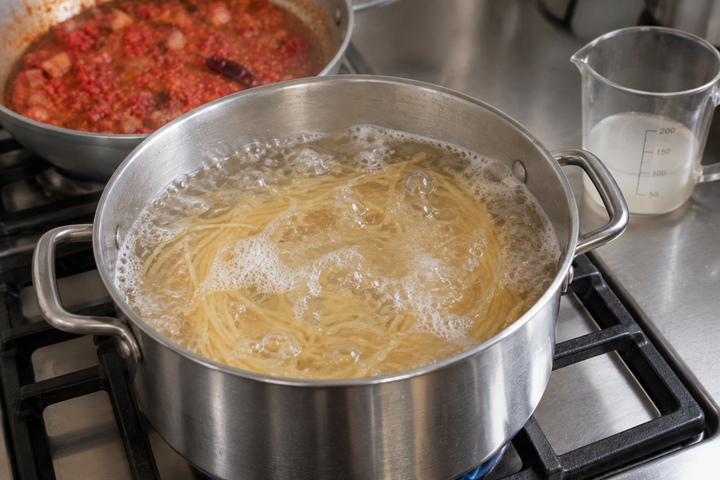
Cook the pasta
- 1 Add 200 g spaghetti to the prepared boiling salted water and cook 1 minute less than the package time.
- 2 Reserve 100 ml cooking water.
Ready when
Remove just before al dente, with a slight core remaining.
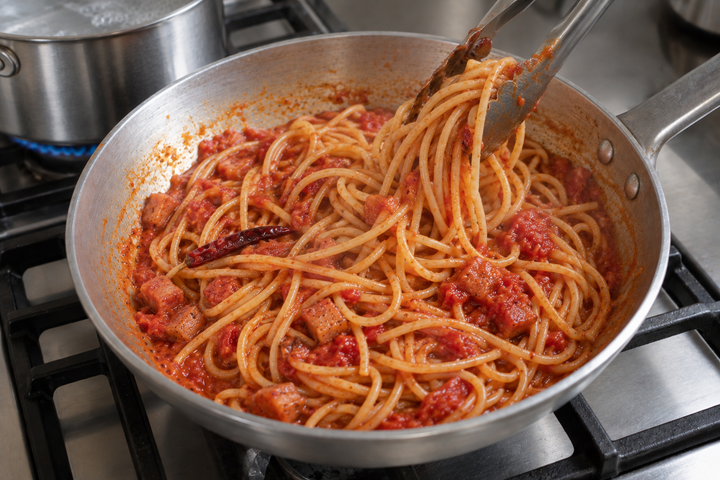
Combine pasta and sauce
- 1 Add the cooked spaghetti to the sauce in the frying pan.
- 2 Toss over high heat for 1–2 minutes, adding cooking water little by little.
Ready when
Continue when the sauce clings and the surface is glossy.
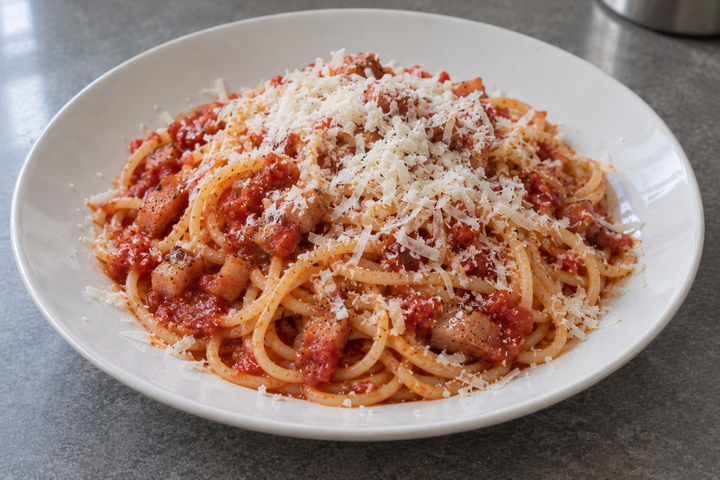
Add Pecorino
- 1 Turn off the heat and generously scatter over 40 g Pecorino.
Caution
Do not return to high heat after adding cheese: it sets and makes the sauce heavy.

About this dish
Amatriciana takes its name from Amatrice, a town in the Apennines. It is known as a pasta sauce combining guanciale, pecorino and tomatoes.
The use of cured meat and cheese from the mountain area also became established on Roman tables. The dish is now enjoyed far beyond the town, while its name continues to recall Amatrice.

Bring the full course home next weekend.
Bring every dish to the table at its best.
Choose the dishes you want to cook, and Chef Authen handles the shopping list and the day-of schedule. The Tabelia app turns everything from starter to main into one coordinated course in your kitchen.
- One shopping listBuilt automatically from your menu and any substitutions, ready to check off.
- One timelineEvery dish’s waiting and cooking time combined into a single schedule.
- Answers beyond the recipeFrom judging the heat to adapting on the fly, Chef Authen answers with concrete criteria, not guesses.