 TABELIA
AUTHENTIC RECIPE
Spaghetti alla Carrettiera alla SicilianaSicilian Carrettiera Spaghetti
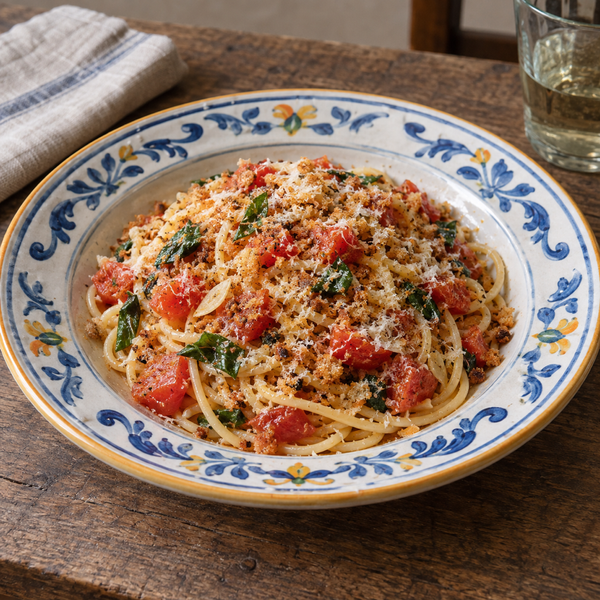
A dish of uncooked tomato sauce tossed with piping-hot spaghetti, once made by carters along the roads. Hand-crushed ripe tomatoes marinate at room temperature for 30 minutes with plentiful garlic, olive oil and basil; uniting the released juice with oil is its central technique. Pecorino and crisp breadcrumbs toasted in anchovy-infused oil, mollica atturrata, finish it with contrasts of texture and savor. With no sauce cooking, tomato selection, the handling of garlic and tossing temperature directly determine flavor.
AUTHENTICITY SCORE
Authenticity Score
This is the standard recipe, exactly as it’s made where it comes from — the highest Authenticity Score possible. Substituting ingredients changes this score; the app shows exactly how, ingredient by ingredient.
Ingredients (4 servings)
- SpaghettiBronze-die pasta 1.9–2.0 mm thick is preferable.400 g
- Ripe plum tomatoesBlanch and peel, remove only seeds and jelly, and crush coarsely by hand. Keep the juice released from the flesh: it is the medium for emulsification.700 g
- Extra virgin olive oil80 ml for raw sauce, 30 ml for toasting crumbs.110 ml
- GarlicRemove the germs; thinly slice 2 cloves and crush 2 with the flat of a knife.4 cloves
- Grated Pecorino SicilianoDivide into 40 g for tossing and 40 g for finishing.80 g
- Stale bread crumbsRemove crusts and crumble the interior coarsely by hand. Toast to make mollica atturrata.80 g
- Fresh basilTear leaves only by hand. Avoid a knife because of metallic odors.15 g
- Dried chili pepperDeseed and crush coarsely.1 piece
- Anchovy fillets in oilFinely chop and dissolve in the oil for the crumbs.3 fillets
- Coarse salt for pasta waterAdd at 10 g/L for 4 L water.40 g
- Fine saltFor marinating raw tomatoes.6 g
- Black pepperCoarsely grind to finish.2 g
Method
Blanch, peel and prepare tomatoes
- 1 Bring 1.5 L water to a boil over high heat and prepare a separate bowl of ice water.
- 2 Core 700 g ripe tomatoes and score a shallow cross in the bottom.
- 3 Lower 2–3 tomatoes at a time into boiling water; after 10–15 seconds, when the skin curls from the cuts, transfer to ice water with a skimmer.
- 4 Once cooled slightly, peel with fingers, halve crosswise and scoop out and discard only seeds and jelly.
- 5 Transfer flesh and any juice flowing from its cut surfaces into a bowl. Do not drain away that juice in a colander.
Ready when
All skin, seeds and jelly are removed, leaving flesh and its released juice in the bowl.
Caution
Too long in boiling water cooks the flesh and loses its raw fragrance. Transfer to ice water immediately when the skin curls.
Discarding the juice removes the medium for emulsifying oil. Remove only seeds and jelly.
Tips
The watery component is the jelly surrounding the seeds; removing only this leaves the flesh's juice to help emulsification.
The original roadside version crushes tomatoes with skins, but peeling to increase the flesh's density is common in Palermo homes and eateries; this recipe follows that approach.
Prepare the raw tomato sauce
- 1 Crush the flesh by hand, without a knife, into uneven 1.5–2 cm chunks.
- 2 Remove the germs from 2 garlic cloves and slice thinly; crush the remaining 2 with the flat of a knife and add to the bowl with their cores intact.
- 3 Deseed 1 dried chili, crush coarsely with fingers and add with 6 g sauce salt.
- 4 Drizzle in 80 ml extra virgin olive oil and mix with 10–15 broad folds from the bottom using a wooden spoon.
- 5 Tear 15 g basil leaves by hand into the bowl and fold just 1 time, gently submerging them.
Ready when
Tomato chunks remain intact, with juice and oil mingling at the bottom.
Caution
Chopping basil with a knife darkens the cut edges and produces a metallic smell. Always tear by hand.
The 2 crushed garlic cloves will be removed just before tossing, so do not chop them finely.
Tips
Sliced garlic supplies pungency to eat; crushed garlic supplies aroma only. Using both forms is the Palermo approach.
Keeping chunks allows both flesh texture and sauce to remain perceptible after tossing.
Marinate at room temperature
- 1 MeanwhileDuring the 30-minute marinade, make the mollica atturrata in step 4.
- 2 Cover the bowl with a clean cloth, not plastic wrap, and leave at room temperature, 20–25°C, for 30 minutes.
Ready when
Tomato juice and olive oil move together thickly when the bowl tilts, without separating.
Garlic and chili aromas have infused the oil and rise alongside the green tomato fragrance when smelled closely.
Caution
Refrigeration makes the oil set and prevents emulsification with juice. Always leave at room temperature.
Tips
Marination may extend to 60 minutes, making the garlic stronger.
These 30 minutes are the main technical challenge: if juice and oil have not united here, even hot pasta will not emulsify them.
Make mollica atturrata, toasted breadcrumbs
- 1 MeanwhileWhile the crumbs cool, start boiling the pasta water for step 5.
- 2 Finely chop 3 anchovy fillets and crush with the flat of a knife to a paste.
- 3 Crumble 80 g stale bread interior by hand into uneven pieces around 5 mm.
- 4 Put 30 ml extra virgin olive oil and anchovy in a frying pan over low heat for 1–2 minutes, pressing with a wooden spoon until dissolved.
- 5 Once the anchovy dissolves completely, add all the crumbs and toast over medium-low heat for 5–7 minutes, stirring constantly.
- 6 Once uniformly deep golden, turn off and immediately spread on a plate or tray to cool.
Ready when
The crumbs are evenly deep golden and make a dry, loose rustling sound when stirred.
They smell of toasted bread, with no raw anchovy smell.
Caution
Leaving them in the pan lets residual heat scorch them and turn them bitter. Spread out immediately after turning off.
High heat colors only the outside while the middle stays damp. Keep medium-low heat.
Stopping stirring can scorch them within tens of seconds.
Tips
Mollica atturrata was the poor person's Parmigiano for those unable to buy cheese, and remains an essential Sicilian texture.
In Palermo, dissolving anchovies or salted sardines in the crumb-toasting oil is customary, supplying the savory core missing from an uncooked sauce.
They become crisper once fully cool. If still damp when cool, toast for 1 more minute over medium-low heat.
Cook pasta and warm plates
- 1 MeanwhileWhile the pasta boils, remove and discard the 2 crushed garlic cloves from the tomatoes; mix 40 g of the 80 g Pecorino Siciliano into the bowl with a wooden spoon.
- 2 MeanwhileWhile the pasta boils, arrange 4 serving plates on a tray and warm for 10 minutes in an 80°C oven.
- 3 Bring 4 L water to a boil over high heat in a large pot, then dissolve 40 g coarse salt, 10 g/L.
- 4 Fan in 400 g spaghetti, submerge and separate with long chopsticks, and boil over medium-high heat for 30 seconds less than the package time.
- 5 Reserve 120 ml cooking water in a measuring cup 1 minute before draining.
Ready when
Taste 1 strand: only a very fine firm core should remain.
Caution
There is no heating after tossing, so draining firmer than normal al dente leaves the core hard. Always taste 30 seconds before the package time.
Adding Pecorino too early absorbs tomato juice and sets. Add only after starting to boil the pasta.
Tips
During the 30–40 seconds of tossing, residual pasta heat finishes the core to just al dente.
Without an oven, fill plates with boiling water for 10 minutes, then discard and dry just before plating.
The reserved 120 ml water adjusts the mixture if oil and juice fail to unite loosely during tossing.
The 10 g/L salt matters for seasoning the pasta itself because the sauce is not cooked.
Toss raw sauce with piping-hot pasta
- 1 Pour 500 ml boiling water into a large serving bowl, swirl over the whole interior, leave 1 minute, discard and wipe dry.
- 2 Transfer all the marinated tomato sauce, including its juice, into the warm bowl.
- 3 Lift and drain the cooked spaghetti with tongs and transfer while hot into the sauce.
- 4 Lift from the bottom with tongs and make about 20 broad folds over 30–40 seconds to combine.
- 5 If juice pools below without coating the pasta, add reserved cooking water 2 tbsp at a time and fold similarly, using up to 120 ml to emulsify.
Ready when
Tomato juice and oil are joined in a cloudy mixture, coating each 1 strand in a thin film.
No pool of clear tomato juice remains at the bottom.
Caution
Cooling pasta before tossing prevents emulsification and makes the sauce watery. Do not delay after draining.
Tossing over heat cooks the tomatoes and loses the raw sauce's character. Never heat it.
Overmixing breaks the tomato chunks and loses texture. Stop within 40 seconds.
Leaving warming water in the bowl dilutes the sauce. Discard it completely and wipe dry.
Tips
The aim is for residual pasta heat to mellow the tomatoes and lift their aroma while they remain raw.
Prewarming the bowl prevents temperature loss while tossing.
Plate with contrasting crisp crumbs
- 1 Lift pasta with tongs into high twisted mounds on the 4 oven-warmed plates and divide the remaining sauce equally over them.
- 2 Divide the remaining 40 g Pecorino Siciliano among the 4 plates, 10 g per 1 plate.
- 3 Scatter the 80 g toasted crumbs, about 20 g per plate, then coarsely grind 2 g black pepper over all.
Ready when
The crumbs stand dry on the surface, visibly contrasting with the red sauce.
Caution
Mixing crumbs through immediately wets them and destroys their crunch. Always add on top after plating.
Delay before serving makes the crumbs damp. Serve immediately once scattered.
Tips
In Sicily a separate bowl of toasted crumbs is often placed on the table for diners to add more.
Palermo carrettiera follows either a basil or parsley approach, so this basil version has no parsley garnish.
About this dish
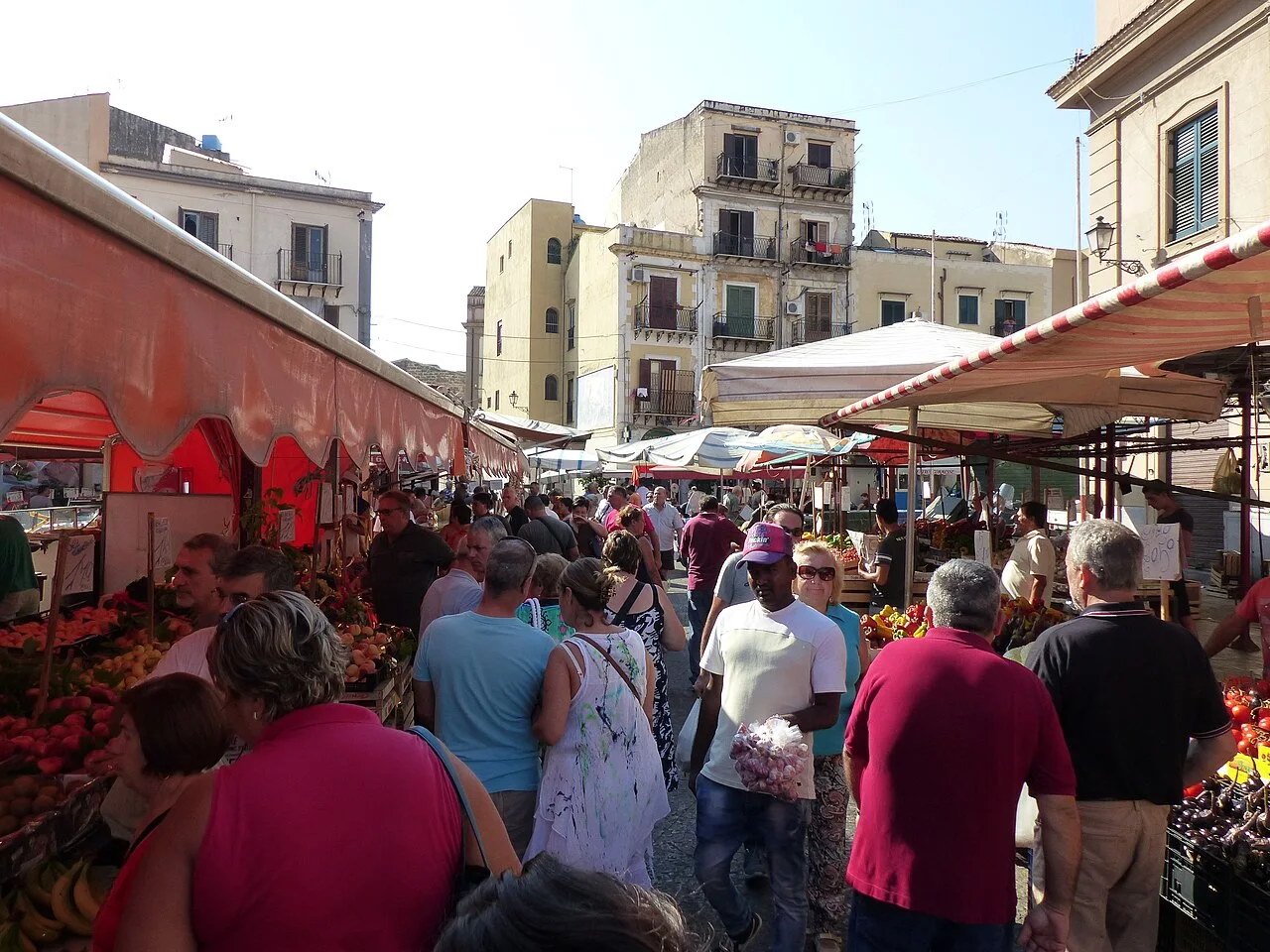
A carrettiere was a carter transporting goods around the island. In 19th-century Sicily, these workers ate at roadside inns.
The dish is built from what they carried: uncooked tomatoes, raw garlic, olive oil and Pecorino. It needs neither time nor a fire to cook the sauce. A dish of the same name exists in Lazio, but Sicily's raw tomatoes distinguish its lineage.
Families in Palermo and Catania still make it on hot summer days with very little use of the stove. Only when tomatoes are at their ripest does this dish take its true form.

Bring the full course home next weekend.
Bring every dish to the table at its best.
Choose the dishes you want to cook, and Chef Authen handles the shopping list and the day-of schedule. The Tabelia app turns everything from starter to main into one coordinated course in your kitchen.
- One shopping listBuilt automatically from your menu and any substitutions, ready to check off.
- One timelineEvery dish’s waiting and cooking time combined into a single schedule.
- Answers beyond the recipeFrom judging the heat to adapting on the fly, Chef Authen answers with concrete criteria, not guesses.