 TABELIA
AUTHENTIC RECIPE
Spaghetti alla Carbonara
- Total
- 30 min
- Difficulty
- ★★★☆☆
- Serves
- 2 servings
- Prep 10 min
- Cook 20 min
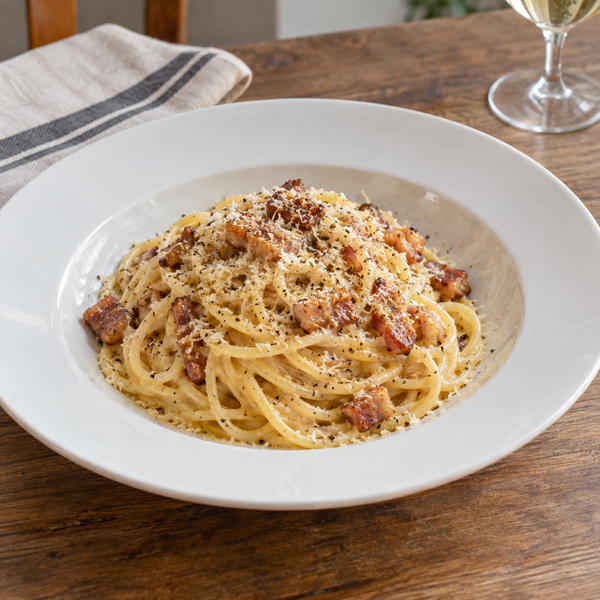


A Roman pasta made with egg yolks, guanciale, Pecorino Romano and black pepper. No cream is used; eggs and cheese are emulsified into the sauce.
AUTHENTICITY SCORE
Authenticity Score
This is the standard recipe, exactly as it’s made where it comes from — the highest Authenticity Score possible. Substituting ingredients changes this score; the app shows exactly how, ingredient by ingredient.
Ingredients (2 servings)
100Authenticity- Guanciale140 gCut into 7 mm cubes.
- Spaghetti200 gA diameter of 1.7–1.9 mm is recommended.
- Egg yolks4 yolksUse only the yolks of fresh eggs, not the whites.
- Pecorino Romano60 gGrated.
- Black pepper2 tspCoarsely ground. This gives carbonara its “charcoal” character.
Method
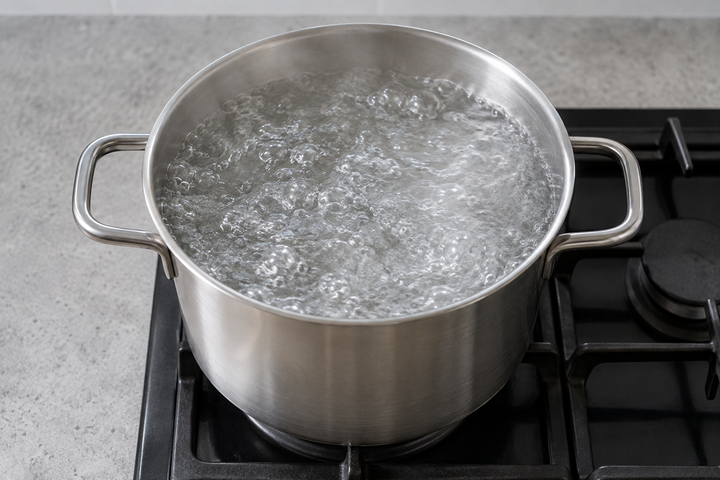
Boil the water
- 1 Fill a large pot with water and bring to a boil over high heat.
- 2 Once boiling, add and dissolve 10 g salt per 1 L water.
Ready when
Proceed when the whole pot is at a rolling boil and the salt has dissolved.
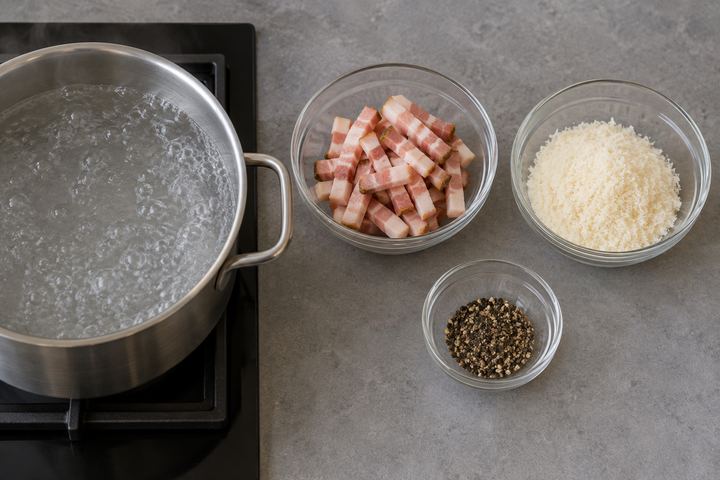
Prepare the ingredients
- 1 Cut the guanciale into batons with a 7 mm square cross-section.
- 2 Finely grate the Pecorino Romano.
- 3 Coarsely grind the black pepper in a mill or crush it with the flat of a knife.
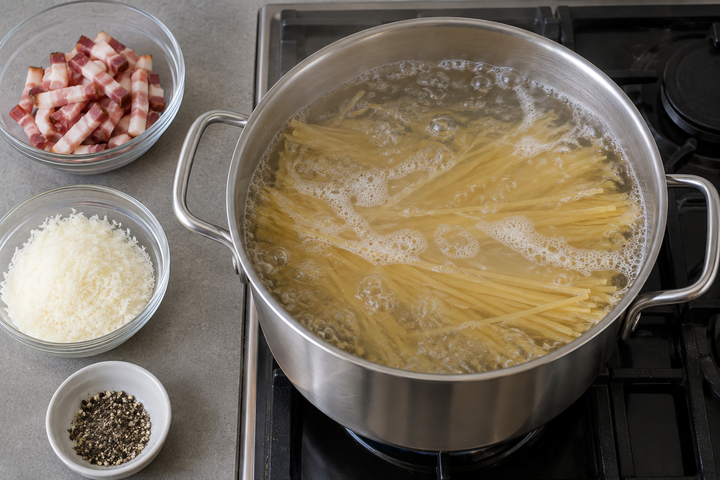
Cook the pasta
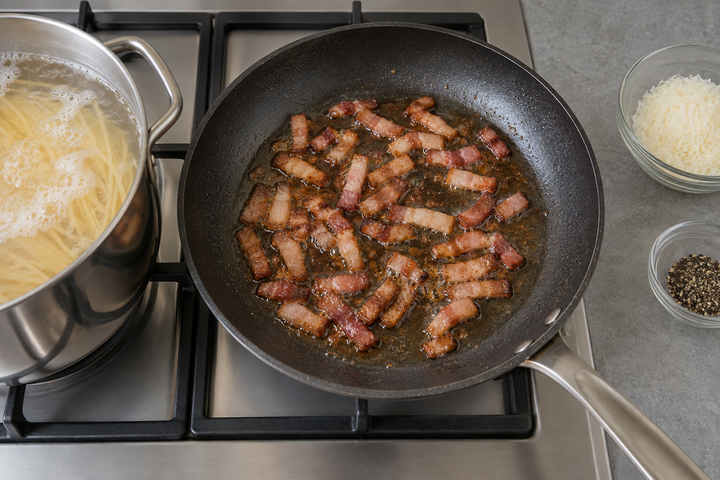
- 1 Add the spaghetti to the boiling salted water and cook for 1 minute less than the package time.
Cook the guanciale
- 1 Place the guanciale in a cold frying pan without oil and heat over medium heat for 2 minutes.
- 2 Once the fat begins to render, reduce to low heat and cook for a further 7–8 minutes.
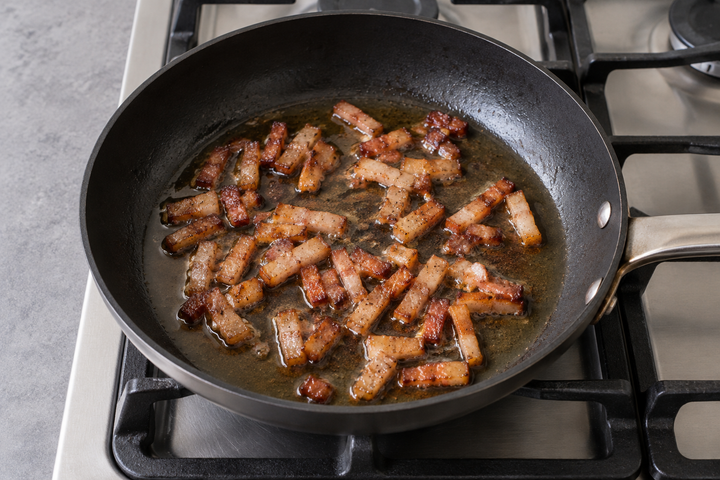
- 3 The guanciale should be golden and crisp on the surface, with clear rendered fat.
Caution
The guanciale releases plenty of fat, so no added oil is needed.
Cool the pan
- 1 Turn off the heat, leave for 1–2 minutes in the residual heat and let the contents cool in the pan to 70°C or below.
Caution
The guanciale fat is hot enough to scramble the egg mixture if it is added immediately.
Mix the egg sauce
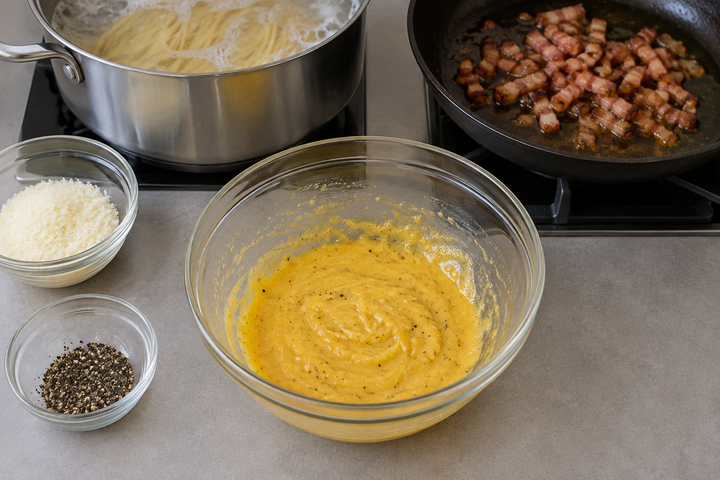
- 1 Place 4 egg yolks in a bowl and add grated Pecorino Romano and coarsely ground black pepper, reserving some cheese and pepper for finishing.
- 2 Stir into a paste.
Ready when
Proceed when no dry cheese remains and the mixture flows in a ribbon.
Coat the pasta in the guanciale fat
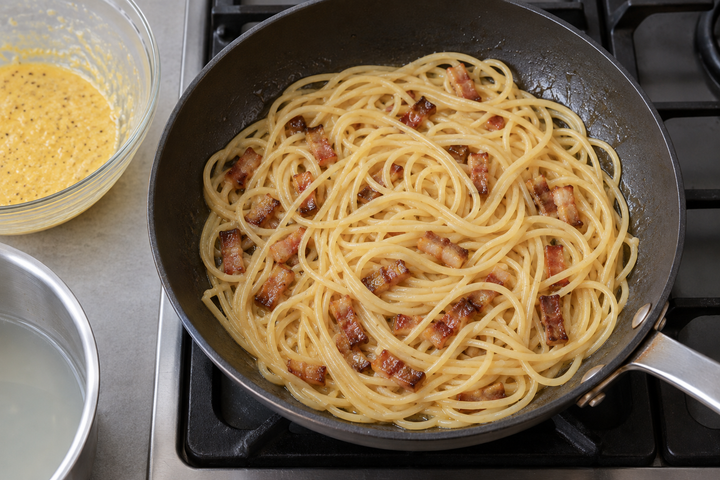
- 1 Cook the spaghetti al dente, with a firm center, drain lightly and transfer directly to the pan of guanciale.
- 2 Put the pan over low heat and toss for about 30 seconds to coat all the pasta thoroughly with the fat.
Ready when
Proceed when the fat coats all the pasta.
Caution
Reserve the cooking water for adjusting the consistency.
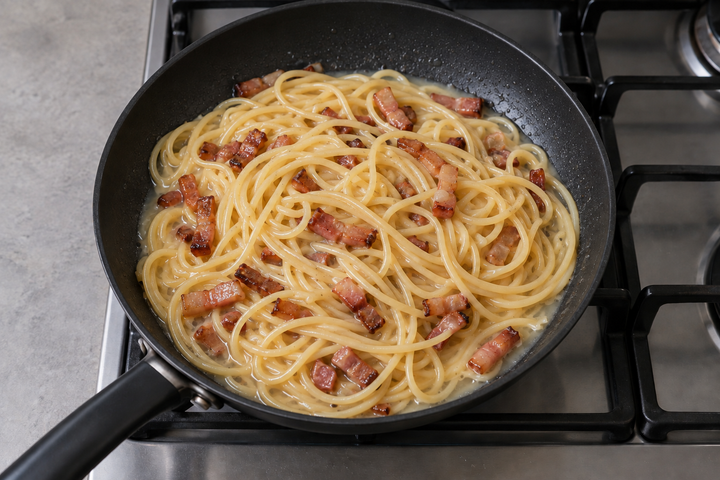
Emulsify with cooking water
- 1 Add cooking water a little at a time over low heat to form a light emulsion.
- 2 Be sure to turn off the heat.
Ready when
Once lightly emulsified, turn off the heat and proceed.
Caution
If you do not turn off the heat here, the egg mixture will scramble when added.
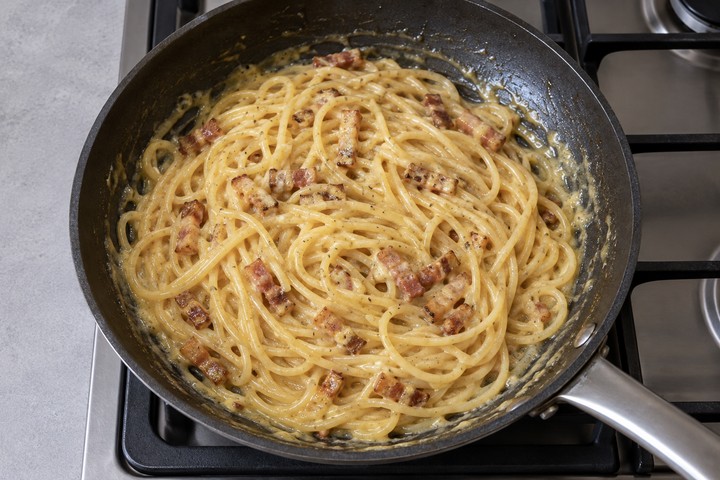
Add the egg mixture
- 1 With the heat off, pour all the egg mixture into the pan and quickly toss to coat everything.
Caution
Do not add the egg mixture while the heat is on.
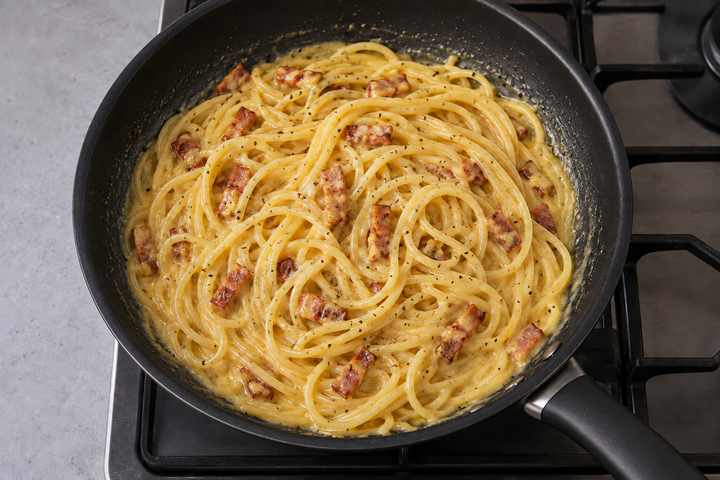
Adjust the sauce consistency
- 1 Add cooking water a little at a time to adjust the consistency.
Ready when
The sauce is ready when it flows slowly as you tilt the pan.
Caution
Too much cooking water makes the sauce watery, so add it gradually and carefully.
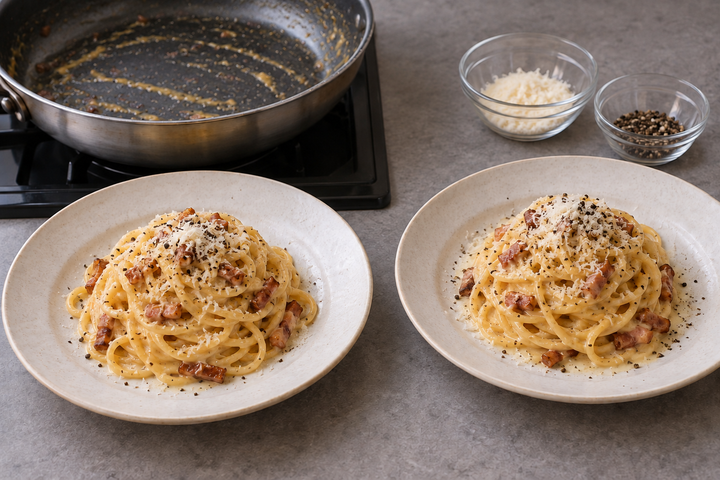
Finish
- 1 Twirl the pasta with tongs and plate half at a time in tall mounds.
- 2 Sprinkle over the reserved Pecorino and coarsely ground black pepper.
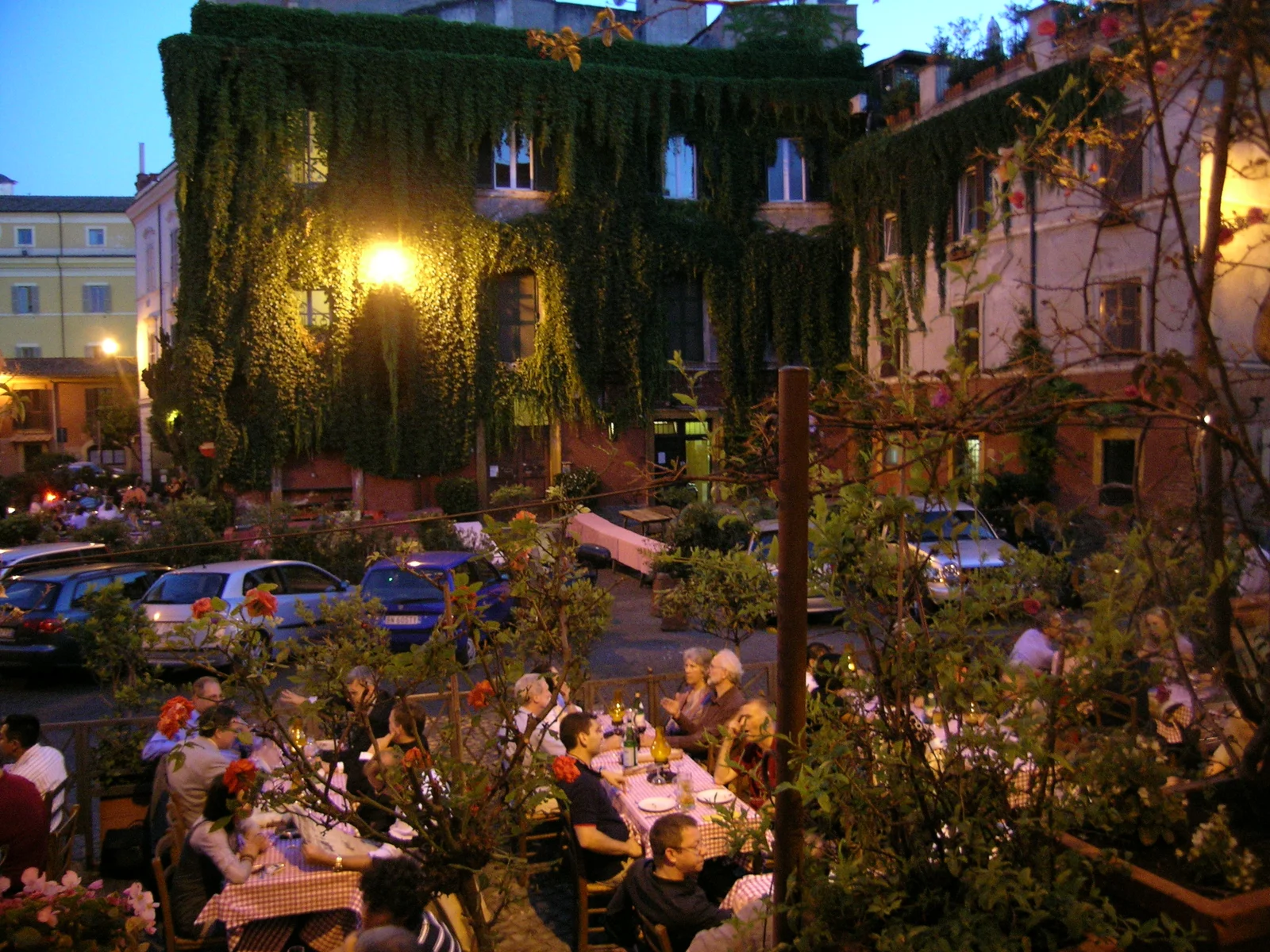
About this dish
Carbonara is a staple primo in Roman trattorias and is now one of the dishes that represent the city.
There are several accounts of its creation. Some link it with charcoal burners in the Apennines; others tell of encounters with American soldiers during the Second World War. No single account has been established.

Bring the full course home next weekend.
Bring every dish to the table at its best.
Choose the dishes you want to cook, and Chef Authen handles the shopping list and the day-of schedule. The Tabelia app turns everything from starter to main into one coordinated course in your kitchen.
- One shopping listBuilt automatically from your menu and any substitutions, ready to check off.
- One timelineEvery dish’s waiting and cooking time combined into a single schedule.
- Answers beyond the recipeFrom judging the heat to adapting on the fly, Chef Authen answers with concrete criteria, not guesses.