 TABELIA
AUTHENTIC RECIPE
Schiacciata all'UvaTuscan Grape Flatbread — Schiacciata all’Uva
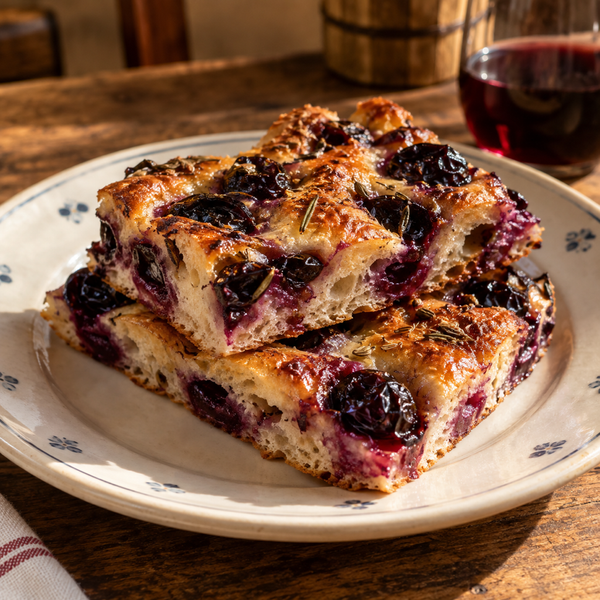
A rustic sweet bread baked by Tuscan farmers and bakers during the grape harvest, or vendemmia, with generous quantities of black wine grapes. The olive-oil-and-sugar dough is divided into two sheets and baked with grapes in two layers: the lower layer releases juice into the dough, creating a wine-like aroma, while the upper grapes reduce to a jam-like consistency. Traditionally the seeds are left in, preserving the contrast between the tannins of the skins and seeds and the sweetness of the sugar. The challenges are handling the loose, highly hydrated dough and baking the base thoroughly despite the abundant grape juice.
AUTHENTICITY SCORE
Authenticity Score
This is the standard recipe, exactly as it’s made where it comes from — the highest Authenticity Score possible. Substituting ingredients changes this score; the app shows exactly how, ingredient by ingredient.
Ingredients (6 servings)
- Type 0 bread flour250 g for the dough and 10 g for dusting.260 g
- WaterLukewarm, about 30°C.150 ml
- Fresh yeastDissolve in some of the lukewarm water.5 g
- Extra virgin olive oil30 ml for the dough and 30 ml for the tray and surface.60 ml
- Small dark-skinned black wine grapesTraditionally seeded grapes with edible skins; in Japan, Campbell Early is an example. The 600 g is the net weight after removing the stems.600 g
- Granulated sugar20 g for the dough, 30 g for the lower grape layer and 40 g for the upper grape layer.90 g
- Fine saltFor the dough. Mix into the flour so that it does not touch the yeast directly.5 g
- Fresh rosemaryStrip the leaves from the stem and chop coarsely.1 sprig
- Anise seedsLightly crush between your fingers to release their aroma.2 g
Method
Knead the bread dough
- 1 Take 50 ml of the 150 ml water at 30°C in a small bowl. Crumble in 5 g fresh yeast with your fingers and stir until completely dissolved.
- 2 Sift 250 g type 0 bread flour into a large bowl, add 5 g fine salt and 20 g granulated sugar, and mix by hand.
- 3 Make a well in the flour, pour in the yeast water and use your fingertips to draw the flour gradually into the center.
- 4 Add the remaining 100 ml lukewarm water in 3 additions, mixing by hand until no dry flour remains and the dough comes together.
- 5 Add 30 ml extra virgin olive oil in 2 additions, kneading each addition into the dough until absorbed.
- 6 Transfer to a worktop dusted with a little of the 10 g dusting flour. Fold the dough away from you and stretch it with the heel of your hand, repeating for 10–12 minutes.
Ready when
The dough is kneaded when its surface is smooth and cohesive; it will still be sticky but should lift from the worktop in one mass.
A piece stretched thinly should form a translucent membrane before tearing.
Caution
Do not keep adding flour because the dough is sticky: extra flour makes the finished bread hard.
Let the dough rise
- 1 Round the dough and place it in a bowl coated with 2 ml olive oil.
- 2 Cover tightly with plastic wrap or a damp cloth and leave at 25–28°C for 90 minutes.
Ready when
Proceed when it has doubled in volume and a floured finger pressed in to the first joint leaves a dent that slowly springs halfway back.
Prepare the grapes and aromatics
- 1 MeanwhileDo this while the dough undergoes its first rise.
- 2 Remove the stems from 600 g grapes, wash and dry thoroughly.
- 3 Strip the leaves from 1 sprig rosemary and chop coarsely; lightly crush 2 g anise seeds between your fingers.
Ready when
Proceed when the grapes are dry and the herbs are prepared.
Divide the dough and arrange the lower grape layer
- 1 Brush 13 ml olive oil over the entire surface of a baking tray about 30 × 20 cm.
- 2 Gently press the risen dough to release the gas and divide it into 2 portions in a 6:4 ratio by weight.
- 3 Place the larger portion (6) on the oiled tray. With oiled fingertips, press from the center outward until it covers the base at about 4 mm thick.
- 4 Arrange half the grapes, 300 g, evenly over it, leaving a 1 cm border.
- 5 Sprinkle 30 g granulated sugar over the entire lower grape layer, then scatter over the 2 g crushed anise seeds.
Ready when
Proceed when the dough reaches all corners of the tray and the grapes form a single layer without overlapping.
Cover with the second sheet and add grapes and rosemary
- 1 Oil the worktop with 5 ml olive oil and place the smaller dough portion on it. Flatten with your palms to about 3 mm thick and the size of the tray.
- 2 Lift the sheet with both hands and cover the lower grapes. Press and pinch the upper and lower dough together along all edges to seal.
- 3 Arrange the remaining 300 g grapes on top, pressing them lightly into the dough.
- 4 Drizzle the remaining 10 ml olive oil evenly over the dough.
- 5 Sprinkle 40 g granulated sugar over the entire surface and scatter over the chopped rosemary.
Ready when
Proceed when the edges of both dough sheets are sealed and the grapes are arranged on top.
Caution
Open seams allow grape juice to leak and burn.
Let the assembled dough rise again
- 1 MeanwhileDuring the final 15 minutes of this second rise, preheat the oven to 220°C.
- 2 Cover loosely with plastic wrap and leave at 25–28°C for 30–45 minutes.
Ready when
Proceed when the edges have visibly thickened and a shallow finger indentation springs back slowly.
Bake through while reducing the grape juice
- 1 Place the tray on the lower rack of the oven preheated to 220°C and bake for 15 minutes.
- 2 Reduce to 190°C and bake for a further 25–30 minutes.
- 3 If the top darkens first, cover with foil and check the color of the base.
Ready when
The grapes on top should have collapsed and reduced to a jam-like consistency, and the dough edges should be deep golden.
It is baked when a corner lifted with a palette knife reveals a browned, dry base and the dough does not droop limply.
Cool in the tray and cut
- 1 Set the tray on a rack and leave to cool undisturbed for 40 minutes.
- 2 Slide a palette knife underneath to release the whole bread from the tray and transfer to a cutting board.
- 3 Use a sharp knife to cut into 8–10 cm squares and arrange on a plate.
Ready when
It is ready to cut when it has cooled to about body temperature and the juice does not run out when sliced.
Caution
Cutting while hot releases the juice and makes it prone to falling apart.
About this dish
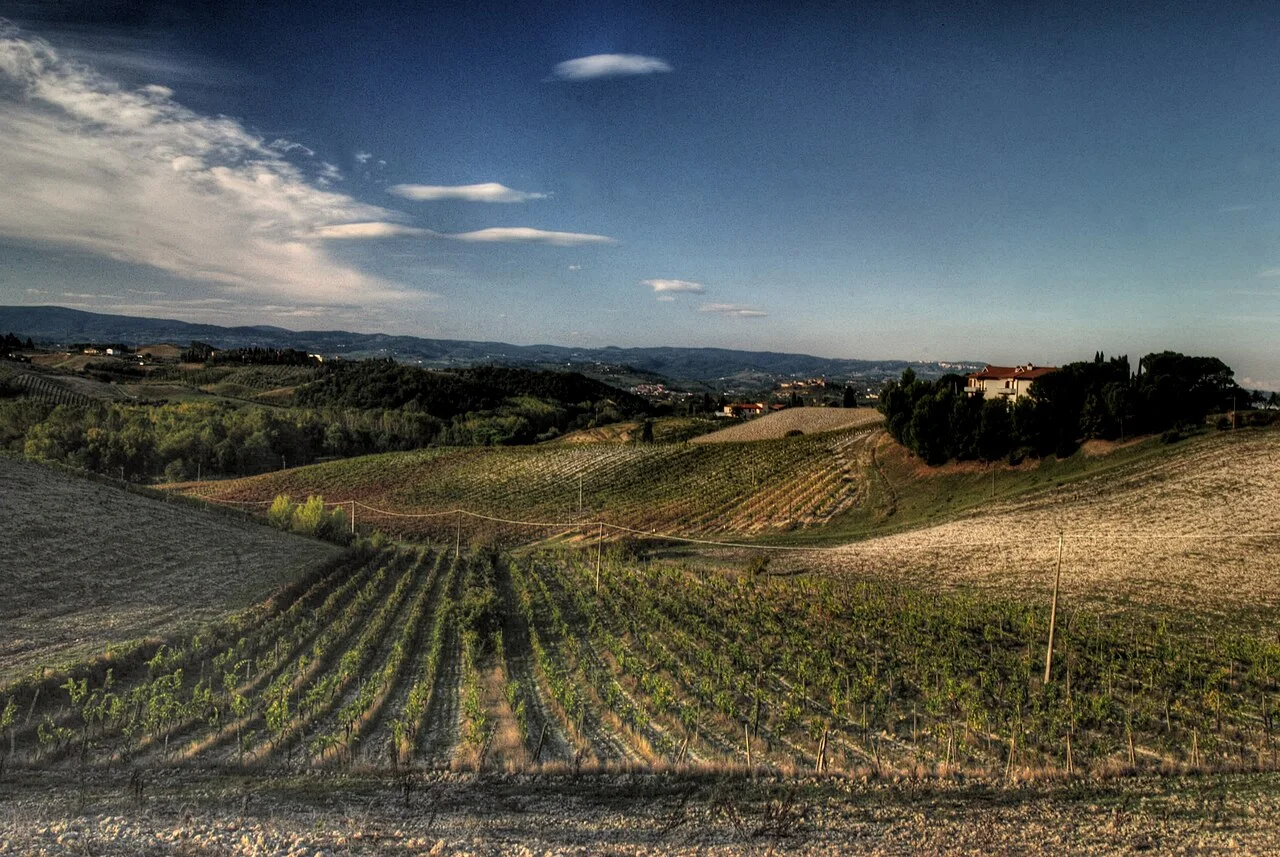
Schiacciata all’uva appears during Tuscany’s grape harvest. Layers of bread dough and black grapes announce the abundance of autumn.
A slice can be a family afternoon snack or a sweet ending to a meal. This Tuscan autumn classic preserves the pleasure of baking in step with the fruit season.

Bring the full course home next weekend.
Bring every dish to the table at its best.
Choose the dishes you want to cook, and Chef Authen handles the shopping list and the day-of schedule. The Tabelia app turns everything from starter to main into one coordinated course in your kitchen.
- One shopping listBuilt automatically from your menu and any substitutions, ready to check off.
- One timelineEvery dish’s waiting and cooking time combined into a single schedule.
- Answers beyond the recipeFrom judging the heat to adapting on the fly, Chef Authen answers with concrete criteria, not guesses.