 TABELIA
AUTHENTIC RECIPE
Risotto alla ZuccaMantuan Pumpkin Risotto
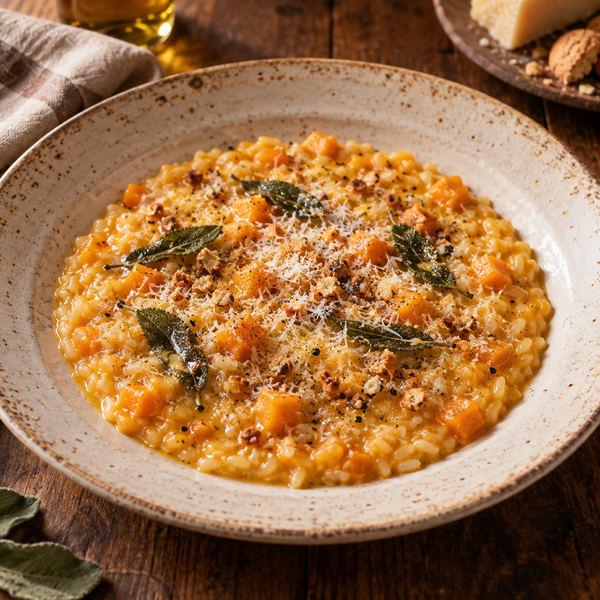
A Po Valley risotto in Mantua’s pumpkin tradition. Firm, floury winter squash is used in two ways: some is braised and mashed, while the rest is browned in cubes to retain texture. Homemade vegetable broth is held at 85°C and added gradually; Carnaroli is toasted before its starch is released, then finished off the heat with cold butter and Parmigiano to flow all’onda, in waves when the pan tilts. Mantua’s classic pairing layers the almond-like bitterness of amaretti over pumpkin sweetness, while browned sage butter sharpens the overall aroma.
AUTHENTICITY SCORE
Authenticity Score
This is the standard recipe, exactly as it’s made where it comes from — the highest Authenticity Score possible. Substituting ingredients changes this score; the app shows exactly how, ingredient by ingredient.
Ingredients (2 servings)
- Carnaroli riceDo not wash: surface starch provides the creaminess.180 g
- Firm floury winter squashNet weight. Remove skin and seeds; divide into 250g in 1cm dice and 250g in rough 2cm pieces.500 g
- Water for vegetable brothSimmer uncovered for 40 minutes to make about 1000ml broth.1600 ml
- Onion for brothPeel and halve.100 g
- Carrot for brothWash well with the skin on and cut into 4cm lengths.80 g
- Celery for brothLeave strings and cut into 4cm lengths.60 g
- Flat-leaf parsley stemsFor broth aroma; do not use leaves.10 g
- OnionVery finely chopped for the soffritto.60 g
- Dry white wineAt room temperature; add immediately after toasting.60 ml
- Unsalted butter for cooking12g for the soffritto, 8g for pumpkin purée and 10g for browning cubes.30 g
- Cold unsalted butterCut 30g into 1cm cubes and refrigerate for mantecatura; keep 15g cold for sage butter.45 g
- Parmigiano ReggianoGrate just before use.50 g
- Dry amaretti almond biscuitsAbout 2 biscuits. Coarsely crush 6g for pumpkin purée and finely crush 6g for finishing.12 g
- Fresh sageFor the finishing sage butter.6 leaves
- NutmegFreshly grate from whole nutmeg.a little
- Fine salt1g for soffritto, 2g for pumpkin and 2g for final adjustment. None in the broth.5 g
- Black pepperFreshly grind 0.5g for mantecatura and 0.5g for finishing.1 g
Method
Start the vegetable broth, skim and lower the heat
- 1 Peel and halve 100g broth onion; cut 80g carrot and 60g celery into 4cm lengths.
- 2 Put the vegetables and 10g parsley stems in a heavy pot and add 1600ml water.
- 3 Bring to the boil uncovered over medium heat in 6–8 minutes.
- 4 Skim the white foam with a ladle and lower to very low heat.
Ready when
The broth should be clear and skimmed, with a quiet bubble only every few seconds.
Caution
Keep the broth unsalted and adjust salt when finishing the risotto.
Prepare the pumpkin in two forms and arrange all ingredients
- 1 Meanwhile(While cutting the pumpkin) keep the broth uncovered over very low heat and skim every 10 minutes.
- 2 Remove skin, seeds and fibres to obtain 500g net pumpkin; cut 250g into 1cm dice and 250g into rough 2cm pieces, in separate bowls.
- 3 Finely grate 50g Parmigiano Reggiano and set on a plate.
- 4 Cut 30g of the 45g cold butter into 1cm cubes and refrigerate; put the remaining 15g on a small plate and refrigerate for sage butter.
- 5 Divide 30g cooking butter into 12g, 8g and 10g portions.
- 6 Split 12g amaretti: coarsely crush 6g and finely crumble 6g by hand onto separate small dishes.
- 7 Very finely chop 60g onion.
Ready when
The 1cm and 2cm pumpkin pieces should be in separate bowls.
Cheese, cold butter, cooking butter, amaretti and onion should be within reach.
Caution
Do not wash the rice; its surface starch thickens the dish.
Strain and measure 1000ml broth and hold around 85°C
- 1 Continue simmering uncovered over very low heat until 40 minutes total from starting.
- 2 Line a sieve over a bowl with a clean cloth and gently strain; do not press the vegetables, using only liquid that drains naturally.
- 3 Measure: if more than 1000ml, take only 1000ml; if less, top up with boiling water to 1000ml and return to a small pan.
- 4 Keep uncovered over very low heat at about 85°C.
Ready when
The broth should be clear with a sweet vegetable aroma.
Small bubbles should rise intermittently from the base, with steam but almost no surface movement, about 85°C if measured.
Make pumpkin purée and browned cubes, keeping the cubes warm
- 1 Meanwhile(While the pumpkin braises) check that the uncovered broth stays around 85°C over very low heat.
- 2 Melt 8g of the 30g cooking butter in a frying pan over medium heat; add the 250g of 2cm pumpkin pieces and brown for 3 minutes.
- 3 Add 120ml warm broth, cover and braise over medium-low heat for 10–12 minutes.
- 4 Coarsely mash against the pan side with a wooden spoon; add 1g of the 5g salt, grate in 0.2g nutmeg and mix in 6g coarsely crushed amaretti.
- 5 If wet, uncover and reduce over medium heat for about 2 minutes to a thick purée; transfer to a bowl.
- 6 Wipe the pan with paper and melt 10g cooking butter over medium heat.
- 7 Spread in the 250g of 1cm pumpkin cubes without overlapping and sauté for 5–6 minutes, letting the faces brown without excessive movement.
- 8 Sprinkle with 1g salt and turn off before the corners collapse; transfer to a plate, cover with foil and keep warm near the broth pot.
Ready when
The purée pumpkin should mash easily and fall slowly from a spoon.
The diced pumpkin should be browned and easily pierced, but retain its shape.
Cook a sweet onion soffritto without colour
- 1 Melt 12g cooking butter in a heavy broad-based sauté pan over low heat.
- 2 Add 60g finely chopped onion and cook over low heat for 6–8 minutes, stirring constantly.
- 3 Add 1g salt and cook another 1 minute, drawing out moisture.
Ready when
The onion should be translucent, soft-edged and sweet-smelling, with no colour at all.
Toast the rice and evaporate the wine
- 1 Raise the soffritto pan to medium heat and add 180g unwashed Carnaroli.
- 2 Toast for 2–3 minutes, stirring constantly as though rubbing the grains along the base.
- 3 Pour all 60ml room-temperature dry white wine down the pan side and boil over medium heat while stirring to remove the alcohol smell.
Ready when
The edges of the rice should be translucent with white centres, making a dry rubbing sound on the base.
The wine’s sharp acidic smell should disappear, with almost no liquid left.
Add broth in stages and incorporate the pumpkin purée
- 1 Meanwhile(Between broth additions) fill 2 plates with boiling water to warm them.
- 2 Add 1 ladle of 85°C broth, about 120ml, and stir from the bottom in a figure 8.
- 3 Whenever liquid recedes enough for a spoon trail to remain briefly, add another roughly 120ml broth.
- 4 After 8 minutes from the first addition, stir in all the pumpkin purée.
- 5 Continue over medium heat, adding broth, for about 16–18 minutes total, using approximately 760ml in this stage.
- 6 Hold the remaining 120ml broth at 85°C for steps 8 and 9.
Ready when
The grains should retain a tiny firm centre while creamy starch coats the outside.
Shaking the pan should make the contents move in loose waves.
Add the warm pumpkin cubes and remove from the heat
- 1 Add the warm 250g of 1cm pumpkin cubes and fold broadly only 2–3 times to distribute.
- 2 Add 60ml reserved broth, heat for just 30 seconds and turn off completely.
Ready when
The cubes should be distributed, warm and intact.
The pan should be off the heat and surface bubbling subsided.
Mantecare with cold butter and Parmigiano, then brown sage butter during the rest
- 1 Meanwhile(During the 2-minute rest) melt the reserved 15g cold butter in a small pan over medium-low heat; when foaming, add 6 sage leaves.
- 2 Meanwhile(Continue) shake the pan for 60–90 seconds until the butter is hazelnut brown and sage edges crisp, then turn off.
- 3 Meanwhile(While making sage butter) empty and dry the 2 warmed plates.
- 4 Add all 30g refrigerated butter in 1cm cubes to the pan off the heat and mix quickly with a wooden spoon.
- 5 Add 40g of the 50g grated Parmigiano, draw and toss the pan towards you and work from the base with the spoon for 30–60 seconds.
- 6 If firm, add the reserved 60ml broth in 30ml portions until the surface waves when the pan tilts.
- 7 Taste, add salt within the remaining 2g allowance and grind in 0.5g black pepper.
- 8 Cover and rest for 2 minutes.
Ready when
Butter and cheese should be completely emulsified into one glossy fluid, without oil floating or graininess.
The surface should move in slow all’onda waves as the pan tilts.
The sage butter should smell nutty without black burning.
Caution
Continued heating makes butter and cheese separate more easily.
Spread on warm plates and finish with sage butter and amaretti
- 1 Divide the risotto between 2 warm plates and tap the bases lightly on the worktop 2–3 times to spread it flat.
- 2 Divide the sage butter and leaves between the 2 plates.
- 3 Divide the 6g finely crushed amaretti and remaining 10g Parmigiano over both plates and grind over 0.5g black pepper.
Ready when
The risotto should spread naturally flat without a central mound.
Sage butter should give scattered gloss and the amaretti should be fragrant.
About this dish
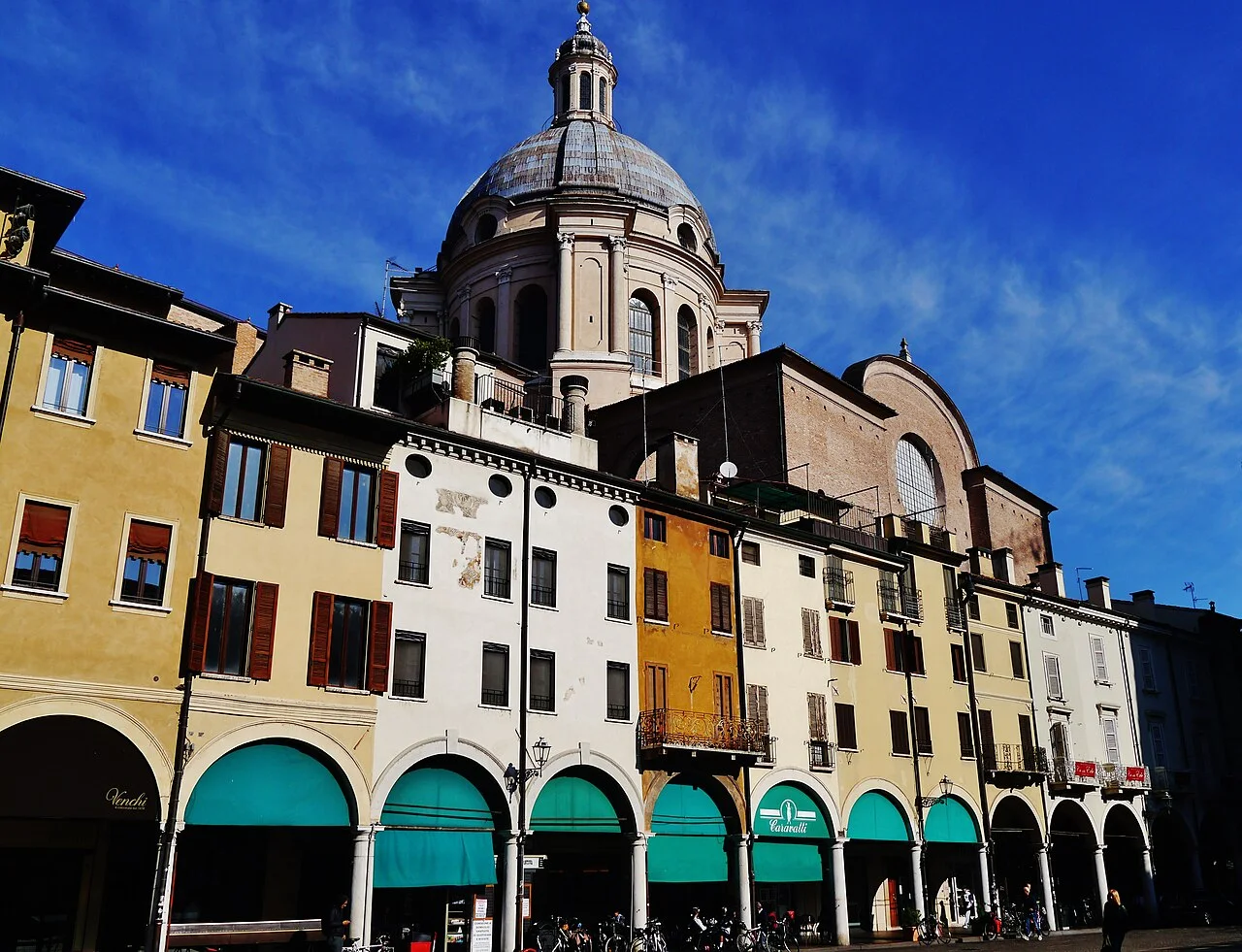
Mantua lies at Lombardy’s southeastern edge, surrounded on three sides by lakes formed by the Mincio. The plains of the Po basin stretch around it, and both rice and pumpkin harvests announce autumn.
The town’s emblematic pumpkin dish is tortelli di zucca, filled with pumpkin, amaretti and Parmigiano and known for appearing on Christmas Eve tables. The same combination carries into risotto, with crushed amaretti considered Mantuan style.
It is now prepared across northern Italy as a regular autumn and winter risotto. When pumpkins pile up at markets, trattoria menus add this dish.

Bring the full course home next weekend.
Bring every dish to the table at its best.
Choose the dishes you want to cook, and Chef Authen handles the shopping list and the day-of schedule. The Tabelia app turns everything from starter to main into one coordinated course in your kitchen.
- One shopping listBuilt automatically from your menu and any substitutions, ready to check off.
- One timelineEvery dish’s waiting and cooking time combined into a single schedule.
- Answers beyond the recipeFrom judging the heat to adapting on the fly, Chef Authen answers with concrete criteria, not guesses.