 TABELIA
AUTHENTIC RECIPE
Rigatoni alla Gricia
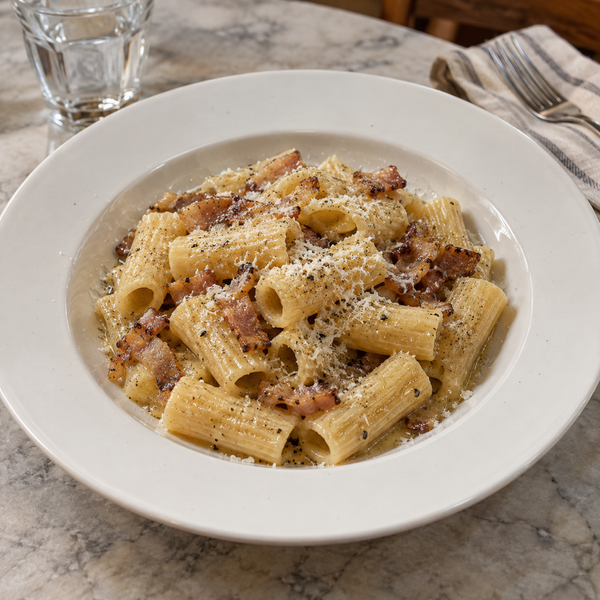
A simple pasta without tomatoes or eggs, sometimes described as carbonara's predecessor. Made with guanciale and Pecorino.
AUTHENTICITY SCORE
Authenticity Score
This is the standard recipe, exactly as it’s made where it comes from — the highest Authenticity Score possible. Substituting ingredients changes this score; the app shows exactly how, ingredient by ingredient.
Ingredients (2 servings)
- GuancialeCut into 1 cm strips.150 g
- Rigatoni200 g
- Pecorino RomanoFinely grated60 g
- Coarsely ground black pepper5 g
Method
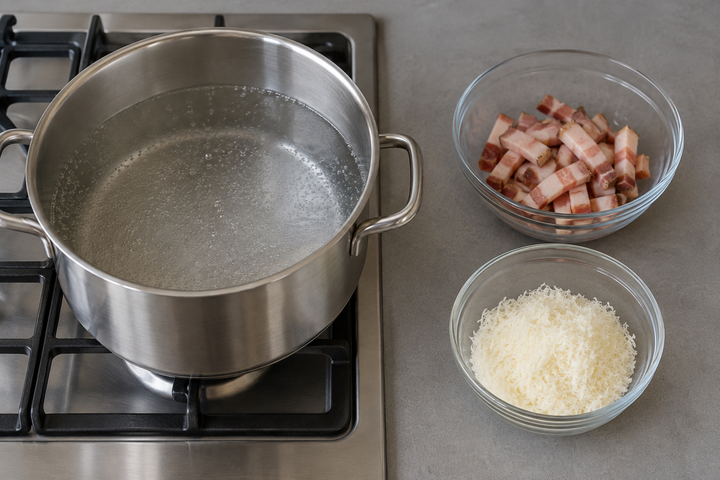
Boil water and prepare ingredients
- 1 First, start bringing a large pot of water to a boil, with 10 g salt per 1 L.
- 2 Cut the guanciale into 1 cm strips.
- 3 Finely grate the Pecorino.
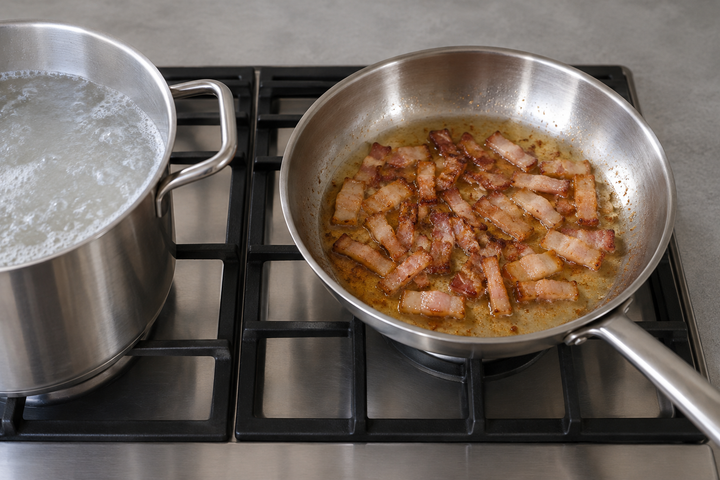
Render the guanciale
- 1 Put the 1 cm guanciale strips in a frying pan and cook slowly over medium to low heat.
Ready when
Once plenty of fat has rendered and the guanciale changes from translucent to pale caramel, about 8 minutes, lower the heat.
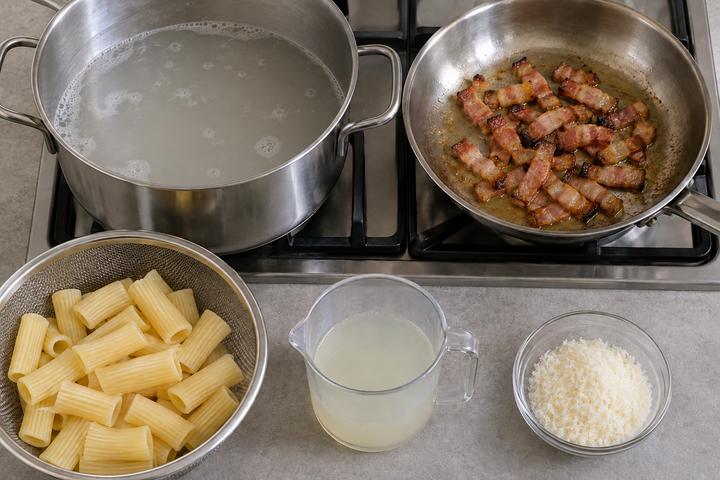
Boil the rigatoni
- 1 MeanwhileWhile the guanciale cooks, boil the rigatoni in salted water.
- 2 Remove 1 minute before the package time and reserve 150 ml cooking water.
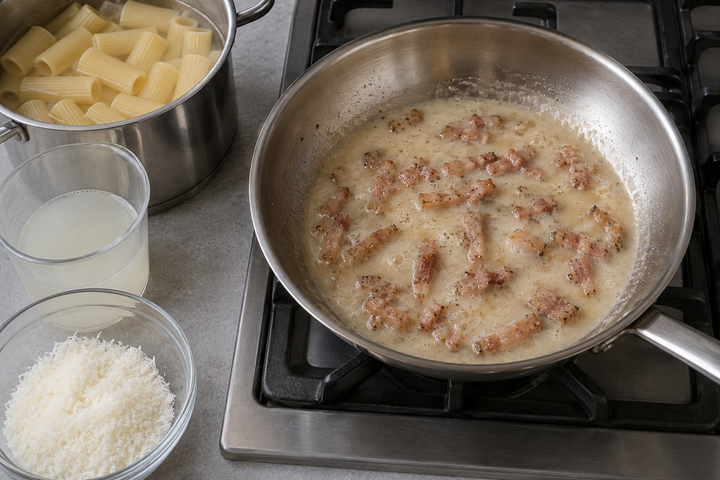
Emulsify the sauce
- 1 Continue when it emulsifies into a white, lightly thickened sauce, about 1–2 minutes.
Caution
Turn off the pan heat and shake while adding cooking water gradually.
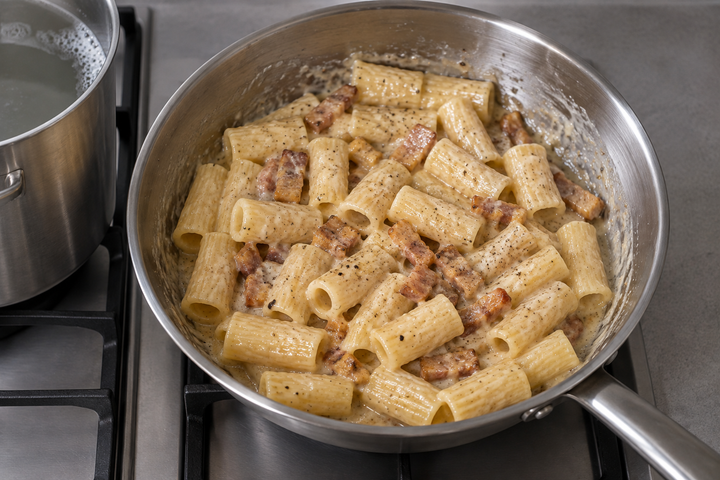
Coat the pasta
- 1 Add the pasta and toss quickly with tongs while adding half the Pecorino and coarsely ground black pepper.
Ready when
It is ready when the creamy sauce clings firmly to the pasta.
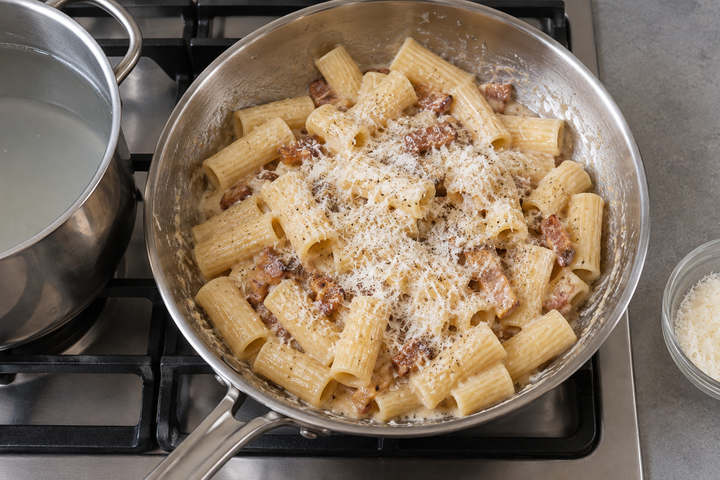
Finish with Pecorino
- 1 Finish with the remaining Pecorino.

About this dish
Gricia belongs to Lazio's pasta traditions dating to before tomatoes spread across Roman tables. Linked to shepherds around Amatrice and mountain life, it has been passed down as a modest dish using preserved pork and sheep's-milk cheese.
The name may derive from a place in Lazio or from artisans called grici in Rome. Either way, its older lineage preceding amatriciana and carbonara gives it a supporting role in the history of Roman cooking.
Now counted among Rome's four great pastas, it is loved in trattorias and homes alike. Without a showy red sauce, it remains treasured for conveying an older layer of the Roman table.

Bring the full course home next weekend.
Bring every dish to the table at its best.
Choose the dishes you want to cook, and Chef Authen handles the shopping list and the day-of schedule. The Tabelia app turns everything from starter to main into one coordinated course in your kitchen.
- One shopping listBuilt automatically from your menu and any substitutions, ready to check off.
- One timelineEvery dish’s waiting and cooking time combined into a single schedule.
- Answers beyond the recipeFrom judging the heat to adapting on the fly, Chef Authen answers with concrete criteria, not guesses.