 TABELIA
AUTHENTIC RECIPE
Prosciutto e FichiProsciutto and Fresh Figs
- Total
- 53 min
- Difficulty
- ★☆☆☆☆
- Serves
- 2 servings
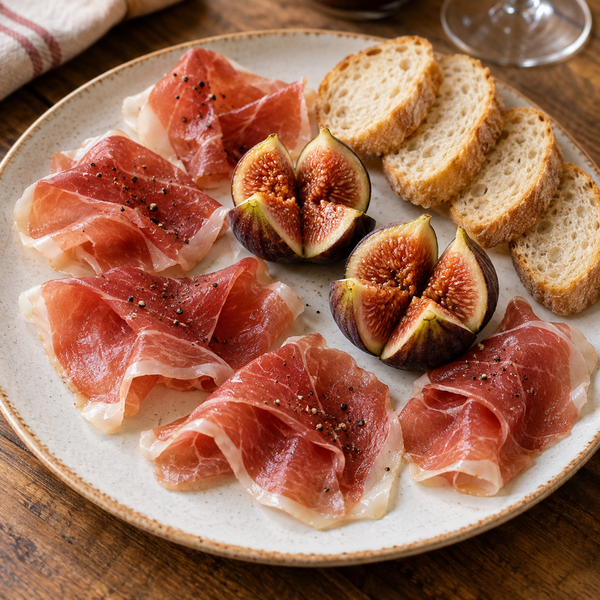
A late-summer and autumn antipasto of mature dry-cured ham and ripe figs. Arrange the thin ham slices loosely and serve with figs and rustic bread.
AUTHENTICITY SCORE
Authenticity Score
This is the standard recipe, exactly as it’s made where it comes from — the highest Authenticity Score possible. Substituting ingredients changes this score; the app shows exactly how, ingredient by ingredient.
Ingredients (2 servings)
100Authenticity- Thinly sliced prosciutto aged 24 months120 gSliced to order at a salumeria or vacuum-packed slices under 1mm thick. Choose slices with the fat still attached to the lean meat.
- Ripe fresh figs4 piecesFully ripe, with fine cracks in the skin and a slight give below the stem. Do not peel.
- Rustic country bread100 gCut into 4 slices 1cm thick and serve at room temperature.
- Black peppercorns0.5 gCoarsely grind just before serving.
Method
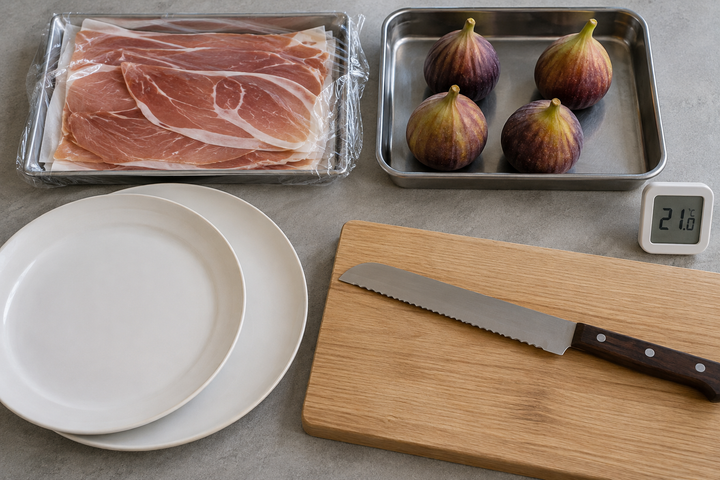
Bring the ham, figs and plates out and choose the warming time
- 1 Transfer 120g thinly sliced prosciutto crudo, uncooked salt-cured matured ham, to a flat tray with its interleaving paper; cover loosely with wrap against drying.
- 2 Take 4 fresh figs from the refrigerator and place on a tray without overlapping.
- 3 Set 2 flat serving plates, a cutting board and bread knife in a place at 20–22°C.
- 4 Measure the kitchen temperature: allow about 30 minutes at 20–22°C, 15 minutes around 25°C or 40 minutes around 18°C.
Ready when
Proceed when the ham, figs and plates are arranged in a room-temperature location and you have chosen the waiting time.
Caution
Store the ham refrigerated according to its label and do not leave it at room temperature for long after opening.
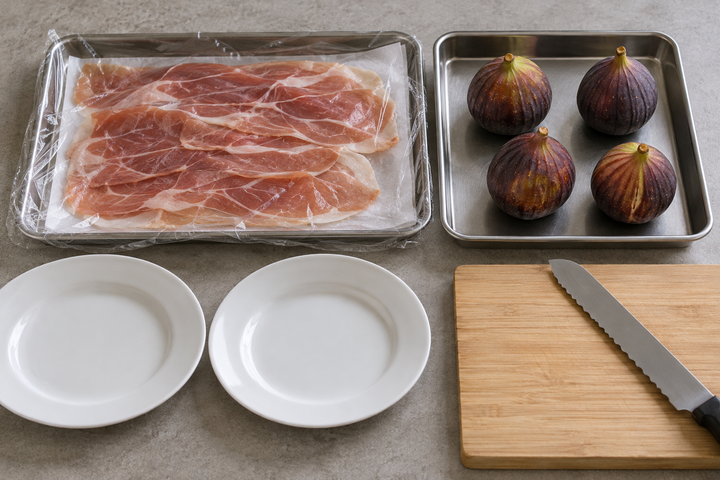
Let ham and figs reach a serving temperature of 16–18°C
- 1 Leave the ham and figs for the time chosen in step 1, away from direct sunlight and hob heat.
Ready when
The ham fat should change from firm white to slightly translucent.
Touch the tip of a cooking thermometer to 1 slice at the edge; proceed when it reaches 16–18°C.
The figs should no longer feel refrigerator-cold when held.
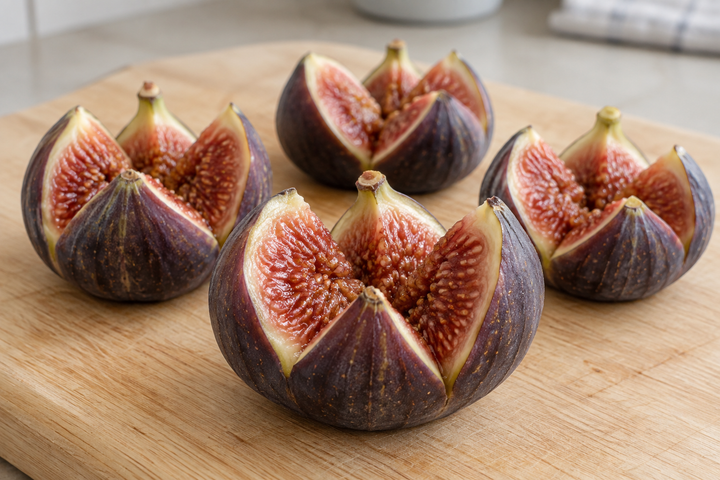
Open the figs with a cross cut
- 1 Rinse 4 figs briefly under running water and dry the skins completely with paper towels.
- 2 Trim the stems, leaving 5mm above the base.
- 3 Without peeling, cut a deep cross from the stem end, leaving the bottom 1cm intact.
- 4 Gently press the four segments outwards with your fingers into a flower, with cut surfaces facing up.
- 5 Arrange the 4 opened figs on a tray and keep at room temperature until plating.
Ready when
Proceed when all 4 open like flowers while joined at the base, with a little syrupy juice appearing on the cut flesh.
Separate and plate the ham without overlaps and serve immediately with bread
- 1 Use a bread knife to cut 100g rustic bread into 4 slices 1cm thick; arrange on a room-temperature plate or in a basket.
- 2 Hold the edge of the interleaving paper with one hand and slowly peel off each ham slice. If difficult, turn paper and ham over and push from the paper side with your fingers.
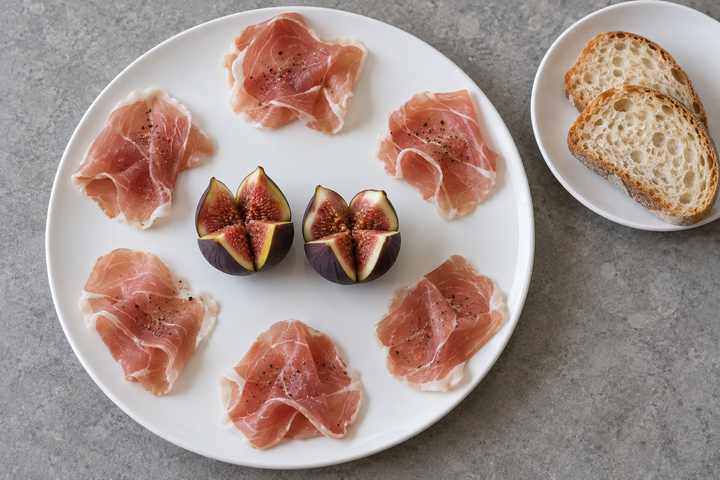
- 3 Place 60g ham per person, 6–8 slices, on each room-temperature plate, gently waving each slice to hold air and never overlapping them.
- 4 Place 2 cross-cut figs per plate among the ham, cut sides up.
- 5 Coarsely grind 0.3g pepper over the ham only.
- 6 Serve the sliced bread alongside and bring to the table immediately.
Ready when
It is ready when no ham slices overlap, the fat is translucent and the slices form airy folds.
Caution
Thin ham tears easily if pulled.
About this dish
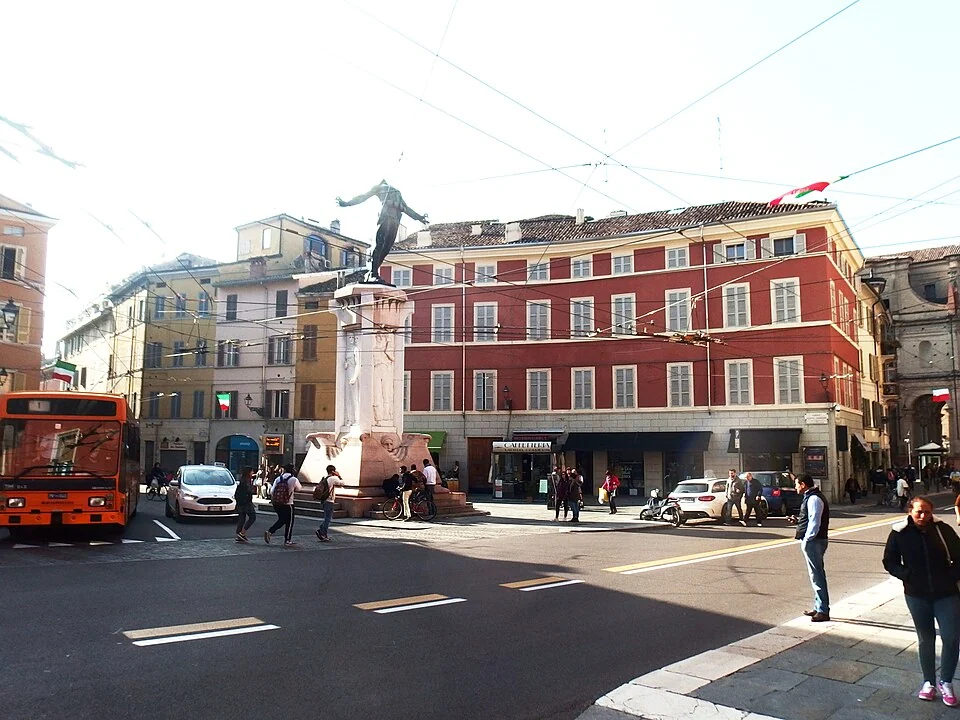
In Langhirano, a town in the hills south of Parma, ham-making workshops have long lined the Parma River. They use the dry air along the river for curing, opening and closing windows on opposite sides of the rooms as the humidity changes while salt-rubbed pork legs dry for at least 14 months.
On the first 2 weekends of September, the town holds a ham festival. During Finestre Aperte, an event held alongside the festival since 1999, producers open their workshops and visitors taste hams aged for different lengths of time. This is also the peak season for forniti, figs that ripen in August and September. Prosciutto e fichi, ripe fruit served with cured ham, is also a late-summer staple in Rome.
Salt-cured ham was made in this area in the 2nd century BC, and in the Middle Ages craftspeople known as lardaroli continued the tradition. Today, only ham produced in the hills between the Enza River and the Stirone stream may bear the Parma name.

Bring the full course home next weekend.
Bring every dish to the table at its best.
Choose the dishes you want to cook, and Chef Authen handles the shopping list and the day-of schedule. The Tabelia app turns everything from starter to main into one coordinated course in your kitchen.
- One shopping listBuilt automatically from your menu and any substitutions, ready to check off.
- One timelineEvery dish’s waiting and cooking time combined into a single schedule.
- Answers beyond the recipeFrom judging the heat to adapting on the fly, Chef Authen answers with concrete criteria, not guesses.