 TABELIA
AUTHENTIC RECIPE
Poulet Rôti du DimancheFrench Sunday Roast Chicken
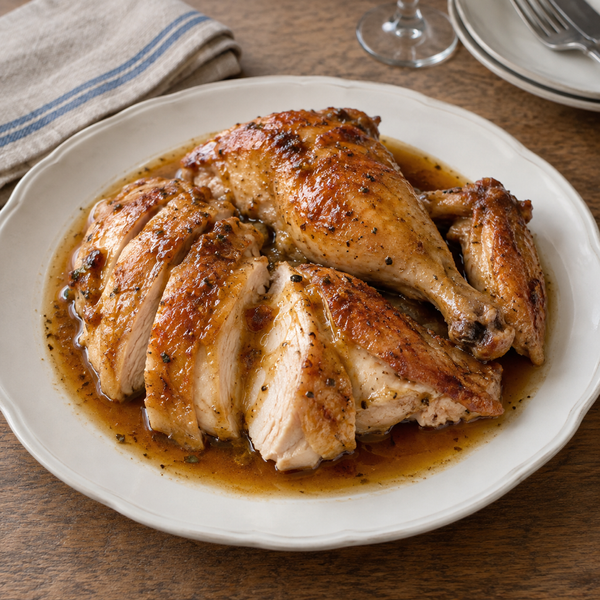
A beloved Sunday lunch in French homes and rotisseries. A whole chicken is trussed with string and roasted while repeatedly basted with butter: crisp skin and moist breast meat. The traditional way is to carve it for the family and serve with a jus made from its roasting juices.
AUTHENTICITY SCORE
Authenticity Score
This is the standard recipe, exactly as it’s made where it comes from — the highest Authenticity Score possible. Substituting ingredients changes this score; the app shows exactly how, ingredient by ingredient.
Ingredients (4 servings)
- Whole chicken1.2–1.5kg, raised in Japan and gutted. Leave at room temperature for 30 minutes before roasting and dry completely.1 bird
- Unsalted butter40g for rubbing the skin and 20g for finishing the jus. Soften the rubbing portion at room temperature.60 g
- OnionCut into 1cm rounds to support the chicken, prevent sticking and flavour the jus.1 piece
- GarlicLightly crush with the skins on and put in the cavity.3 cloves
- Fresh thymeFor the cavity.4 sprigs
- Dry white wineThe base of the jus; dissolves the browned deposits in the roasting dish.100 ml
- Salt1/2 teaspoon for the cavity and 1 teaspoon for the surface.1.5 teaspoons
- Black pepperCoarsely ground.0.5 teaspoons
Method
Bring the chicken towards room temperature
- 1 Take the chicken from the refrigerator, place on a tray and leave at room temperature for 30 minutes.
- 2 Putting it in the oven with a cold centre leads to uneven cooking.
Prepare the chicken and preheat
- 1 Start preheating the oven to 220°C.
- 2 Dry the chicken thoroughly inside and out with kitchen paper until the surface is completely dry; residual moisture spoils the skin texture.
- 3 Sprinkle 1/2 teaspoon salt into the cavity and insert 3 lightly crushed garlic cloves and 4 thyme sprigs.
- 4 Cut the onion into 1cm rounds and lay in the centre of the roasting dish.
Truss the chicken
- 1 Truss the whole chicken with about 80cm kitchen string.
- 2 Fold the neck skin onto the back, pass the middle of the string under the tail, cross the leg ends and tie.
- 3 Run both ends along the body to hold the wings close and knot firmly at the neck.
- 4 Shaping helps it cook evenly, allowing the thighs to finish before the breast dries.
Ready when
The bird should form an oval with wings and leg ends held against the body.
Rub with butter and salt
- 1 Rub 40g softened room-temperature butter by hand over the entire skin.
- 2 Cover breast, legs and back without gaps.
- 3 Sprinkle all over with 1 teaspoon salt and black pepper and place breast-side up on the onion.
Roast and baste for crisp skin
- 1 Roast at 220°C for 20 minutes to colour the skin, then reduce to 180°C and roast for another 40–50 minutes.
- 2 Every 20 minutes, take it out and spoon the collected juices and butter over the whole skin: this is basting, or arroser.
- 3 These repeated coats create the skin’s colour and gloss.
- 4 Insert a skewer at the thigh joint; clear juices indicate it is roasted.
- 5 If the juices are reddish, roast for 10 more minutes and check again.
Rest the juices
- 1 Transfer the roasted chicken to a board, cover loosely with foil and rest for 15 minutes.
- 2 Resting distributes the juices so they do not run out when carved.
Make jus from the roasting juices
- 1 Meanwhile(While the chicken rests) make the jus.
- 2 Set the roasting dish directly over medium heat, or transfer its juices and onions to a saucepan if it is not hob-safe; add 100ml white wine, bring to a boil and scrape the browned deposits with a wooden spoon.
- 3 Reduce for 2–3 minutes until the alcohol smell has gone and the liquid is roughly halved; strain through a tea strainer to remove the onion.
- 4 Turn off the heat, melt in 20g butter while stirring, then season with a little salt once lightly thickened and glossy.
Carve and serve
- 1 Remove the string and carve the legs, wings and breasts in that order.
- 2 Cut the legs away at the joints and slice the breast meat off along the bones on both sides.
- 3 Arrange on warmed plates and serve with plenty of hot jus.
About this dish
In France, Sunday lunch is special. Even households that eat simply on weekdays gather family and relatives for a long meal from starter to dessert. Whole roast chicken has most often occupied the centre of that table.
The link between Sunday and chicken has a long history. King Henri IV is said to have wished in the late 16th century that every peasant could put a chicken in the pot on Sundays. Chicken remained a symbol of a weekly feast for ordinary people, and whole roast birds moved from festive occasions to a Sunday staple.
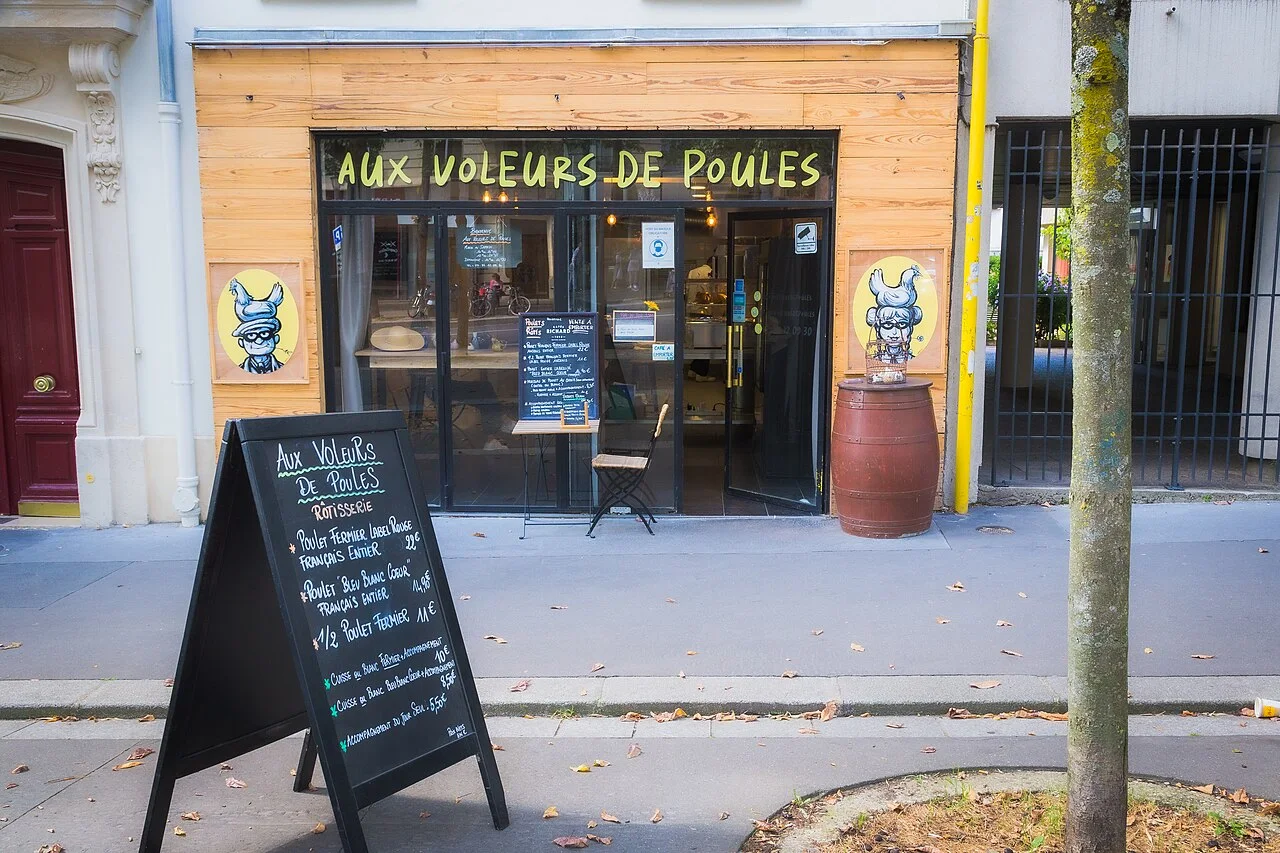
Even now, queues form outside market and street rotisseries on Sunday mornings. Some take home amber-coloured chickens from revolving spits; others roast at home and serve with jus. The form may vary, but carving a whole chicken for the family on Sunday remains a foundation of French food culture.

Bring the full course home next weekend.
Bring every dish to the table at its best.
Choose the dishes you want to cook, and Chef Authen handles the shopping list and the day-of schedule. The Tabelia app turns everything from starter to main into one coordinated course in your kitchen.
- One shopping listBuilt automatically from your menu and any substitutions, ready to check off.
- One timelineEvery dish’s waiting and cooking time combined into a single schedule.
- Answers beyond the recipeFrom judging the heat to adapting on the fly, Chef Authen answers with concrete criteria, not guesses.