 TABELIA
AUTHENTIC RECIPE
Polenta FrittaCrisp Fried Polenta
- Total
- 2 hr 55 min
- Difficulty
- ★★☆☆☆
- Serves
- 4 servings
- Prep 10 min
- Cook 45 min
- Rest 2 hr
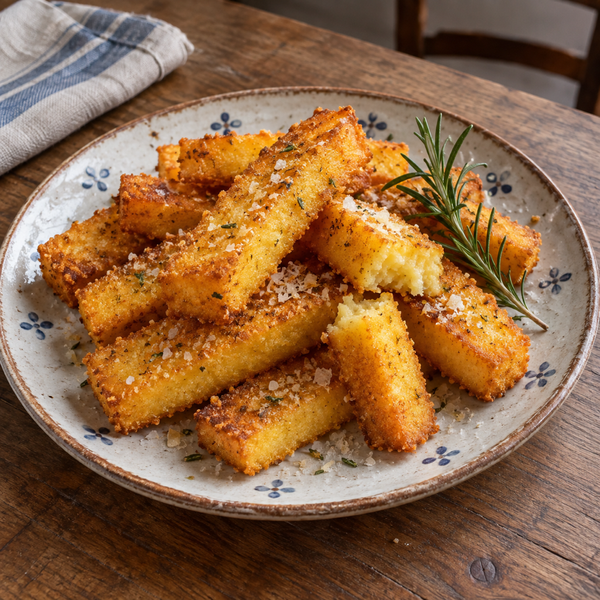
Soft-cooked polenta is set in a mould, cut into sticks and fried until crisp outside and pleasantly chewy within. An authentic fritto enjoyed with drinks in Veneto bars, flavoured with rosemary and Parmigiano mixed into the polenta.
AUTHENTICITY SCORE
Authenticity Score
This is the standard recipe, exactly as it’s made where it comes from — the highest Authenticity Score possible. Substituting ingredients changes this score; the app shows exactly how, ingredient by ingredient.
Ingredients (4 servings)
100Authenticity- Polenta cornmeal250 gMedium-ground.
- Water1000 ml
- Salt10 g
- Rosemary2 sprigsFinely chop the leaves and mix into the polenta.
- Parmigiano Reggiano40 gGrate and mix into the polenta.
- Peanut oil for frying600 mlHeat to 190°C for frying.
- Coarse sea salt for finishing2 gSprinkle over immediately after frying.
Method
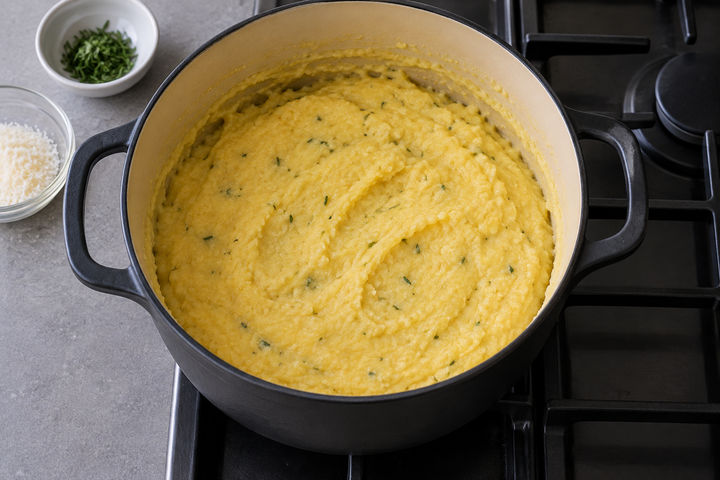
Cook the polenta and mix in rosemary and cheese
- 1 Finely chop the leaves from 2 rosemary sprigs.
- 2 Put 1000ml water and 10g salt in a heavy pot over high heat.
- 3 Just before boiling, lower the heat and gradually whisk in 250g polenta cornmeal.
- 4 Switch to a wooden spoon and cook over low heat for 30 minutes.
- 5 Turn off the heat and mix in the chopped rosemary and 40g grated Parmigiano.
Ready when
After 30 minutes, proceed when a wooden-spoon trail closes slowly and the rosemary is fragrant.
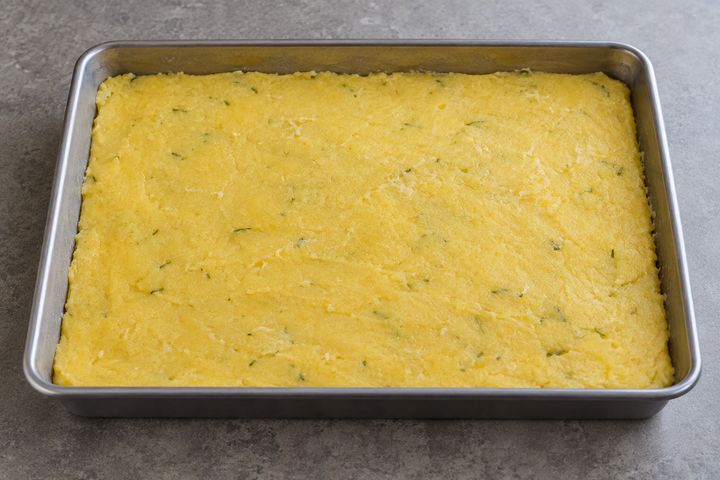
Set in a mould for at least 2 hours
- 1 Lightly grease a tray about 20 × 25 cm with additional olive oil.
- 2 Pour in the polenta evenly to a depth of 2cm and level it.
- 3 Cool at room temperature for 30 minutes, then refrigerate for at least 2 hours, preferably overnight.
Ready when
After at least 2 hours of chilling, proceed when pressing leaves no indentation. It is firm enough when a knife releases it from the edge.
Caution
Insufficient setting causes it to fall apart when fried; always chill for at least 2 hours.
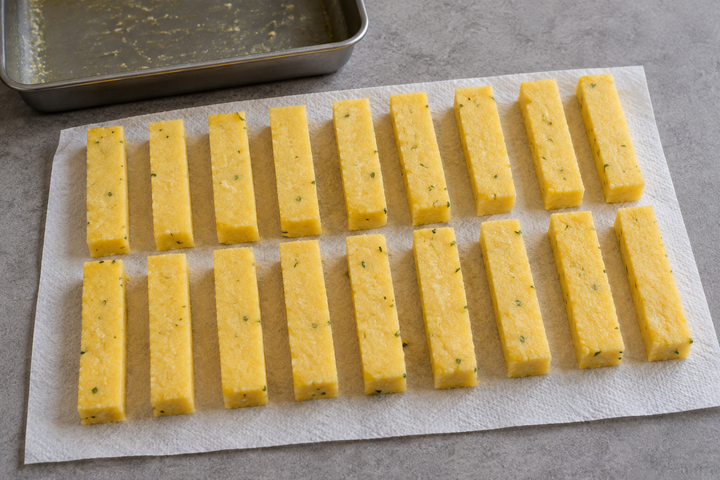
Cut into sticks
- 1 Remove the polenta from the mould.
- 2 Cut into sticks about 2×8cm.
- 3 Arrange on kitchen paper to remove surface moisture.
Ready when
Proceed when evenly cut and free of excess surface moisture.
Caution
Moisture causes oil to splatter; always dry the surface before frying.
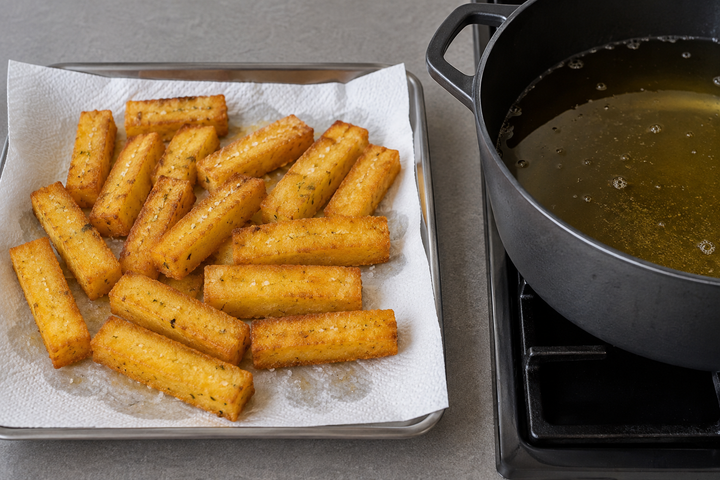
Fry until crisp
- 1 Heat 600ml peanut oil in a pot to 190°C.
- 2 Fry a few polenta sticks at a time for 4–5 minutes.
- 3 Transfer to kitchen paper when golden.
- 4 Sprinkle with 2g coarse salt while freshly fried.
Ready when
After 4–5 minutes, they are ready when evenly golden and the oil bubbles have become smaller and fewer.
Caution
Too many at once lower the oil temperature and make them greasy; fry small batches.
Low oil temperature makes the crust absorb oil and turn heavy; maintain 190°C.
Tips
They are best freshly fried; eat within 5 minutes of finishing.
About this dish
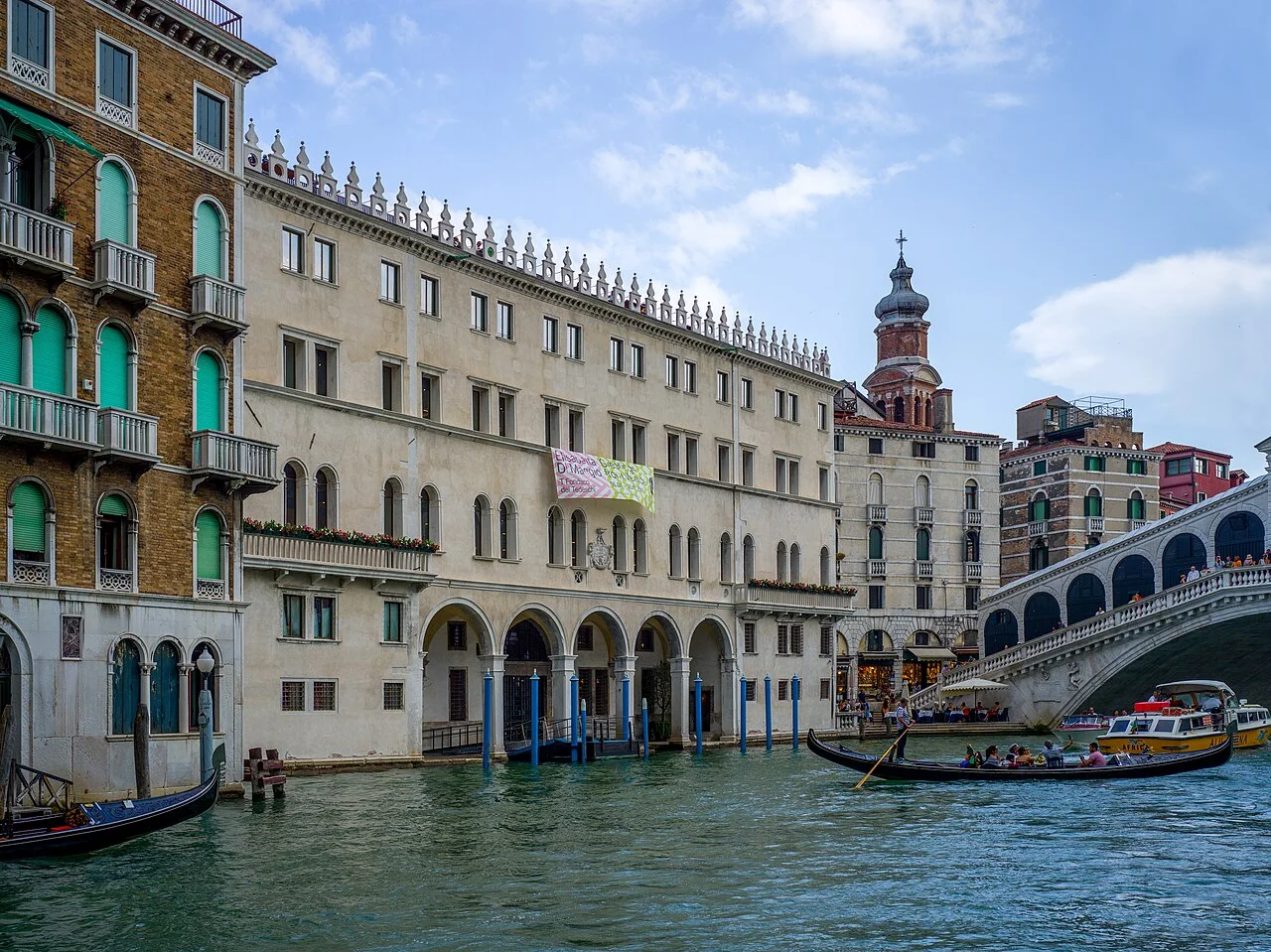
In Venice’s bacari, customers stand and order a small glass of wine called an ombra, choosing bite-sized foods from the plates on display. These are cicchetti: fried polenta topped with baccalà mantecato, or polenta with small shrimp called schie, are among them. The custom is to begin the first glass as early as 10 or 11 in the morning.
Ombra means shadow. The name is traditionally linked to vendors who moved their barrels with the shadow of Saint Mark’s bell tower to protect the wine from the sun. Bacaro is said to derive either from Bacchus, the god of wine, or from the dialect expression far bacara, to celebrate noisily. It was a place to chat standing up over an inexpensive glass and a small snack.
On the Veneto plain, white polenta predominated until after the Second World War, while yellow polenta belonged to the mountains. White corn from the Piave basin appears in a late-17th-century farming book. It nearly disappeared, but a Slow Food Presidium now protects its seed under the name Biancoperla. White polenta, long served with lagoon fish and dried cod, fits into the hand of a standing wine drinker when set and fried.
Bring the full course home next weekend.
Bring every dish to the table at its best.
Choose the dishes you want to cook, and Chef Authen handles the shopping list and the day-of schedule. The Tabelia app turns everything from starter to main into one coordinated course in your kitchen.
- One shopping listBuilt automatically from your menu and any substitutions, ready to check off.
- One timelineEvery dish’s waiting and cooking time combined into a single schedule.
- Answers beyond the recipeFrom judging the heat to adapting on the fly, Chef Authen answers with concrete criteria, not guesses.