 TABELIA
AUTHENTIC RECIPE
Pasta e ZuccaNeapolitan Pasta and Pumpkin
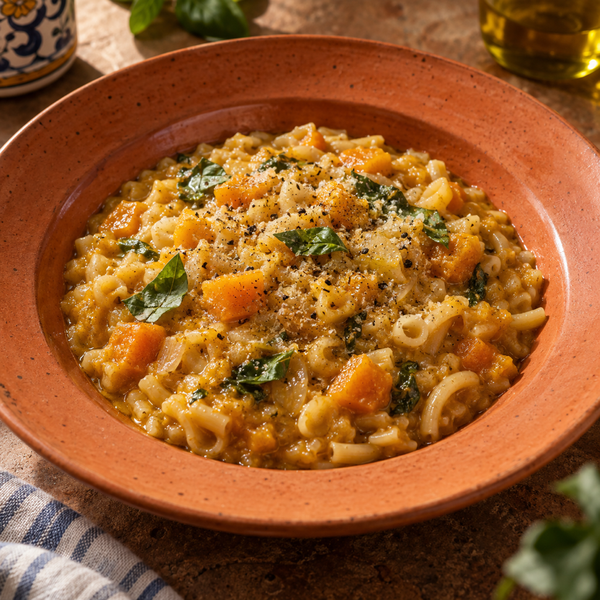
Pasta e zucca is made in Neapolitan homes from autumn through winter. Pumpkin is slowly simmered until it breaks down in oil flavoured with garlic and chilli, then pasta mista, a mixture of leftover short pasta, is added directly and cooked like risotto with gradual additions of boiling water: pasta risottata. The usual home method uses water rather than stock. Keeping the starch in the pot instead of draining it produces a thick, creamy dish without cream. Managing the heat and timing the additions of water are the essential skills.
AUTHENTICITY SCORE
Authenticity Score
This is the standard recipe, exactly as it’s made where it comes from — the highest Authenticity Score possible. Substituting ingredients changes this score; the app shows exactly how, ingredient by ingredient.
Ingredients (2 servings)
- Kabocha pumpkinNet weight after removing skin, seeds and fibres. Cut 300g into 2cm cubes and 300g into 5mm cubes: mash the former into the sauce and retain the latter for texture.600 g
- Mixed short pastaA mixture of dry shapes such as ditalini, tubetti and broken spaghetti.180 g
- WaterBoil in a small pan and keep hot. Use 300ml + 200ml + 100ml 2 times, totalling 700ml, and reserve the remaining 200ml to adjust consistency.900 ml
- Yellow onionFinely dice to 5mm for the flavoured oil.60 g
- Extra virgin olive oil30ml for the flavoured oil base and 10ml for the final mantecatura.40 ml
- Grated Provolone PiccanteAdd off the heat and melt with residual warmth. Available from imported-cheese shops or online.40 g
- GarlicPeel, lightly crush with the flat of a knife and remove the germ.2 cloves
- Dried red chilliRemove seeds and tear in half.1 piece
- Fresh basilReserve 5 leaves for the end of simmering and 3 for finishing.8 leaves
- Parmigiano rindScrape the surface with a knife and wash; submerge during simmering and remove before finishing.15 g
- Fine salt3g for simmering the pumpkin and 3g to adjust the pasta at the end.6 g
- Black pepperFreshly grind and divide over 2 plates to finish.0.5 teaspoons
Method
Boil and hold 900ml water; cut the pumpkin in two sizes and prepare the aromatics
- 1 Meanwhile(While waiting for the water to boil) prepare the pumpkin and aromatics.
- 2 First put 900ml water in a small pan and bring to the boil over medium heat.
- 3 Once boiling, lower the heat to very low and keep just below boiling.
- 4 Remove the pumpkin skin, seeds and fibres with a spoon and knife to obtain 600g net.
- 5 Cut 300g pumpkin into 2cm cubes and put in a bowl.
- 6 Cut the other 300g into 5mm cubes and put in a separate bowl.
- 7 Peel 2 garlic cloves, lightly crush with the flat of a knife and remove the central germ.
- 8 Finely dice 60g onion to 5mm.
- 9 Remove the stalk and seeds from 1 dried red chilli and tear in half by hand.
- 10 Thinly scrape the surface of 15g Parmigiano rind with a knife, rinse and pat dry.
- 11 Wash and dry 8 basil leaves; set aside 5 for simmering and 3 for finishing.
Ready when
Proceed when 900ml water is held steaming in the small pan, the 2cm and 5mm pumpkin cubes are in separate bowls, and garlic, onion, chilli, cheese rind and basil are ready.
Caution
Stabilize hard pumpkin cut-side down and take care that the knife does not slip.
Infuse the garlic-chilli oil and soften the onion until translucent
- 1 Put 30ml extra virgin olive oil, 2 crushed garlic cloves and the torn pieces of 1 chilli in a cold heavy pot about 24cm across; set over low heat to make olio aglio peperoncino, olive oil infused with garlic and chilli.
- 2 Cook gently for 3–4 minutes, turning the garlic occasionally, until its edges are very pale golden.
- 3 Remove the 2 cloves with tongs to a plate. Their aroma is now in the oil; do not return them to this dish. Leave the chilli in the pot.
- 4 Add 60g diced onion and cook over low heat for 6–8 minutes, stirring occasionally with a wooden spoon.
Ready when
Proceed when the oil carries the garlic and chilli aromas and the onion is translucent and tender without browning.
Coat the pumpkin in oil and bring to a simmer with 300ml boiling water
- 1 Add the 300g of 2cm pumpkin cubes, raise to medium heat and turn with a wooden spoon for 3 minutes to coat all sides in oil.
- 2 Add the 300g of 5mm cubes and stir for another 2 minutes to coat them likewise.
- 3 Sprinkle in 3g salt and submerge the washed 15g Parmigiano rind at the side of the pot.
- 4 Pour in 300ml of the hot water and bring briefly to the boil over medium heat.
Ready when
Proceed when the liquid reaches about 2/3 of the pumpkin layer and the whole pot is gently bubbling.
Simmer gently until the pumpkin is nearly collapsing
- 1 Meanwhile(While simmering) keep the small pan of water warm over low heat.
- 2 Reduce to low heat, cover with the lid slightly ajar and simmer for 20 minutes.
- 3 Every 5 minutes, sweep a wooden spoon once along the base to prevent sticking.
- 4 Submerge 5 basil leaves 5 minutes before the end.
Ready when
Proceed when a skewer passes easily through the 2cm cubes and the liquid has reduced to about 1/3 of the pumpkin layer.
Mash only the 2cm pumpkin cubes into a sauce
- 1 Over low heat, press the 2cm pumpkin cubes against the side of the pot with the back of a wooden spoon to mash them into a sauce.
- 2 Choose where to press carefully so the 5mm cubes remain intact.
- 3 Stir broadly just once to combine the mashed pumpkin and cooking liquid.
Ready when
Proceed when the pot contains a thick orange sauce and the 5mm cubes still have defined corners.
Add dry pasta mista and cook risottata with gradual additions of water
- 1 Meanwhile(While cooking) warm 2 serving plates in a water bath or a 60°C oven.
- 2 Return to medium heat, add 200ml boiling water and bring briefly to the boil.
- 3 Add 180g dry pasta mista, a mixture of leftover short pasta shapes, directly to the pot and stir constantly for 1 minute to distribute.
- 4 Keep a gentle bubbling over medium heat and cook pasta risottata: allow the pasta to absorb water without draining, retaining the starch in the pot.
- 5 When liquid reduces enough to expose the base briefly as you draw a spoon through, add 100ml boiling water. Do this 2 times, using 700ml water in total.
- 6 Stir thoroughly from the bottom every 2 minutes to prevent the pasta sticking.
- 7 After 8 minutes, take out 1 piece of the thickest pasta and bite it to check its centre. Repeat every 1 minute thereafter.
- 8 When a very fine white core remains in the thickest shape, add 3g salt, taste and adjust.
- 9 Lift out the Parmigiano rind with cooking chopsticks and discard.
- 10 If the base is drying and likely to scorch, add water from the reserved 200ml in 50ml increments.
Ready when
Proceed when the thickest pasta is al dente with a fine core and the contents fall slowly from a spoon in a thick stream.
Caution
Different shapes cook at different rates; check the centre of the thickest one.
Mantecare off the heat and finish with oil and black pepper
- 1 Turn off the heat completely and wait 1 minute for the pot to cool slightly.
- 2 Add all 40g grated Provolone Piccante and stir vigorously from the bottom for 30 seconds to mantecare: mix cheese or oil in off the heat to emulsify with starch, giving the sauce gloss and body.
- 3 Drizzle in 10ml extra virgin olive oil and stir for another 15 seconds until glossy.
- 4 If too thick, loosen with reserved hot water 1 tablespoon (15ml) at a time.
- 5 Divide between 2 warmed plates and gently level the surface with the back of a spoon.
- 6 Tear the reserved 3 basil leaves over the 2 plates and divide 1/2 teaspoon freshly ground black pepper between them.
Ready when
The dish is ready when the cheese has melted evenly without strings and the pasta spreads slowly on the plate without immediately running.
Caution
Continued heating after adding the cheese makes separation more likely.
About this dish
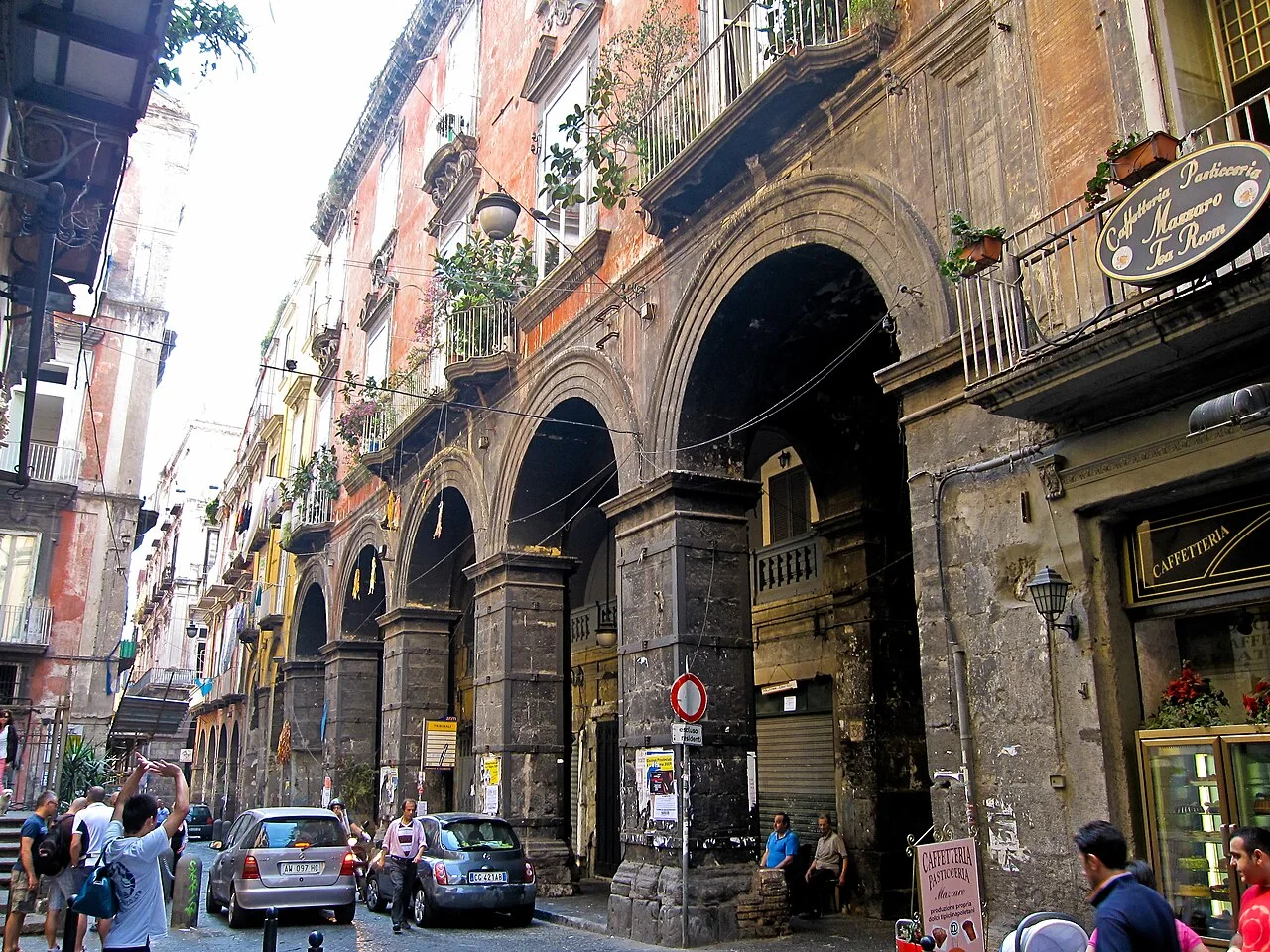
In Naples, one-pot “pasta e…” dishes pairing pasta with a single vegetable or pulse have long supported family meals. Pasta e zucca, made with pumpkin, belongs alongside pasta e fagioli and pasta e patate.
In autumn, large pumpkins appear at Neapolitan market stalls, cut into portions and sold by weight. Their keeping qualities mean they remain in kitchens into winter, returning repeatedly for lunch and dinner through the colder months.
The pasta is pasta mista, a mixture of several short shapes. It once consisted of odds and ends left at the bottom of bulk containers; today, pasta factories sell it already mixed. The method of cooking without making broth has also been passed down as home cooking.

Bring the full course home next weekend.
Bring every dish to the table at its best.
Choose the dishes you want to cook, and Chef Authen handles the shopping list and the day-of schedule. The Tabelia app turns everything from starter to main into one coordinated course in your kitchen.
- One shopping listBuilt automatically from your menu and any substitutions, ready to check off.
- One timelineEvery dish’s waiting and cooking time combined into a single schedule.
- Answers beyond the recipeFrom judging the heat to adapting on the fly, Chef Authen answers with concrete criteria, not guesses.