 TABELIA
AUTHENTIC RECIPE
Pasta chi Vroccoli ArriminatiPalermitan Pasta with Stirred Cauliflower
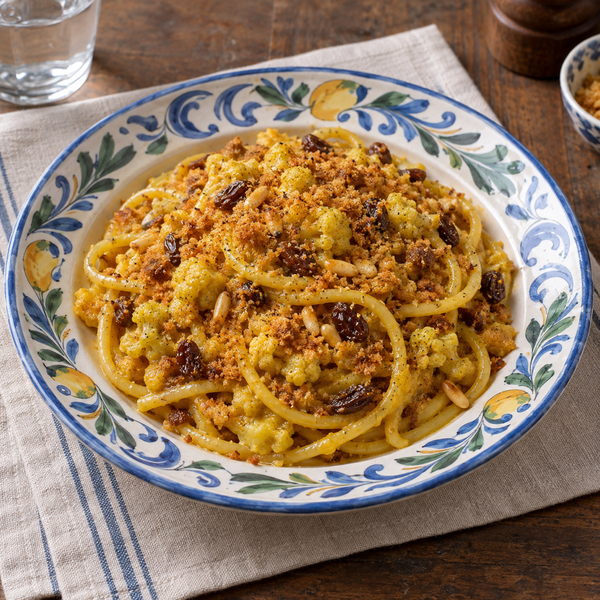
A characteristic Palermo dish using a whole green cauliflower, called “vruocculu” in Sicily, then reusing its cooking water for the pasta to retain all its aroma and colour. Anchovies, raisins, pine nuts, saffron and concentrated tomato bring the sweet-savoury elements inherited from Arab rule into the soffritto. As the name arriminare, “to stir and work together”, suggests, the boiled cauliflower is broken up and mashed with a wooden spoon into a creamy coating. The finish is golden muddica atturrata, toasted breadcrumbs, rather than cheese; their coarse texture and bittersweet toasted flavour complete the dish.
AUTHENTICITY SCORE
Authenticity Score
This is the standard recipe, exactly as it’s made where it comes from — the highest Authenticity Score possible. Substituting ingredients changes this score; the app shows exactly how, ingredient by ingredient.
Ingredients (4 servings)
- BucatiniDried, thick hollow long pasta.400 g
- Green cauliflower (Sicilian variety)1 whole head. Remove outer leaves, boil whole, then divide into florets and stems.900 g
- White onionSlice 2mm thick for the soffritto base.150 g
- Salt-packed anchovies1 fish yields 2 fillets. Rinse off the salt, remove backbone and tail to obtain 12 fillets.6 fish
- Small raisins (passolina)Soak in 200ml lukewarm water for 15 minutes, then squeeze dry.50 g
- Pine nutsRaw; dry-toast before adding.50 g
- Saffron threadsSoak in 50ml cauliflower cooking water for 10 minutes to release colour and aroma.0.5 g
- Concentrated tomato paste (estratto)Loosen with 30ml cooking water before adding.20 g
- Extra virgin olive oil60ml for the soffritto and 30ml for toasting breadcrumbs.90 ml
- Stale bread interior for breadcrumbsCoarsely crumble the white interior of rustic semolina bread by hand for muddica atturrata.100 g
- Coarse sea salt40g for 4L cooking water, 10g/L. The remaining 5g is for 500ml boiling water used to replenish it.45 g
- WaterBoil the cauliflower in 4L and reuse for the pasta. Boil 500ml in another pan and reserve to replenish the water.4.5 L
- Fine saltTo adjust the sauce seasoning.3 g
- Black peppercornsFreshly grind to finish.1 g
Method
Prepare raisins, anchovies, breadcrumbs, onion and cauliflower
- 1 Meanwhile(During the 15-minute raisin soak) desalt the anchovies and prepare the breadcrumbs, onion and cauliflower.
- 2 Soak 50g raisins in 200ml lukewarm water.
- 3 Rinse 6 salt-packed anchovies under running water for 20–30 seconds to remove surface salt; open with your fingers, remove backbones and tails to make 12 fillets, and pat dry.
- 4 Crumble 100g stale bread interior by hand into irregular pieces about 5mm across.
- 5 Slice 150g white onion 2mm thick.
- 6 Remove the outer leaves from the 900g green cauliflower, trim the base flat and wash thoroughly while keeping it whole.
- 7 After 15 minutes of soaking, squeeze the raisins firmly dry with both hands.
Ready when
The raisins should be plump.
No grains of salt or backbones should remain on the anchovies.
The cauliflower should be washed and whole, with onion and breadcrumbs ready in separate bowls.
Caution
Prolonged soaking removes flavour from anchovies; rinse off the salt for only a few tens of seconds under running water.
Grinding the crumbs too finely in a processor loses the coarse finishing texture.
Do not separate the cauliflower into florets at this stage; boiling it whole is the established method.
Tips
In Palermo these crumbs are called muddica atturrata and replace cheese; a legacy of poorer times, they are also known as “the poor person’s Parmesan”.
Do not use the raisin soaking water in the dish, as it brings unwanted flavours.
Boil the whole cauliflower and reserve its water
- 1 Meanwhile(While waiting for the water to boil) prepare small bowls for soaking the saffron and loosening the tomato paste, and a tray for the cauliflower.
- 2 Bring 4L water and 40g coarse salt to the boil over high heat in a deep pot at least 26cm across.
- 3 Lower 1 whole cauliflower into the boiling water stem-side down; if it floats, hold it down with a wooden spoon or drop lid and boil over medium heat for 15–18 minutes.
- 4 When a skewer passes through the centre of the core without resistance, lift it out carefully with a slotted ladle and tongs and place on a tray.
- 5 Leave the cooking water in the pot, cover and keep warm over very low heat with the surface barely moving.
Ready when
A skewer should pass easily through the centre of the core and the florets should break when gently pressed with a finger.
The water should be pale green.
The covered water should remain just below boiling.
Caution
Never discard the cooking water: it serves both to cook the pasta and to loosen the sauce.
Holding it uncovered allows too much evaporation, leaving too little for the pasta.
Overboiling until it falls apart makes the later mixture watery; lift out as soon as a skewer passes through.
Tips
In Palermo it is boiled whole, or halved if too large. Boiling separate florets loses too much sweetness and aroma to the water, leaving the vegetable depleted.
Infuse saffron, loosen tomato paste and break up the cauliflower
- 1 Meanwhile(During the 10-minute saffron infusion) divide the cauliflower and slice the stems.
- 2 Take 50ml cooking water into a small bowl, lightly crush 0.3g saffron with your fingers and soak for 10 minutes.
- 3 In another bowl, smoothly dissolve 20g concentrated tomato paste in 30ml cooking water.
- 4 When the cauliflower is cool enough to handle, cut away the core and break into 3–4cm florets.
- 5 Peel thick stems with a vegetable peeler, cut into 1cm rounds and return to the tray with the florets.
Ready when
The saffron water should be deep orange.
The tomato paste should be smoothly dissolved without lumps.
The tray should hold 3–4cm florets and sliced stems.
Caution
Each removal reduces the cooking water; always replace the lid and maintain very low heat.
Handling the hot florets forcefully destroys their shape; only break them apart at this stage.
Tips
Infusing saffron before adding it dissolves the pigment and spreads an even golden colour through the pot.
Toast the pine nuts and prepare muddica atturrata
- 1 Heat a dry frying pan over medium-low heat and toast 50g pine nuts for 3–4 minutes, moving constantly with a wooden spoon; transfer to a plate when pale golden.
- 2 Warm 30ml olive oil over medium heat in the same pan and add 100g crumbled bread.
- 3 Cook for 5–7 minutes, stirring constantly to coat all the crumbs in oil and drive off moisture.
- 4 Immediately transfer the toasted crumbs to a cold plate or tray, spread flat and cool.
Ready when
The pine nuts should be lightly coloured and have a fragrant, resinous toasted aroma.
The crumbs should be deep golden and make a crisp, dry sound when pressed with a wooden spoon.
Caution
Pine nuts are oily and can burn within about 30 seconds of starting to colour; watch the pan continuously.
Crumbs left in the pan burn and turn bitter in the residual heat; move them immediately once coloured.
Tips
They become crisper once completely cool; do not return them to the pan before finishing.
Incorporate the sweet-savoury elements into the soffritto
- 1 Meanwhile(During the onion’s 10–12 minutes of cooking) boil 500ml water in another pan, cover and reserve for replenishing.
- 2 Warm 60ml olive oil in a deep frying pan or pot over medium-low heat.
- 3 Add 150g sliced white onion and cook over low heat for 10–12 minutes, turning with a wooden spoon without browning.
- 4 Add the 12 anchovy fillets and cook over low heat for 2–3 minutes, pressing with the spoon until dissolved into the oil.
- 5 Add the loosened tomato paste and cook over low heat for 2 minutes to soften its acidity.
- 6 Add the squeezed 50g raisins and toasted 50g pine nuts and cook together over low heat for 1 minute.
- 7 Pour in all 50ml saffron water with its threads and simmer over low heat for 1 minute to combine.
Ready when
The onion should be translucent and soft without brown colouring.
The anchovies should disappear completely, leaving the oil a cloudy grey-brown.
The pot should be deep orange, with sweet aromas and fish savour united.
Caution
Browning the onion creates bitterness that overwhelms delicate saffron; cook it sweetly without colour.
Anchovies burn quickly and develop an unpleasant fishy smell over high heat; always dissolve over low heat.
Tips
Raisins, pine nuts, saffron and anchovies form the sweet-savoury agrodolce pattern that arrived in Sicily during Arab rule and underpins Palermo’s cooking.
Mash and stir the cauliflower: arriminare
- 1 Meanwhile(During the 12 minutes of stirring) cover the cauliflower-water pot and return it to a full boil over high heat for the pasta.
- 2 Add all the large cauliflower pieces to the pot of soffritto, the slowly cooked aromatic vegetable base.
- 3 Over medium heat, work and stir for 10–12 minutes, pressing florets against the side with a wooden spoon.
- 4 Whenever evaporation threatens sticking, add cauliflower water in 50ml portions and keep working until a total of 200ml is used.
- 5 Season with 3g fine salt and stir for another 1 minute.
Ready when
About 8/10 of the florets should be creamy, with about 2/10 remaining in small pieces.
A spoon drawn across the base should leave a trail for a few seconds as the sauce flows slowly back.
Caution
Stirring without enough moisture scorches the base and taints the whole dish; add cooking water as you work.
Do not make a completely smooth purée; a few pieces define the texture.
Tips
Use 200ml cooking water as the guide, adjusting within ±50ml if a wide pan or stronger heat causes faster evaporation.
Arriminare means to work and stir together in Sicilian dialect and gives the dish its name; pressing with the wooden spoon unites its flavours.
Cook the pasta and combine with the sauce
- 1 Meanwhile(While the pasta cooks) warm 4 plates with hot water or in a low oven.
- 2 Check the boiling liquid volume; if below 3.5L, add up to 500ml reserved boiling water and 5g coarse salt per 500ml added to maintain 10g/L.
- 3 At a full boil over high heat, add 400g bucatini, separate with cooking chopsticks and cook for 2 minutes less than the package time.
- 4 Just before it is ready, reserve 300ml cooking water in a measuring jug.
- 5 Drain the bucatini, transfer to the cauliflower pot and add 150ml reserved water.
- 6 Toss over medium heat for 2–3 minutes, repeatedly lifting and turning with tongs.
- 7 If too tight, add the remaining reserved water in 50ml portions, up to 150ml, to maintain a thick sauce.
Ready when
The pasta should be just short of having only a very fine white line at its centre, with golden sauce coating it all over.
The sauce should cling to the pasta rather than run off when the pot tilts.
Caution
Adding 400g pasta to substantially less than 3.5L drops the temperature, makes the pasta gluey and concentrates saltiness; always check before adding it.
The water already contains 10g/L salt and concentrated cauliflower flavour; taste before adding salt.
Water enters the hollow bucatini and drains rapidly after straining; combine with the sauce promptly.
Tips
Reserve a generous 300ml cooking water because the worked cauliflower absorbs more than expected.
Plate and finish with toasted crumbs
- 1 Divide the pasta among 4 warmed plates, lifting into mounds with tongs.
- 2 Divide half the toasted crumbs evenly over the 4 plates.
- 3 Freshly grind 1g black pepper over the plates.
- 4 Serve the remaining crumbs alongside in a small bowl.
Ready when
The crumb layer should sit dry on the golden pasta without becoming damp.
Caution
Mixing crumbs into the pot makes them absorb moisture and lose their coarse texture; always add after plating.
Tips
In Palermo neither cheese nor green herbs are added; toasted crumbs and freshly ground black pepper alone are the customary finish.
Adding more crumbs at the table just before eating is the trattoria custom.
About this dish
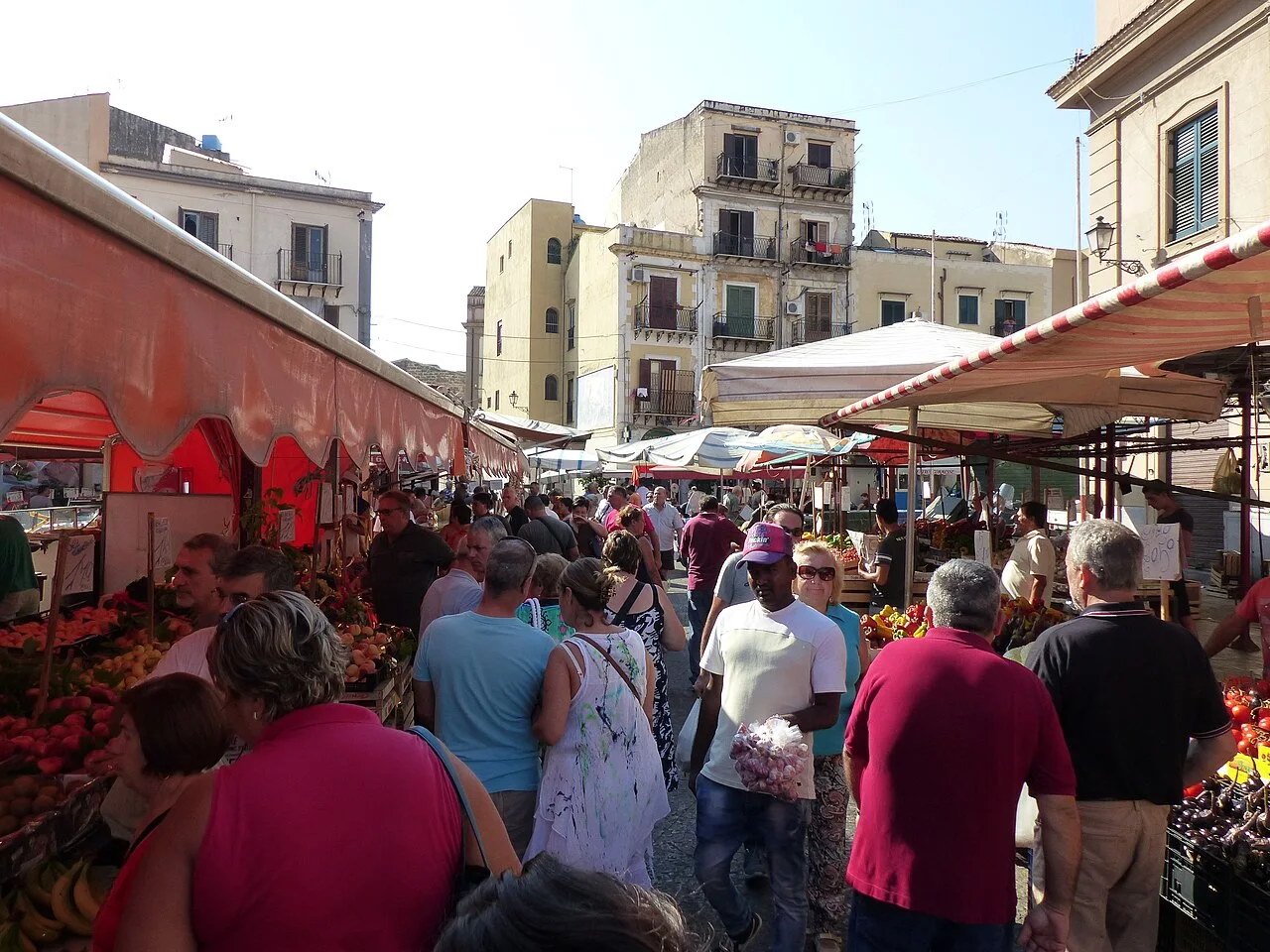
In western Sicily, centred on Palermo, cauliflower reaches its peak in winter. Green and purple local varieties are grown on the island and piled by colour at markets.
This dish includes saffron, raisins and pine nuts, ingredients brought to the island during Arab rule from the 9th century onward that became firmly established. Arriminati means “stirred” in dialect: breaking up the cauliflower and stirring it into the pasta gives the preparation its name.
It remains a winter staple in Palermo’s homes and trattorias. Finishing with toasted breadcrumbs instead of cheese is a custom shared by the island’s fish-based dishes.

Bring the full course home next weekend.
Bring every dish to the table at its best.
Choose the dishes you want to cook, and Chef Authen handles the shopping list and the day-of schedule. The Tabelia app turns everything from starter to main into one coordinated course in your kitchen.
- One shopping listBuilt automatically from your menu and any substitutions, ready to check off.
- One timelineEvery dish’s waiting and cooking time combined into a single schedule.
- Answers beyond the recipeFrom judging the heat to adapting on the fly, Chef Authen answers with concrete criteria, not guesses.