 TABELIA
AUTHENTIC RECIPE
Minestra di Ceci e CastagneChickpea and Chestnut Soup
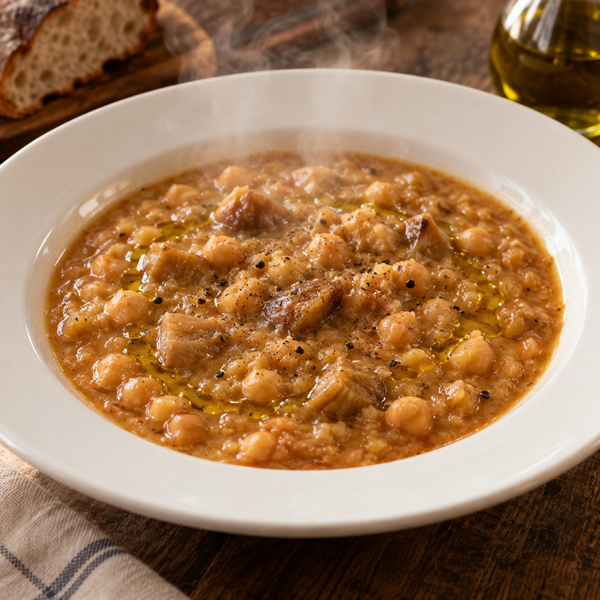
A winter minestra from the mountains of Tuscany, made by soaking dried chickpeas and dried chestnuts separately for 12 hours, then slowly simmering them together until they begin to break down and combine. The starch of the chickpeas and sweetness of the chestnuts meld to thicken the soup, with no flour or cream. The key is to control its consistency solely through the quantity of liquid and the heat. Serve over toasted stale Tuscan bread, finishing with uncooked olive oil and coarsely ground black pepper for fragrance. The 12-hour soaking period is additional to the cooking time.
AUTHENTICITY SCORE
Authenticity Score
This is the standard recipe, exactly as it’s made where it comes from — the highest Authenticity Score possible. Substituting ingredients changes this score; the app shows exactly how, ingredient by ingredient.
Ingredients (2 servings)
- Dried chickpeasSoak for 12 hours in water with baking soda. Remove broken chickpeas and small stones180 g
- Dried chestnutsSoak separately for 12 hours, then remove any remaining inner skin or darkened areas120 g
- Water1000 ml for soaking the chickpeas, 600 ml for soaking the chestnuts, 1200 ml for simmering and up to 300 ml boiling water to replace evaporation3100 ml
- Extra virgin olive oilUse 30 ml for the soffritto and 15 ml uncooked for finishing45 ml
- Stale Tuscan breadSome regions traditionally use unsalted bread. Use a locally available bread that is not sweet2 pieces
- Red onionCut into 5 mm dice60 g
- GarlicCrush 1 clove for sautéing; use 1 clove to rub the toasted bread2 cloves
- RosemaryA sprig about 10 cm long. Infuse the oil with the whole sprig and leave it in while simmering; remove before finishing1 piece
- SageFresh leaves. Simmer with the whole aromatic sprig and remove before finishing2 pieces
- Bay leafFor simmering; remove before finishing1 piece
- Canned peeled tomatoesCrush finely by hand80 g
- SaltAdd after the chickpeas are tender9 g
- Black pepperCoarsely grind to finish and sprinkle over the 2 bowls0.5 tsp
- Baking sodaDissolve in 1 L chickpea soaking water to soften the skins2 g
Method
Soak the chickpeas and dried chestnuts separately for 12 hours
- 1 MeanwhileDuring the 12-hour soak, change the chestnut water once if it becomes cloudy, and weigh the chestnuts down with a plate or similar so they stay submerged.
- 2 Spread 180 g dried chickpeas in a bowl and remove broken or discolored chickpeas and small stones.
- 3 Put 1000 ml water in another bowl and dissolve 2 g baking soda completely.
- 4 Submerge the chickpeas in the baking soda water, cover with plastic wrap and leave in a dark place at room temperature for 12 hours.
- 5 Put 120 g dried chestnuts and 600 ml water in another bowl and likewise leave in a dark place at room temperature for 12 hours.
Ready when
The chickpeas have finished soaking when they have swollen to at least 2 times their original size and the surface yields slightly when pinched.
The chestnuts have finished soaking when their edges are rounded, they feel springy and a fingernail enters lightly.
Caution
Soak in the refrigerator and do not leave at room temperature for a long time.
Finish preparing the chickpeas and chestnuts and chop the aromatics
- 1 Drain the chickpeas in a colander, rinse thoroughly under running water until the slippery baking soda residue is gone, and drain well.
- 2 Drain the chestnuts and discard their soaking liquid. Inspect them 1 by 1 and use the tip of a knife to scrape off any remaining inner skin or darkened areas.
- 3 Break large chestnuts in half so all the pieces are about 2 cm.
- 4 Cut 60 g red onion into 5 mm dice.
- 5 Crush and peel 1 garlic clove with the flat of a knife; reserve the other 1 unpeeled for the finishing bread.
- 6 Put 80 g canned peeled tomatoes in a bowl and crush finely by hand.
- 7 Rinse 1 rosemary sprig, 2 sage leaves and 1 bay leaf and pat dry. Keep the sprig and leaves whole, ready for simmering.
Ready when
The baking soda has been rinsed away when the chickpea washing water is clear and does not foam.
Preparation is complete when no dark inner skin remains on the chestnuts and the pieces are uniformly about 2 cm.
Caution
Baking soda left from rinsing causes an acrid taste.
Build the soffritto and reduce the tomatoes
- 1 MeanwhileWhile the onion cooks, start bringing 1200 ml water to a boil in another saucepan or kettle.
- 2 Put 30 ml extra virgin olive oil in a heavy saucepan, add 1 crushed garlic clove over low heat and warm for 2–3 minutes until fragrant.
- 3 Add 60 g red onion and cook over medium-low heat for 8–10 minutes, stirring with a wooden spoon until translucent and soft without browning. This makes the soffritto, a base of aromatics slowly cooked in oil.
- 4 Add 2 sage leaves, 1 bay leaf and 1 rosemary sprig and cook over low heat for 1 minute to infuse the oil.
- 5 Add 80 g crushed peeled tomatoes and cook over medium heat for 4–5 minutes, stirring with a wooden spoon until the moisture evaporates and the oil begins to separate from the tomato.
Ready when
The soffritto is ready when the onion is translucent and sweet-smelling, without any browning.
The tomatoes have reduced enough when red oil appears on the bottom of the pan and a trail drawn with the spoon remains for a few seconds.
Combine chickpeas and chestnuts, bring to a boil and skim
- 1 Add the drained chickpeas and prepared chestnuts to the soffritto. Turn with a wooden spoon for about 2 minutes to coat them in the oil and aromatics.
- 2 Pour in the 1200 ml prepared boiling water, raise the heat to high and bring the surface to a boil.
- 3 Skim off and discard the white foamy scum with a ladle 3–4 times.
Ready when
Proceed when the entire pot is boiling and almost no grayish-white foam remains to be skimmed.
Simmer very gently for 90 minutes to soften the chickpeas and chestnuts
- 1 MeanwhileWhile simmering, check whether rosemary leaves have fallen from the sprig and scattered. If only the bare stem remains, remove it with cooking chopsticks.
- 2 Leave the lid slightly ajar and simmer over very low heat for 90 minutes, with only an occasional bubble breaking the surface.
- 3 Every 30 minutes, stir gently from the bottom with a wooden spoon and check for sticking.
- 4 If the liquid falls below the ingredients, add boiling water in 100 ml increments, up to 300 ml in total, keeping the ingredients covered by 2 cm of liquid.
Ready when
Simmering is complete when a chickpea crushes between the fingers without resistance and a chestnut splits easily with chopsticks.
If the chickpeas are still firm in the center, continue simmering in further 15-minute intervals.
Add salt and mash a portion to thicken the broth
- 1 MeanwhileDuring the 30-minute simmer, cut 2 slices of unsweetened country bread 1.5 cm thick and halve 1 unpeeled garlic clove ready for use.
- 2 Remove and discard the 1 bay leaf, rosemary sprig and sage leaves with cooking chopsticks.
- 3 Add 9 g salt and stir throughout with a wooden spoon to dissolve it.
- 4 Ladle 1/3 of the chickpeas and chestnuts into a separate bowl, roughly crush with a fork or masher and return to the pot.
- 5 Simmer uncovered over low heat for 30 minutes to thicken, stirring every 5–8 minutes and scraping along the bottom.
Ready when
It is ready when it falls thickly from a ladle without forming strings.
Turn off the heat when intact chickpeas coexist with the thickened broth and a thin film forms on the surface.
Caution
Once thickened, it can easily scorch on the bottom.
Pour over toasted bread and finish with raw oil and black pepper
- 1 MeanwhileWhile the bread toasts, reheat the soup over low heat and keep it steaming.
- 2 Fill 2 deep plates 8/10 full with boiling water and leave for 1 minute. Empty and dry with a cloth to warm the plates.
- 3 Toast 2 slices of unsweetened country bread in a dry frying pan or on a grill over medium heat for 1.5–2 minutes on each side, until browned.
- 4 While hot, rub the entire surface of 1 side of each slice with the cut face of the halved unpeeled garlic.
- 5 Place 1 bread slice in each warmed deep plate.
- 6 Gently ladle the soup from the pot, dividing it evenly between the plates until the bread is completely covered.
- 7 Divide 15 ml extra virgin olive oil between the 2 plates, drizzling it in circles.
- 8 Coarsely grind 1/2 tsp black pepper and sprinkle over the 2 plates.
- 9 Leave in the plates for 3 minutes to let the bread absorb the soup.
Ready when
Serve when the bread has absorbed the soup and softened at the bottom, and the olive oil is fragrant on the surface.
About this dish
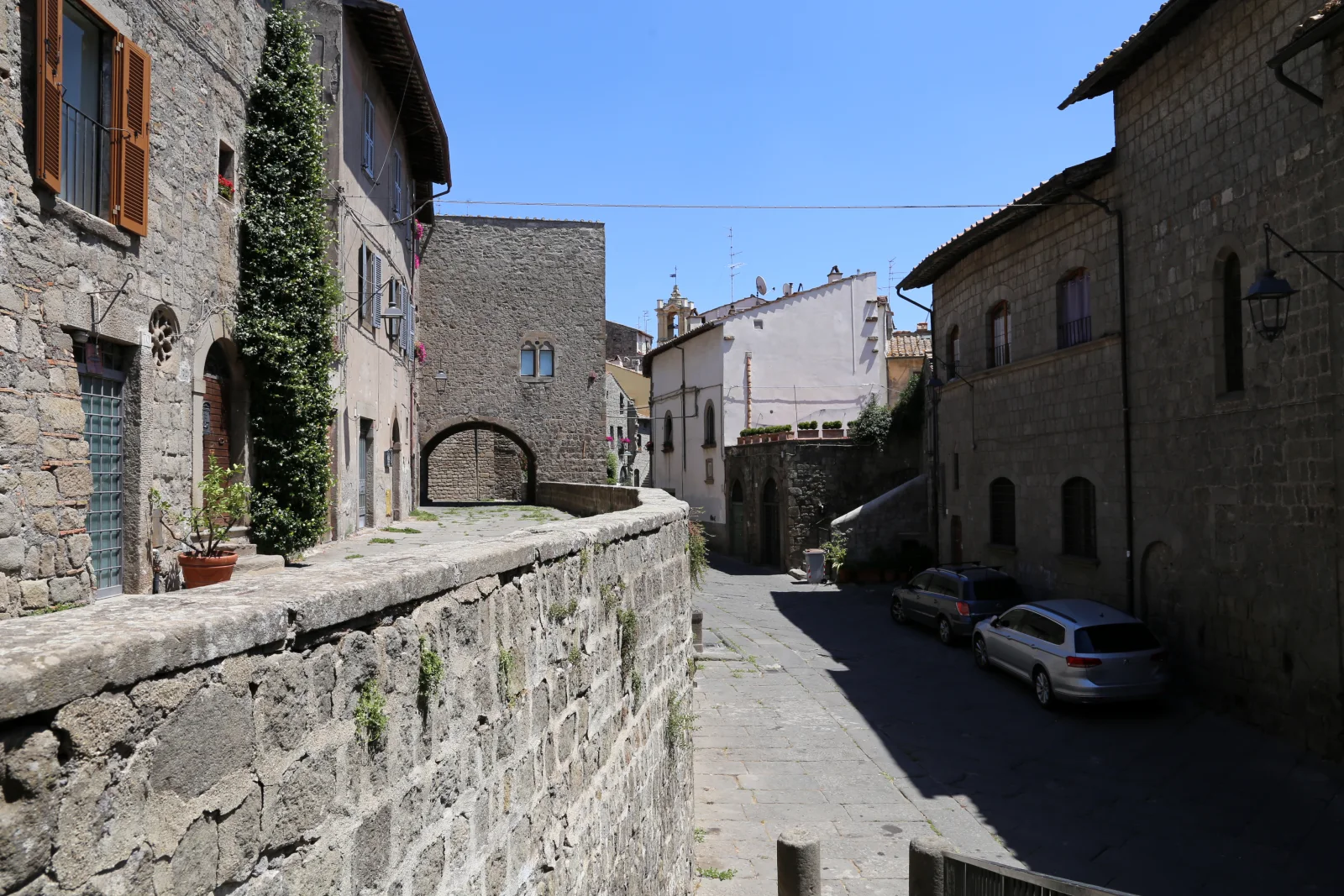
Chestnut and chickpea minestra is an autumn dish passed down in central Italy. This combination also appears in the local cooking of Viterbo, bringing legumes from the fields and the harvest of the mountains to the same table.
In chestnut season, people gather around warm bowls and enjoy it with bread. The herbs and treatment of the legumes vary from place to place, but they share the pleasure of turning the autumn harvest into a meal without waste.

Bring the full course home next weekend.
Bring every dish to the table at its best.
Choose the dishes you want to cook, and Chef Authen handles the shopping list and the day-of schedule. The Tabelia app turns everything from starter to main into one coordinated course in your kitchen.
- One shopping listBuilt automatically from your menu and any substitutions, ready to check off.
- One timelineEvery dish’s waiting and cooking time combined into a single schedule.
- Answers beyond the recipeFrom judging the heat to adapting on the fly, Chef Authen answers with concrete criteria, not guesses.