 TABELIA
AUTHENTIC RECIPE
Linguine al LimoneLemon Linguine
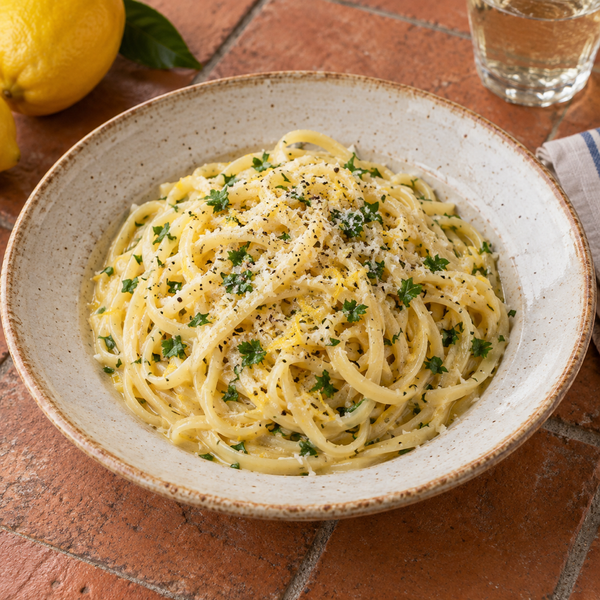
A summer pasta of Liguria and Campania, emulsifying the rich fragrance of Amalfi lemons with olive oil and rounding it out with Parmigiano. To preserve the lemon aroma without heating it, every stage requires quick, skillful handling.
AUTHENTICITY SCORE
Authenticity Score
This is the standard recipe, exactly as it’s made where it comes from — the highest Authenticity Score possible. Substituting ingredients changes this score; the app shows exactly how, ingredient by ingredient.
Ingredients (4 servings)
- Linguine320 g
- Pesticide-free lemonsUse the grated zest and juice. Choose unwaxed fruit.2 lemons
- Extra virgin olive oil80 ml
- Parmigiano ReggianoFinely grated.60 g
- Flat-leaf parsleyFinely chopped.1 small bunch
- Coarsely ground black peppera little
- Salt for the pasta water20g for 2L water: 10g per 1L.20 g
Method
Grate the lemon zest
- 1 Finely grate the zest of 2 lemons with a Microplane or cheese grater. Grate only the yellow skin, as the white pith is bitter.
- 2 Reserve the zest on a small plate.
Squeeze the lemon juice
- 1 Squeeze the 2 zested lemons to obtain 3–4 tbsp juice, about 50ml.
- 2 Keep the zest and juice separate.
Cook the linguine
- 1 Bring 2L water to the boil in a large pot over high heat.
- 2 When boiling, add 20g salt and cook 320g linguine for 1 minute less than the package time.
- 3 Reserve 1 cup cooking water, about 200ml.
Infuse the oil with the zest
- 1 Put 5 tbsp extra virgin olive oil, about 80ml, and the lemon zest in a frying pan and warm over low heat for just 30 seconds to release the aroma.
- 2 Excessive heat causes bitterness, so turn off the heat as soon as the oil is slightly warm.
Emulsify the lemon sauce
- 1 With the pan off the heat, add 4 tbsp cooking water, about 60ml, and 3 tbsp lemon juice, then shake the pan to emulsify with the oil.
Caution
With the pan off the heat, add 4 tbsp cooking water, about 60ml, and 3 tbsp lemon juice, then shake the pan to emulsify with the oil.
A cloudy white appearance indicates successful emulsification.
Toss the pasta with cheese
- 1 Transfer the al dente linguine to the pan and quickly toss with tongs over medium heat while adding 60g grated Parmigiano.
- 2 Adjust the consistency with cooking water, 1 tbsp at a time, until the sauce smoothly coats all the linguine, for 1–2 minutes.
Finish with parsley and pepper
- 1 Turn off the heat, finely chop and add the parsley, sprinkle with coarsely ground black pepper and mix.
- 2 Plate and serve immediately: the emulsion breaks down over time.

About this dish
On the Amalfi Coast, lemons grow on terraces cut into steep cliffs. Limone di Amalfi has IGP, or Protected Geographical Indication, status; its skin is thicker and richer in aromatic compounds than that of ordinary lemons. Grating the zest and emulsifying it with olive oil produces a sauce that foregrounds aroma rather than acidity.
The dish’s history is comparatively recent: it is said to have spread when restaurants along the Amalfi Coast added it to their summer menus. Yet all its ingredients originate in this land: lemons, olive oil, pasta and Parmigiano. Its composition seems to concentrate the coast’s summer light and sea breeze.
Lemon’s aromatic compounds are highly volatile and are lost with prolonged heating. They evaporate even in the brief time between draining the pasta and finishing the dish, so speed is essential.

Bring the full course home next weekend.
Bring every dish to the table at its best.
Choose the dishes you want to cook, and Chef Authen handles the shopping list and the day-of schedule. The Tabelia app turns everything from starter to main into one coordinated course in your kitchen.
- One shopping listBuilt automatically from your menu and any substitutions, ready to check off.
- One timelineEvery dish’s waiting and cooking time combined into a single schedule.
- Answers beyond the recipeFrom judging the heat to adapting on the fly, Chef Authen answers with concrete criteria, not guesses.