 TABELIA
AUTHENTIC RECIPE
Gnocchi di ZuccaPumpkin Gnocchi
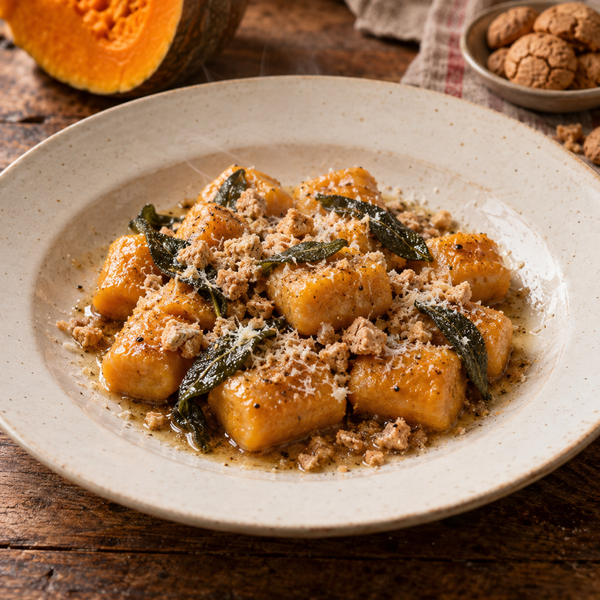
A traditional Mantuan autumn primo: pumpkin is halved and roasted to lose moisture, then its sieved flesh is mixed with minimal flour and egg yolk. Its dough loosens more easily than potato gnocchi; judging the narrow margin between too much flour, producing heavy dumplings, and too little, causing disintegration in water, requires skill. Browned butter, sage, Grana Padano and the bittersweet aroma of crushed amaretti create Mantua’s distinctive sweet-and-savory contrast.
AUTHENTICITY SCORE
Authenticity Score
This is the standard recipe, exactly as it’s made where it comes from — the highest Authenticity Score possible. Substituting ingredients changes this score; the app shows exactly how, ingredient by ingredient.
Ingredients (2 servings)
- Whole winter squashRemove seeds and fibers, roast, sieve and dry to use 400 g purée. Choose a floury, low-moisture variety800 g
- Type 00 flour100 g basic dough quantity, 20 g for consistency adjustments and 10 g for correction after test-boiling130 g
- Egg yolkBring to room temperature; binds the dough1 piece
- Grated Grana Padano30 g in the dough and 20 g for finishing50 g
- NutmegGrate whole nutmeg freshly0.5 g
- Fine salt4 g in the dough and 1 g to adjust during emulsification5 g
- Water for boilingUse a large pot at least 24 cm in diameter4000 ml
- Coarse salt for boiling water10 g/L for 4 L cooking water40 g
- Fine semolina flour20 g for the worktop (5 g for gathering the dough and 15 g for shaping), plus 20 g for the tray40 g
- Unsalted butterFor emulsifying the sauce; cut cold into 1 cm cubes70 g
- Fresh sageWash and thoroughly dry10 pieces
- Dry amaretti biscuitsCoarsely crush by hand and scatter on to finish20 g
- Black peppercornsGrind on to finish0.5 g
Method
Preheat and halve and clean the pumpkin
- 1 Preheat the oven to 190°C.
- 2 Wash the 800 g pumpkin under running water, dry and cut lengthwise in half.
- 3 Scrape out all seeds and stringy fibers with a spoon.
- 4 Line a baking tray with parchment and place the halves cut-side down.
Ready when
Bake when the oven has reached 190°C and the pumpkin lies in a single layer, cut-side down.
Caution
Stabilize hard pumpkin on its cut side and take care that the blade does not slip.
Roast at 190°C to remove moisture
- 1 Meanwhile(While roasting) cut 70 g butter into 1 cm cubes and return to the refrigerator.
- 2 Meanwhile(While roasting) wash 10 sage leaves and thoroughly pat dry with kitchen paper.
- 3 Bake on the middle rack of the preheated oven at 190°C for 55 minutes.
Ready when
It is baked when a skewer inserted through the skin reaches the center without resistance.
Browned cut edges and almost-dry juices on the tray signal moisture loss.
Sieve, dry and measure 400 g purée
- 1 Once cool enough to touch with bare hands, scoop out the flesh and discard the skin.
- 2 Pass all the flesh through a setaccio, a sieve, or a colander, pressing with a rubber spatula to remove fibers.
- 3 Put all the sieved flesh in a frying pan and stir constantly with a wooden spoon over low heat for 5–6 minutes to evaporate moisture.
- 4 Weigh the dried purée and set aside 400 g. Transfer any excess, roughly 30–80 g, to a separate container; do not use it in this recipe.
- 5 Line a tray with parchment and spread the 400 g purée thinly, 1 cm deep.
Ready when
It is dry enough when a wooden spoon drawn through the center leaves a line that does not immediately fill.
Once 400 g is measured, proceed to cooling.
Cool below body temperature
- 1 Leave the spread purée untouched at room temperature for 25 minutes.
Ready when
Proceed when it no longer feels warm against your palm.
Judge dough consistency with minimal flour
- 1 Gather the 400 g cooled purée in the middle of the worktop, make a well and add 1 egg yolk and 30 g grated Grana Padano. Freshly grate in 0.3 g nutmeg and sprinkle with 4 g fine salt.
- 2 Sift 100 g type 00 flour over everything and combine with cutting motions using a scraper or heel of the hand for 20–30 seconds.
- 3 If it sticks strongly and will not gather, add the 20 g adjustment flour in 10 g additions, mixing for 10 seconds and checking each time.
- 4 Lightly dust a free area of the worktop with 5 g semolina and place the gathered dough there as a single mass.
Ready when
It is ready when pressing and releasing with your palm leaves only a faint trace on your fingers, not large amounts of dough.
Proceed to shaping when the surface is smoothly joined and does not crack under pressure.
Caution
Adding too much flour or continuing to knead produces a heavy texture.
Roll ropes and cut into 2 cm gnocchi
- 1 Meanwhile(Between shaping tasks) put 4000 ml water in a large pot, cover and heat over high heat.
- 2 Evenly dust a tray with 20 g semolina.
- 3 Dust the worktop with half the remaining 15 g semolina and divide the dough into 4.
- 4 Roll each 1 portion on the worktop into a rope 2 cm in diameter.
- 5 Cut the ropes with a scraper into 2 cm pieces.
- 6 Lightly coat the cut faces with semolina and arrange on the tray without touching.
- 7 Repeat with the remaining dough, adding the rest of the semolina to the worktop as you roll, cut and arrange.
Ready when
Shaping is complete when everything is in a single layer and the cut faces are dry and no longer stick to fingers.
Test-boil to check the dough’s strength
- 1 Add 40 g coarse salt to the boiling water and lower the heat to a gentle trembling simmer.
- 2 Drop in 1 gnocco, boil for 30 seconds after it floats and lift out.
- 3 If it falls apart, gather all the gnocchi on the tray back into dough, sprinkle with the 10 g corrective flour, mix for 20 seconds, roll again into 2 cm ropes and cut into 2 cm pieces. Test-boil another 1 piece.
Ready when
Cook the full batch when the test piece holds its shape and is cooked to the center of its cross-section.
Develop browned-butter aroma in the butter and sage sauce
- 1 Meanwhile(While heating the butter) coarsely crush 20 g amaretti, crisp almond-kernel-flavored biscuits, by hand.
- 2 Meanwhile(While heating the butter) warm 2 plates in hot water and dry with a cloth.
- 3 Melt 70 g cold butter in a 26 cm frying pan over medium heat.
- 4 When the bubbles become fine, spread in 10 sage leaves, reduce to low heat and cook for 1 minute 30 seconds–2 minutes.
- 5 As soon as the butter turns hazelnut-colored and smells toasted, turn off the heat and move the pan off the burner onto a work surface.
Ready when
The sage has released its aroma when the leaves lose their firmness and their edges darken and become slightly translucent.
Proceed when the pan is off the heat and the butter’s color has stopped at hazelnut.
Caution
Browned butter keeps coloring in residual heat and becomes bitter if blackened.
Boil the gnocchi and emulsify with the sauce
- 1 Put half the gnocchi into gently simmering water, cook for 30 seconds after they rise, then drain with a slotted ladle and transfer to the frying pan.
- 2 Cook and transfer the remaining half in the same way.
- 3 Measure 60 ml cooking water into the pan and sprinkle with 1 g fine salt.
- 4 Heat over medium heat and toss the pan back and forth for 30–40 seconds for mantecatura, the finishing emulsion of butter and cooking water.
Ready when
The sauce should change from clear oil to a cloudy, thickened coating lightly covering all the gnocchi.
Caution
Gnocchi are fragile; do not stir vigorously with a spatula.
Finish with amaretti and black pepper
- 1 Divide the gnocchi evenly between 2 warm plates and spoon over all the remaining sauce and sage.
- 2 Sprinkle 20 g grated Grana Padano evenly over them.
- 3 Scatter with 20 g crushed amaretti.
- 4 Freshly grind over 0.5 g black pepper.
Ready when
It is ready when the amaretti remain dry, distinct crumbs on top.
About this dish
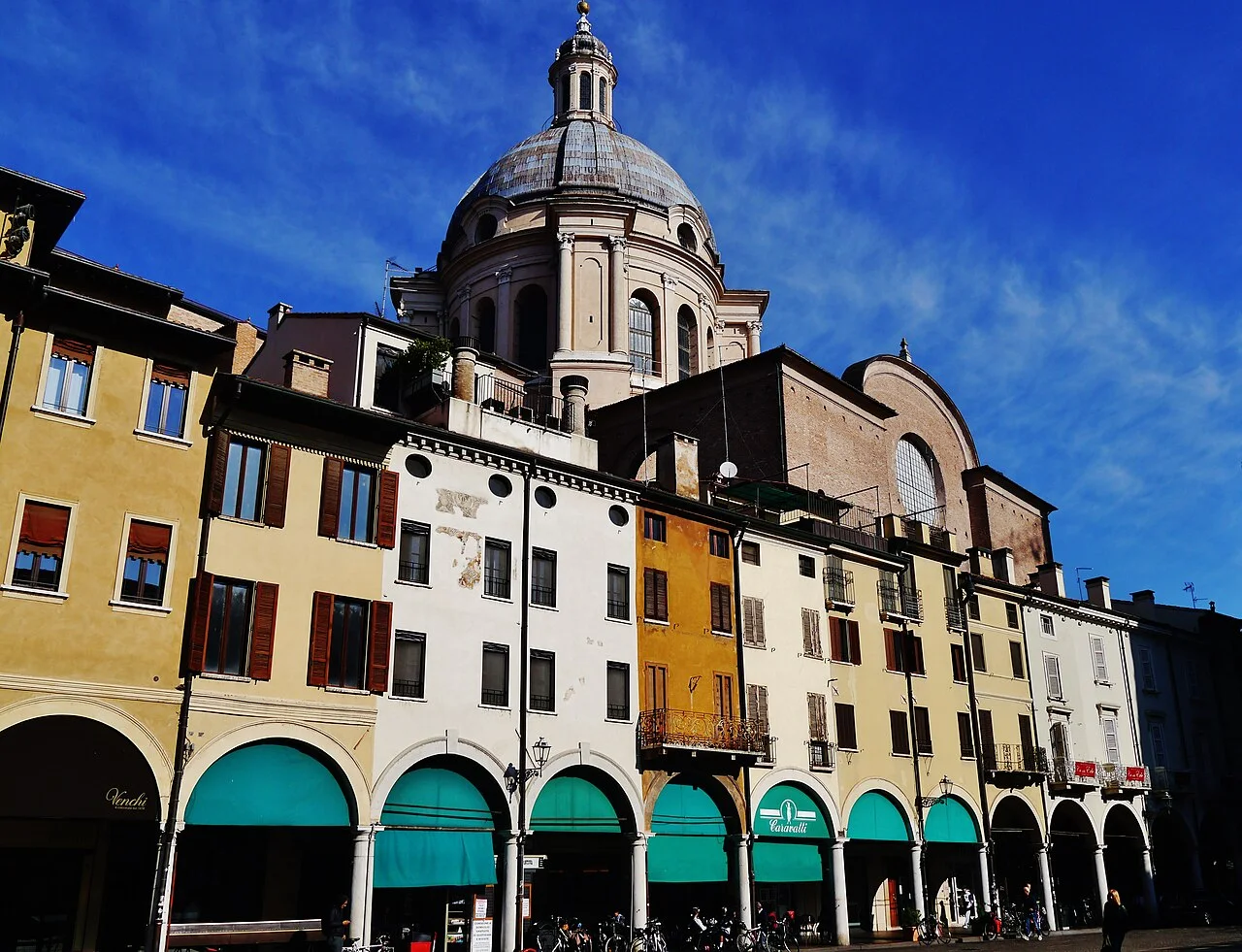
Autumn in northern Italy suits primi that incorporate pumpkin in their fillings or dough. Gnocchi di zucca are one of the dishes bringing that harvest to the table.
Served warm in a modest portion, they form part of a leisurely course meal leading into a meat dish. It is a primo to include in an autumn lunch while thinking of the different pumpkin dishes found across the regions.

Bring the full course home next weekend.
Bring every dish to the table at its best.
Choose the dishes you want to cook, and Chef Authen handles the shopping list and the day-of schedule. The Tabelia app turns everything from starter to main into one coordinated course in your kitchen.
- One shopping listBuilt automatically from your menu and any substitutions, ready to check off.
- One timelineEvery dish’s waiting and cooking time combined into a single schedule.
- Answers beyond the recipeFrom judging the heat to adapting on the fly, Chef Authen answers with concrete criteria, not guesses.