 TABELIA
AUTHENTIC RECIPE
Gnocchi di Patate al Pomodoro e BasilicoPotato Gnocchi with Tomato and Basil
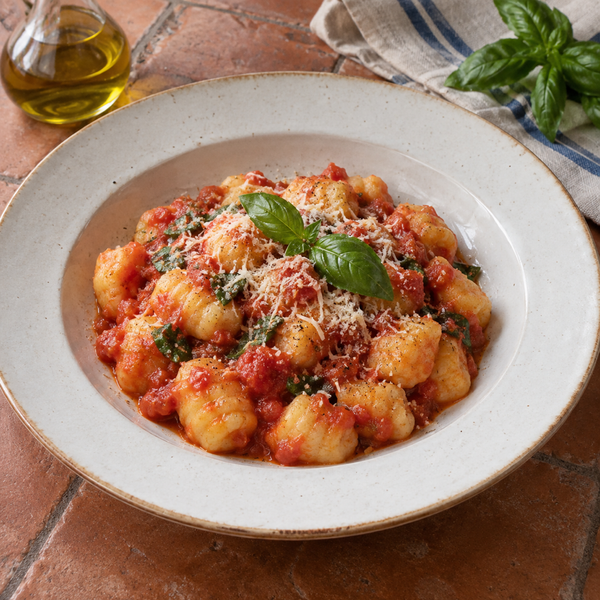
Traditional gnocchi made by boiling (or steaming) whole, unpeeled floury potatoes, passing them through a sieve while hot to release moisture, and bringing them together with as little flour as possible. More flour makes the dough easier to handle but also makes it heavy and dumpling-like, so judging the amount from the condition of the potatoes is essential. The sauce is a light pomodoro of canned whole tomatoes briefly cooked with garlic and olive oil, with basil added just before turning off the heat to release its fragrance.
AUTHENTICITY SCORE
Authenticity Score
This is the standard recipe, exactly as it’s made where it comes from — the highest Authenticity Score possible. Substituting ingredients changes this score; the app shows exactly how, ingredient by ingredient.
Ingredients (4 servings)
- Floury potatoes (stored potatoes such as Danshaku or Kita Akari)Choose similar sizes. Wash and cook whole without peeling.1000 g
- Soft wheat flour (Italian type 00)Start with 200g and adjust to a maximum of 250g according to the dough. Do not use for dusting.250 g
- EggMedium, brought to room temperature and beaten; to bind the dough.1 egg
- Salt for the doughSprinkle directly onto the sieved potatoes.8 g
- NutmegGrate fresh from a whole nutmeg.0.5 g
- Semolina for dusting and traysSprinkle over the work surface and trays for the shaped gnocchi to prevent sticking.50 g
- Coarse salt for the cooking waterAdd at 10g/L for 6L of water.60 g
- Canned whole tomatoesCrush by hand and remove tough cores and stem ends. Use the juices too. The recipe uses all the contents of each opened can. Even when reducing the servings, open and use 1 whole can; leftover sauce keeps refrigerated for 2–3 days, so no min_servings is set.800 g
- Extra virgin olive oil45ml for cooking the sauce and 15ml for drizzling at the end.60 ml
- GarlicPeel, lightly crush with the flat of a knife and remove the germ. Infuse whole, then remove.2 cloves
- Fresh basilSubmerge 1 sprig with its stem in the sauce to infuse it, add 10 leaves just before tossing and reserve 8 small leaves for garnish.30 g
- Salt for the sauceAdd in separate portions during cooking and at the end.5 g
- Caster sugarFor balancing particularly acidic tomatoes.2 g
- Black peppercornsGrind fresh over the finished dish.1 g
- Grated Parmigiano Reggiano40g for tossing and 20g at the table.60 g
Method
Cook the potatoes in their skins
- 1 Meanwhile(While the potatoes cook) Clear the work surface and set out a sieve or potato ricer, dough scraper, 2 large trays and 50g semolina.
- 2 Meanwhile(While the potatoes cook) Beat 1 egg and let it come to room temperature.
- 3 Scrub 1000g floury potatoes with a brush under running water to remove all soil. Use the corner of a knife to cut out any sprouts.
- 4 Divide the potatoes into 2 groups by size so you can lift out the smaller, quicker-cooking ones first. Cook them whole without cutting.
- 5 Arrange the potatoes without overlapping in a large pot, cover with water and place over high heat without adding salt.
- 6 When boiling, reduce to medium heat and cook for 30–40 minutes, keeping the water at a gentle simmer.
- 7 Lift out each potato with tongs as soon as a bamboo skewer slides easily into its center.
Ready when
The potatoes are done when a skewer passes through the center without resistance and the potato does not cling to it as you pull it out.
Caution
Peeled potatoes absorb water while boiling, forcing you to add more flour and making heavy gnocchi. Always cook them whole in their skins.
A rolling boil splits the skins and lets water inside. Keep the surface moving gently.
Do not salt the cooking water. Control the salt by adding it directly to the dough.
Tips
Stored floury potatoes are used instead of new potatoes because their starch is stable and they contain less moisture, allowing you to minimize the flour.
If you have a steamer, steaming them whole for 40–45 minutes is ideal because even less water enters the potatoes.
Sieve while hot and make the dough
- 1 Hold the cooked potatoes with a cloth and peel them with a paring knife while hot.
- 2 Pass the peeled potatoes through a sieve while still hot, spreading them into a long, narrow mound on the work surface.
- 3 Leave the sieved potatoes spread out for 5 minutes to release all their steam.
- 4 When cool enough to touch and only slightly warm, sprinkle evenly with 8g salt and 0.3g freshly grated nutmeg.
- 5 Pour over 1 beaten egg and sift in an initial 200g flour.
- 6 Use a dough scraper to cut the flour into the potatoes. When no dry flour remains, press just 3–4 times with the heel of your hand to bring the dough together.
- 7 If it still sticks to your hands, add flour in 20g increments, up to a maximum of 250g, and bring together in the same way.
Ready when
The dough is ready when it barely sticks to your hands, is soft enough to retain a finger impression and does not tear under its own weight when lifted.
Caution
If you mash the potatoes after they have cooled completely, the starch gelatinizes and becomes sticky, preventing the dough from coming together however much flour you add. Sieve while hot.
A masher or food processor breaks the cells and makes the potatoes sticky. Use a sieve or potato ricer.
Overkneading develops gluten and makes the gnocchi hard and heavy. Press as little as possible.
Adding the full 250g flour at the start makes the texture dumpling-like. Always begin with 200g and assess the dough.
Tips
The amount of flour needed changes with the moisture in the potatoes. The traditional approach is to judge the dough rather than follow a fixed number.
Nutmeg is a common flavoring for potato dough in northern Italy; freshly grated nutmeg releases a sweet fragrance.
Check the flour with a test cook (prova di cottura)
- 1 Meanwhile(While the dough rests under a cloth) Put 1L water in a small pot over high heat and begin bringing it to the boil for the test.
- 2 Meanwhile(While the test water heats) Cover the remaining dough with a cloth to prevent drying.
- 3 Add 5g fine salt to the boiling water.
- 4 Pinch off 2 thumb-tip-sized pieces of dough, round them gently in your palms and drop them into the boiling water.
- 5 Cook for 30 seconds after they float, lift out and cut in half to check the inside and texture.
- 6 If they disintegrate in the water or the cut surface is wet and sticky, add 20g flour to the dough and repeat the test, up to a maximum of 250g.
- 7 If they taste floury or feel very springy and too firm, proceed to shaping without adding more flour.
Ready when
The flour amount is right when 1 test gnoccho floats without losing its shape, has an evenly moist interior when cut and leaves no floury taste when chewed.
Caution
If you skip this test and shape all the dough, insufficient flour can make the entire batch dissolve as soon as it enters the water, while too much makes the entire batch heavy and hard. You cannot correct it afterward.
Use a separate small pot of water for the test. Water in which dough has dissolved will make the main batch cloudy.
Tips
Because potato moisture varies, cooks locally always test 1–2 pieces before shaping the whole batch. This 1 piece, rather than the recipe numbers, guides the decision.
Make a light pomodoro sauce
- 1 Meanwhile(While the sauce cooks) Bring 4L water to the boil in a separate pot over high heat.
- 2 Empty 800g canned whole tomatoes into a bowl and roughly crush them by hand. Remove any tough cores and stem ends with your fingers and add all the can juices.
- 3 Peel 2 garlic cloves, lightly crush with the flat of a knife and remove the germs.
- 4 Put 45ml olive oil and the 2 garlic cloves in a wide frying pan and warm slowly over low heat for 5–6 minutes until lightly colored and fragrant.
- 5 Remove the garlic, add all the crushed tomatoes at once and turn the heat to medium.
- 6 When the tomatoes simmer, add 3g salt and cook over medium heat for 20 minutes, occasionally scraping the bottom with a wooden spatula.
- 7 Submerge 1 stemmed sprig of basil in the sauce and cook over low heat for a further 5 minutes.
- 8 Taste; if the acidity is sharp, dissolve in 2g caster sugar. Finish seasoning with 2g salt.
- 9 Remove the basil sprig and turn off the heat.
Ready when
The sauce is ready when a spatula drawn across the bottom leaves a track for 2–3 seconds and the oil and tomato remain united rather than separating.
Caution
Garlic burns and becomes bitter over high heat. Always infuse it slowly over low heat.
Overreducing makes the sauce too heavy and concentrated when combined with the gnocchi. Stop while it still flows lightly.
Prolonged cooking darkens the basil sprig and makes it grassy. Remove it after 5 minutes.
Tips
This briefly cooked pomodoro is a light Neapolitan sauce intended to retain the distinct acidity of the tomatoes.
Infusing the garlic and then removing it is the classical method.
Shape the gnocchi
- 1 Dust 2 trays with a total of 30g semolina, covering the bottoms.
- 2 Divide the dough into 6 portions and cover those not in use with a cloth to prevent drying.
- 3 Sprinkle the work surface with a little semolina, using only what is needed from the remaining 20g, and roll 1 portion into a rope 2cm thick.
- 4 Cut the rope into 2cm lengths with a dough scraper.
- 5 Press each piece against the back of a fork or a gnocchi board, pressing gently with your thumb and rolling it toward you to create grooves.
- 6 Arrange the shaped gnocchi on the trays without overlapping and shape the remaining 5 portions in the same way.
Ready when
Shaping is complete when all the gnocchi have grooves and sit separately on the trays without sticking together.
Caution
Too much dusting makes the surface floury and prevents sauce from clinging. Use just enough to leave a thin white coating on the work surface.
If left too long after shaping, the potatoes release moisture and stick to the surface. Cook within 30 minutes of shaping.
Pressing too hard while making the grooves crushes and toughens the dough. Touch it lightly, using a rolling motion.
Tips
The grooves hold the sauce; both the outer ridges and the inner hollow help it cling.
If not cooking immediately, freeze the gnocchi on the trays and cook from frozen to help them keep their shape.
Cook the gnocchi
- 1 Dissolve 60g coarse salt in 6L boiling water.
- 2 Brush the inside of a tray lightly with olive oil to hold the cooked gnocchi.
- 3 Take the sauce pan off the heat and leave it warm with its residual heat.
- 4 Reduce the water from a rolling boil to a gentler boil with a visibly moving surface.
- 5 Slide the gnocchi off the tray into the pot in batches of 30–40, according to the pot size.
- 6 Immediately after adding them, gently sweep a wooden spatula across the bottom 1 time to prevent sticking.
- 7 After the gnocchi float, wait 20–30 seconds, then lift them out with a slotted ladle and spread them without overlapping on the tray lightly brushed with olive oil.
- 8 Cook the remaining gnocchi in the same way in a total of 4 batches and spread them on the same tray.
- 9 Reserve 100ml cooking water.
Ready when
Cooking is complete when all the gnocchi have floated and been removed, and sit on the tray without sticking together.
Caution
Violent boiling can break the gnocchi apart. Maintain a gentle boil with a moving surface.
Adding too many at once lowers the water temperature, leaving them on the bottom where they dissolve. Always cook in 4 batches.
Lifting them out as soon as they float leaves the centers floury. Wait 20–30 seconds after they rise.
If you put cooked gnocchi in the sauce while waiting for the next batch, they absorb sauce, swell and lose their shape. Hold them on the tray until all are cooked.
Tips
Cooking time varies with gnocchi size, so their rising to the surface is a more reliable guide than the clock.
Toss with the sauce and finish
- 1 Meanwhile(While tossing) Warm 4 plates with hot water and dry them.
- 2 Return the sauce pan to medium heat and add 50ml of the reserved 100ml cooking water.
- 3 Transfer all the gnocchi from the tray to the pan.
- 4 Shake and toss the pan for 30–40 seconds to coat everything in sauce without using a wooden spatula. If the sauce is heavy, add the remaining cooking water in 20ml increments.
- 5 Turn off the heat, sprinkle in 40g Parmigiano and shake the pan again to distribute it.
- 6 Tear in the 10 basil leaves reserved for finishing and toss 2–3 times to mix.
Ready when
The dish is ready when sauce clings to the grooves and makes the gnocchi glossy, with no watery sauce pooling in the pan.
Caution
Stirring with a wooden spatula breaks the gnocchi. Always combine them by tossing the pan.
Adding cheese over the heat makes it clump and become stringy. Always turn off the heat first.
Tips
Starch in the cooking water binds the sauce and oil into a coating on the gnocchi.
Plate
- 1 Divide the gnocchi evenly among 4 warm plates, mounding them high.
- 2 Spoon the sauce remaining in the pan over the center of each plate.
- 3 Divide the finishing 15ml olive oil among the 4 plates and drizzle over.
- 4 Grind 1g black pepper and distribute evenly among the 4 plates.
- 5 Place the 8 whole garnish basil leaves in the center, using 2 leaves per 1 plate.
Ready when
The dish is complete when each plate has glossy sauce, pepper and basil.
Caution
Cold plates cool the gnocchi rapidly and firm their surface. Always use warmed plates.
Tips
Serve the remaining 20g Parmigiano in a small dish at the table for everyone to add themselves, as is customary locally.
About this dish
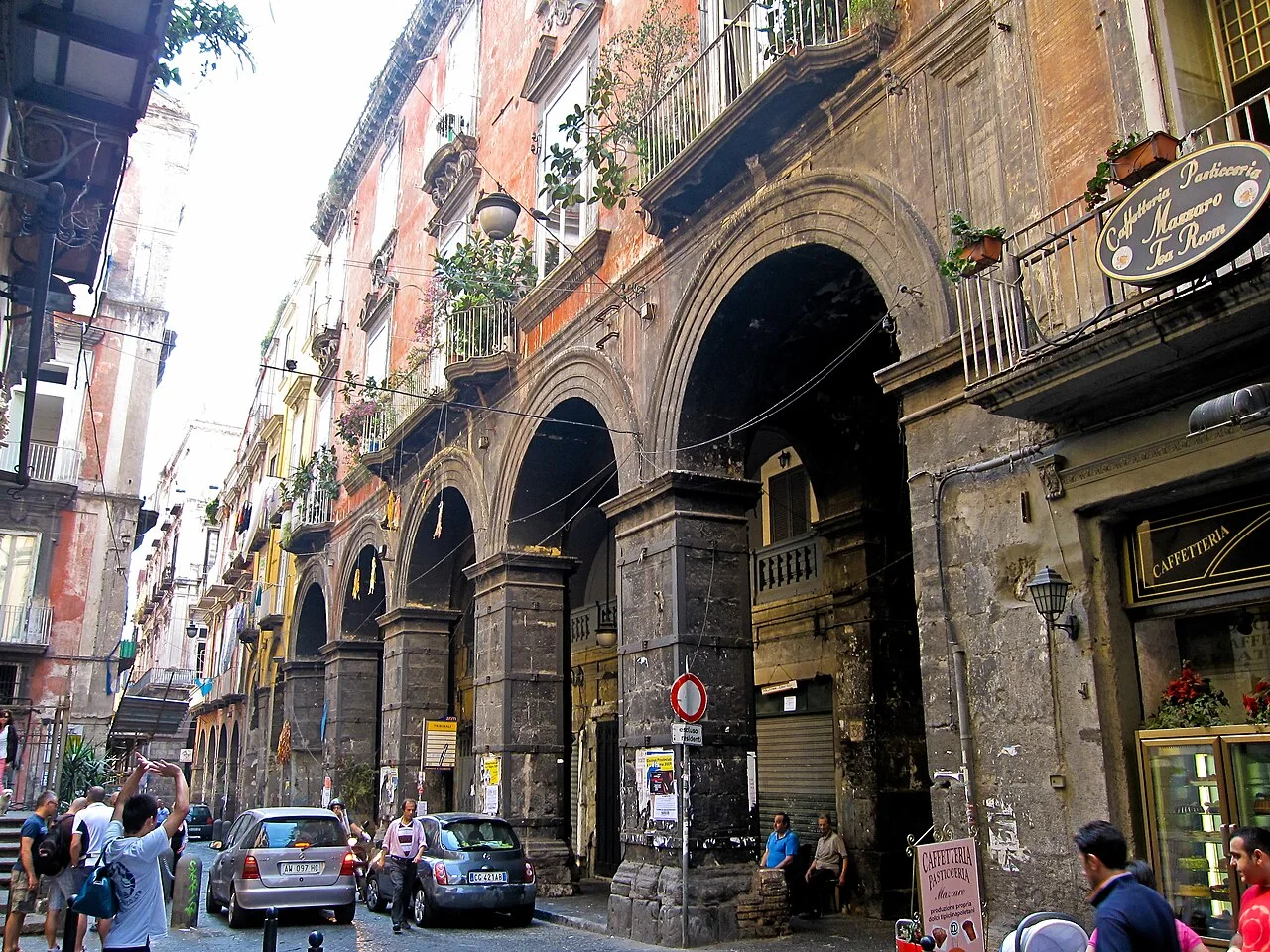
Potato gnocchi are made throughout Italy, but the version dressed with a light tomato and basil sauce belongs to Campania, centered on Naples.
Potatoes became established on Italian tables from the 18th century onward; earlier gnocchi were made from bread or semolina. Potatoes lightened the dough, and in the south it became paired with summer tomatoes. Bake the same dough in an earthenware dish with mozzarella and it becomes gnocchi alla sorrentina.
Some areas around Naples still keep the household tradition of making gnocchi on Thursdays, and traces of it remain in trattoria daily specials. In midsummer, when tomatoes are sweetest, the sauce is cooked for even less time.

Bring the full course home next weekend.
Bring every dish to the table at its best.
Choose the dishes you want to cook, and Chef Authen handles the shopping list and the day-of schedule. The Tabelia app turns everything from starter to main into one coordinated course in your kitchen.
- One shopping listBuilt automatically from your menu and any substitutions, ready to check off.
- One timelineEvery dish’s waiting and cooking time combined into a single schedule.
- Answers beyond the recipeFrom judging the heat to adapting on the fly, Chef Authen answers with concrete criteria, not guesses.