 TABELIA
AUTHENTIC RECIPE
Gnocchi alla Sorrentina
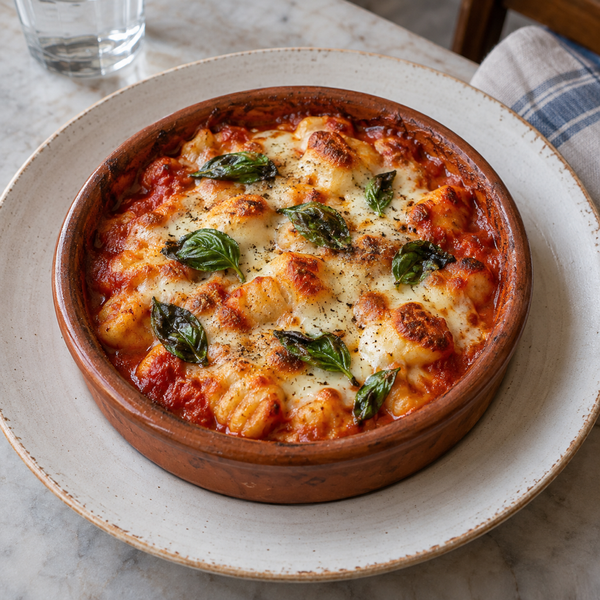
A signature first course of the Sorrento peninsula: potatoes are riced while hot and bound without egg using the minimum flour to make light gnocchi. They are dressed with a simple garlic-and-basil tomato sauce, layered with fiordilatte and Parmigiano and baked in earthenware. Worthwhile care goes into limiting flour absorption, checking the amount with a test boil, judging a short cooking time and keeping the cheese stringy during baking. The result is light yet rich, without flouriness or heaviness.
AUTHENTICITY SCORE
Authenticity Score
This is the standard recipe, exactly as it’s made where it comes from — the highest Authenticity Score possible. Substituting ingredients changes this score; the app shows exactly how, ingredient by ingredient.
Ingredients (6 servings)
- Floury stored potatoes, such as DanshakuBoil whole in their skins. Choose similar sizes for even cooking.1000 g
- Type 00 soft wheat flourStart with 150 g in the dough, increasing to no more than 200 g according to potato moisture. The remaining 20 g dusts the worktop during shaping.220 g
- Fine semolina25 g for the tray holding the shaped gnocchi and 15 g for sprinkling on top to prevent sticking.40 g
- Canned whole peeled tomatoesCrush by hand into coarse pulp.800 g
- Fiordilatte mozzarellaCut into 1 cm cubes and drain in a sieve in the refrigerator for at least 30 minutes.300 g
- Grated Parmigiano Reggiano30 g for tossing and 30 g for the top cheese layer.60 g
- GarlicPeel and lightly crush with the flat of a knife. Remove after infusing the oil.2 cloves
- Extra virgin olive oil40 ml for the sauce and 10 ml to grease the baking dish.50 ml
- Fresh basilSubmerge 10 g with stems in the sauce to infuse. Pick the remaining 10 g leaves, about 10 leaves, and reserve for the top after baking.20 g
- Fine salt8 g for the dough and 6 g for the sauce.14 g
- Coarse salt for boilingUse 10 g/L: 10 g in the small test-boiling pot with 1 L water and 40 g in the main pot with 4 L water.50 g
- Water for boiling1000 ml in the small test pot and 4000 ml in the main pot.5000 ml
- Black pepperFreshly grind to finish.1 tsp
Method
Boil the potatoes whole in their skins
- 1 MeanwhileMeanwhile, cut 300 g fiordilatte into 1 cm cubes, spread in a sieve over a dish and refrigerate to drain for at least 30 minutes.
- 2 MeanwhileMeanwhile, reserve 10 g of the 20 g basil with stems for the sauce. Pick the other 10 g, about 10 leaves, put briefly in cold water, dry and refrigerate.
- 3 Scrub 1000 g unpeeled potatoes under running water and sort larger ones so the sizes are similar.
- 4 Arrange without overlapping in a pot, cover with water and set uncovered over medium heat.
- 5 After boiling begins, lower to a gentle, steady simmer over medium-low heat and cook for 35–45 minutes.
Ready when
A bamboo skewer should pass to the center without resistance.
The skins should loosen enough to pinch lightly with your fingers.
Caution
Peeling and cutting potatoes before boiling makes them absorb water, loosening the dough and requiring extra flour.
Vigorous boiling lets water enter cracks and makes the dough watery.
Tips
Stored floury potatoes contain less moisture, requiring less flour and producing a lighter result.
Peel and rice while hot
- 1 Drain the pot and remove 2–3 potatoes at a time, keeping the rest covered in the pot to stay warm.
- 2 Hold with a cloth and steady with a fork while peeling with a small knife while still hot.
- 3 Pass the peeled potatoes while hot through a potato ricer or fine sieve directly onto the worktop in a loose shower.
- 4 Once all are riced, spread thinly and leave for about 5 minutes to release steam.
Ready when
Heavy steam has subsided and the surface looks loose and floury.
No lumps remain and the texture is evenly fine and fibrous.
Caution
Ricing after cooling sets the starch and creates stickiness, making heavy gnocchi.
Hot potatoes burn bare hands; always secure them with a cloth and fork.
Tips
Sorrento households regard ricing while hot as a rule worth enduring the heat for.
Peeling the entire 1 kg at once allows it to cool; taking out and ricing 2–3 potatoes at a time is reliable.
Bind without eggs using minimal flour
- 1 Sprinkle 8 g salt evenly over the spread potatoes.
- 2 Sprinkle over 150 g flour and use a scraper to cut it into the potatoes.
- 3 Gather for only 30–60 seconds, folding from outside inward rather than pressing outward with the heel of your hand.
- 4 If still sticky, add flour 10 g at a time without exceeding 200 g total in the dough, repeating the same movement.
- 5 Round the dough, cover with a cloth to prevent drying and set at the side of the worktop.
Ready when
Its surface is moist and glossy, lightly springs back when pressed and does not stick to the hand.
The total flour in the dough is within 150–200 g.
Caution
Overkneading develops gluten and makes the cooked gnocchi rubbery.
Adding all the flour at once prevents adjustment for moisture and produces floury, heavy dough.
Tips
The basic Sorrento peninsula method uses no egg, relying on potato starch to bind.
The right amount of flour is the minimum needed to bring the potato moisture together; the recipe’s figures are a guide.
Shaping immediately without resting is easier because the dough has not released water.
Test-boil to finalize the flour quantity
- 1 MeanwhileWhile the dough rests, put 1000 ml water in a small pot over high heat to start boiling for the test.
- 2 Add 10 g coarse salt to the boiling water.
- 3 Pinch off 2 pieces of dough, 10 g each, round to thumb-sized pieces and gently put in the boiling water.
- 4 Cook for 20 seconds after they float, then lift out with a slotted spoon.
- 5 Split 1 to inspect the center and taste the other 1.
- 6 If they fall apart or their surfaces dissolve, add 10 g flour to the dough without exceeding 200 g total, gather again for 30 seconds and repeat the test with 1 more piece.
Ready when
The test gnocchi hold their shape with no white core of raw flour inside.
They break gently apart when bitten without flouriness.
Caution
Shaping all the dough with too little flour risks all the gnocchi collapsing irretrievably in the main boil.
If they taste floury, add no more flour and proceed to shaping.
Tips
Potato moisture varies widely, so local cooks also test-boil 1–2 pieces to decide the flour quantity.
Roll, cut and ridge the gnocchi
- 1 Dust a tray thinly with 25 g semolina.
- 2 Dust the worktop lightly with 20 g flour.
- 3 Divide the dough into 6 portions and roll 1 at a time into ropes 2 cm across, keeping the rest covered.
- 4 Cut the ropes into 2 cm pieces with a scraper.
- 5 Press each 1 piece with your thumb against a gnocchi board or the back of a fork and roll toward you, making ridges on one face and a hollow on the other.
- 6 Arrange without overlapping on the tray and lightly sprinkle with the remaining 15 g semolina.
Ready when
All the dough is shaped and arranged without pieces sticking together.
Caution
Leaving it too long releases water, makes it stick to the tray and causes collapse during boiling.
Pressing too hard for deep ridges thins the dough and can create holes while boiling.
Tips
Ridges and hollows hold sauce, so they matter even in a baked preparation such as sorrentina.
If not cooking immediately, freeze on the tray and boil directly from frozen.
Cook the garlic-and-basil tomato sauce
- 1 MeanwhileWhile the sauce simmers, preheat the oven to 220°C.
- 2 MeanwhileWhile the sauce simmers, put 4000 ml water in a large pot, cover and set over high heat.
- 3 MeanwhileWhile the sauce simmers, grate 60 g Parmigiano Reggiano and divide into 2 portions of 30 g.
- 4 Put 800 g whole peeled tomatoes in a bowl and crush by hand into coarse pulp.
- 5 Put 40 ml extra virgin olive oil and 2 peeled garlic cloves crushed with the flat of a knife in a frying pan over low heat.
- 6 Heat gently for 3–4 minutes until the garlic is lightly colored and fragrant, then remove it.
- 7 Add the crushed tomatoes all at once, raise to medium heat and stir from the bottom with a wooden spoon.
- 8 Once bubbling, reduce to medium-low, submerge the 10 g basil stems and leaves, add 6 g salt and simmer for 20–25 minutes.
- 9 Remove and discard the basil stems when cooked.
Ready when
A spoon drawn across the pan leaves a line for about 2 seconds.
Red-orange oil rises to the surface and the aroma is sweet, with the sharp acidity mellowed.
Caution
High heat scorches tomatoes and creates bitterness: maintain medium-low heat.
Leaving basil stems in for prolonged simmering darkens them and creates a grassy smell.
Tips
In the basic Sorrento peninsula method, garlic perfumes the oil and is removed, and onion is not used.
Leave the sauce slightly loose, as it thickens during baking.
A home oven takes 15–20 minutes to preheat to 220°C, so begin while the sauce simmers.
Briefly boil the gnocchi and dress with sauce
- 1 Brush the inside of ovenproof earthenware dishes or a gratin dish with 10 ml olive oil.
- 2 Dissolve 40 g coarse salt in the 4000 ml boiling water and maintain a boil over high heat.
- 3 Gently slide in half the gnocchi, loosening any on the bottom with just one gentle movement of a wooden spoon.
- 4 Lift the floating gnocchi with a slotted spoon, drain and transfer directly to the sauce pan.
- 5 Cook the remaining half in the same way and transfer all to the sauce.
- 6 Set the pan over low heat, sprinkle in 30 g Parmigiano and shake the pan to toss for 30–40 seconds.
Ready when
Allow 15–20 seconds after the gnocchi rise to the surface.
Sauce coats them thinly and evenly without pooling in the pan.
Caution
Prolonged cooking after floating makes them absorb water, disintegrate and turn mushy in the oven.
Adding all at once lowers the water temperature and dissolves their surfaces.
Stirring vigorously breaks gnocchi; toss by shaking the pan.
Tips
Floating signals that gnocchi are cooked, the decisive point for their lightness.
Layer in earthenware and bake
- 1 Spread half the dressed gnocchi evenly in the greased baking dish.
- 2 Scatter over half the drained diced fiordilatte, 150 g.
- 3 Add the remaining gnocchi and level the surface.
- 4 Scatter over the remaining 150 g fiordilatte, then 30 g Parmigiano across the top.
- 5 Bake on the upper rack of the oven preheated to 220°C for 12–15 minutes.
Ready when
The cheese is fully melted with a rippling surface and the sauce bubbles around the edges.
Light golden patches appear on top.
Caution
Do not exceed 15 minutes: overbaking separates mozzarella’s water and fat and stops it stretching.
Insufficiently drained cheese leaves water underneath and makes the gnocchi soggy.
Tips
Earthenware retains heat well, keeping the dish piping hot at the table.
Only if more color is needed, switch to the grill for the last 1–2 minutes.
Rest, finish and serve
- 1 Remove the dish from the oven and rest on a trivet for 3 minutes.
- 2 Grind 1 tsp black pepper over the whole surface.
- 3 Scatter over the reserved 10 g basil leaves, about 10 leaves.
- 4 Carry the baking dish to the table and serve with a spoon.
Ready when
Surface bubbling has subsided and the cheese stretches in threads when scooped.
Caution
Serving immediately after baking lets the sauce run out and the portions collapse.
Adding basil before baking burns it black and loses its aroma.
Tips
In Sorrento the custom is to bring the baking vessel to the table and let everyone serve themselves.
About this dish
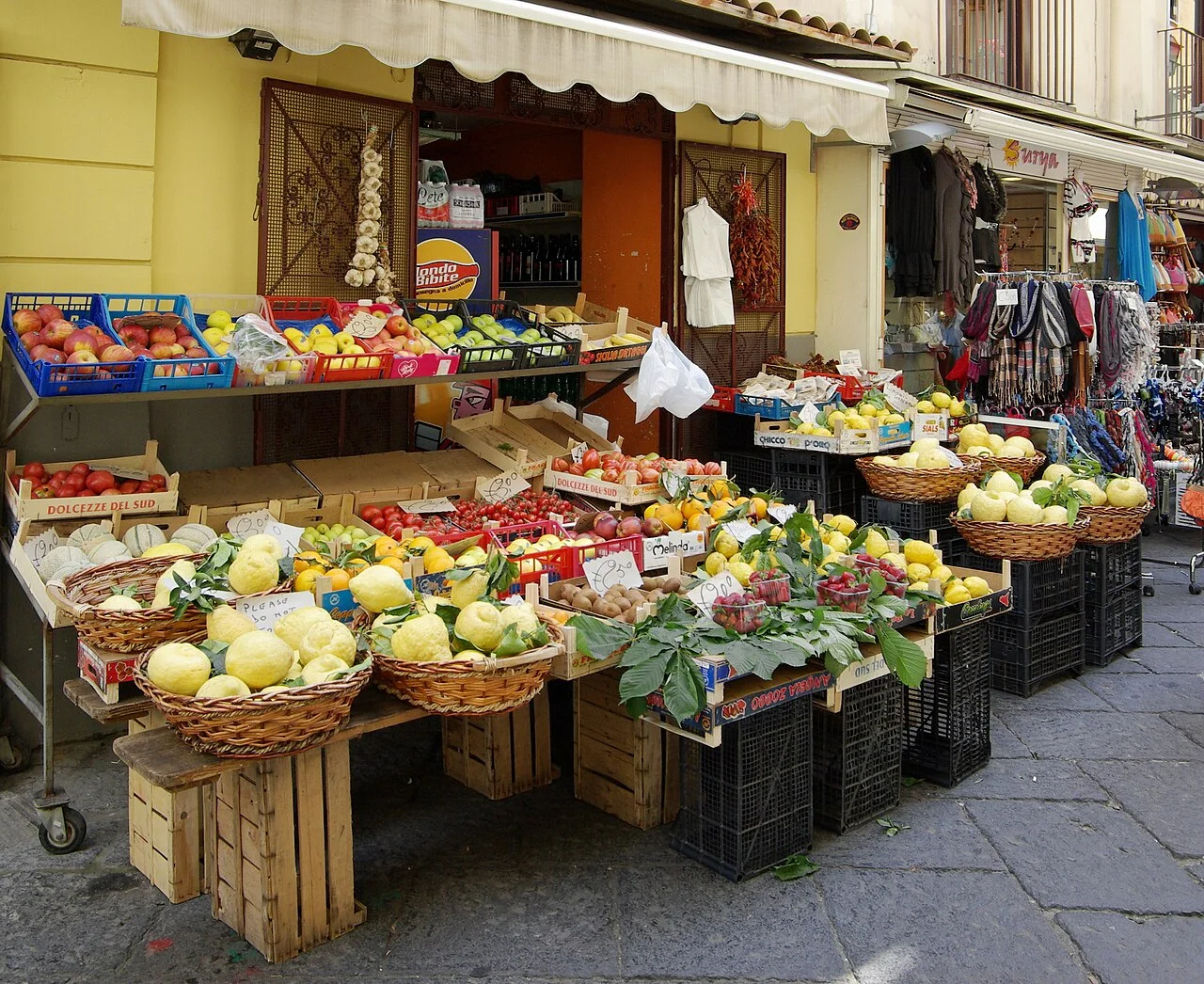
Sorrento lies on cliffs on the southern shore of the Bay of Naples, looking toward Capri. Buffalo farms and tomato fields surround it, and mozzarella and tomatoes are the twin pillars of local cooking.
Gnocchi alla sorrentina combines potato gnocchi with tomato sauce, layers mozzarella over them and bakes them in ceramic dishes. Small individual dishes are carried straight to the table. Sauce caramelized at the edges and patches of color on the cheese have long signaled that it is ready.
It remains a Sunday family-lunch staple in trattorias from the Sorrento peninsula to Naples. Served hot in its baking dish, it cannot be eaten immediately on arrival.

Bring the full course home next weekend.
Bring every dish to the table at its best.
Choose the dishes you want to cook, and Chef Authen handles the shopping list and the day-of schedule. The Tabelia app turns everything from starter to main into one coordinated course in your kitchen.
- One shopping listBuilt automatically from your menu and any substitutions, ready to check off.
- One timelineEvery dish’s waiting and cooking time combined into a single schedule.
- Answers beyond the recipeFrom judging the heat to adapting on the fly, Chef Authen answers with concrete criteria, not guesses.