 TABELIA
AUTHENTIC RECIPE
Gnocchi alla Bava
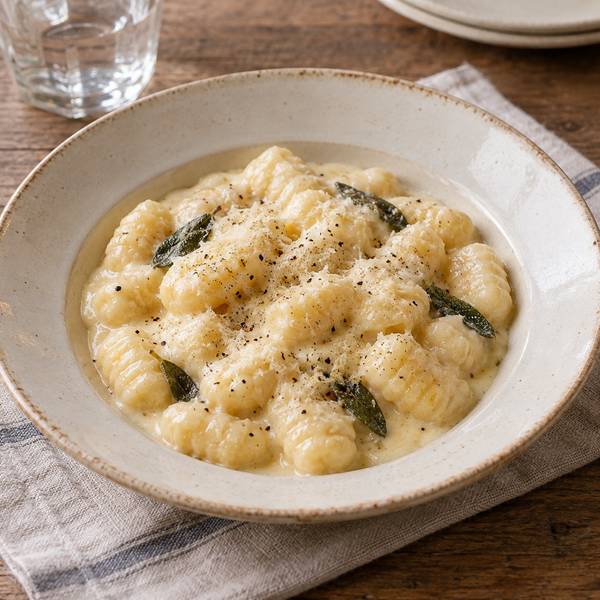
A primo from Piedmont’s mountains: floury potatoes are boiled in their skins and sieved hot, then made into light handmade gnocchi with minimal flour. They are coated in rich fonduta, Fontina slowly melted with milk and butter and bound with egg yolks. Bava, “drool,” refers to the long cheese strings formed when lifting a forkful. Biella and Valsesia also preserve a simpler method of layering hot gnocchi with thin Fontina and hot butter to melt with residual heat. This recipe takes the festive fonduta method as its traditional benchmark: long milk soaking followed by water-bath emulsification. Its value lies in controlling potato moisture and the 2-stage water-bath temperatures that keep the cheese emulsified.
AUTHENTICITY SCORE
Authenticity Score
This is the standard recipe, exactly as it’s made where it comes from — the highest Authenticity Score possible. Substituting ingredients changes this score; the app shows exactly how, ingredient by ingredient.
Ingredients (4 servings)
- Floury potatoes, such as DanshakuChoose similar sizes; boil whole with the skins on800 g
- Type 00 flourMeasure separately: 160 g for the dough, up to 30 g for adjustment and 30 g for dusting220 g
- Egg yolk for the doughBring to room temperature; binds the dough1
- NutmegFreshly grate from whole nutmeg0.5 g
- Fine salt5 g for the dough and up to 1 g to adjust the fonduta6 g
- Coarse salt for cooking water60 g in 6 L cooking water and 10 g in 1 L test-cooking water, both 10 g/L70 g
- FontinaRemove the rind and slice 5 mm thick250 g
- Whole milkUse cold; 120 ml for fonduta, reserving 60 ml refrigerated to adjust consistency or restore a split sauce180 ml
- Unsalted butter for the fondutaCut into 1 cm cubes and refrigerate30 g
- Egg yolks for the fondutaBring to room temperature; bind the emulsion2
- Unsalted butter for finishingInfuse with sage and toss with the cooked gnocchi20 g
- Sage leavesInfuse the finishing butter and crisp for serving6 leaves
- Grated Parmigiano ReggianoSprinkle sparingly to finish20 g
- Black peppercornsCoarsely grind to finish1.5 g
Method
Prepare the Fontina for soaking
- 1 Remove the rind from 250 g Fontina, slice 5 mm thick and place in a bowl.
- 2 Pour over all 180 ml cold milk, rather than only enough to cover, approximately 120–150 ml, and submerge the cheese completely.
- 3 Cover with plastic wrap and refrigerate.
Ready when
The cheese should be entirely below the milk surface.
Caution
Warm milk releases the cheese’s fat at this stage and destabilizes later emulsification; always use cold milk.
Tips
Hydrating the cheese by soaking makes fat and liquid less likely to separate during heating.
Soak the cheese chilled for at least 2 hours
- 1 Meanwhile(While the cheese soaks.) Continue with potato boiling, sieving and dough preparation in steps 3–5.
- 2 Leave the bowl undisturbed in the refrigerator for at least 2 hours, or preferably overnight for 8 hours.
Ready when
Soaking is complete when the cheese corners are soft and rounded and the milk is cloudy white.
Caution
At room temperature the milk spoils and fat rises from the cheese surface; always soak in the refrigerator.
Tips
Valle d’Aosta and Piedmont fonduta traditionally requires at least 2 hours of soaking, usually overnight from the previous evening. Longer soaking stabilizes the emulsion and transfers the aroma into the milk.
Boil the potatoes in their skins
- 1 Meanwhile(While the potatoes cook.) Set out a sieve, fork, dough scraper, gnocchi board and a tray lined with a cloth.
- 2 Meanwhile(While the potatoes cook.) Measure the 00 flour separately: 160 g for the dough, 30 g for adjustment and 30 g for dusting.
- 3 Scrub the dirt from 800 g potatoes and place unpeeled in a large pot.
- 4 Add water to cover and bring to a boil over high heat without adding salt.
- 5 Reduce to medium-low and cook for 35–45 minutes, keeping the water gently trembling.
Ready when
They are done when a skewer slides without resistance into the center of the largest potato.
A few cracks in the skin, beginning to lift away, are a guide.
Caution
Peeling before boiling lets potatoes absorb water, requiring more flour and making heavy gnocchi.
A continuous rolling boil breaks down the outside and makes it watery; keep the simmer gentle.
Tips
Choosing similar-sized potatoes ensures even cooking and avoids absorption from overcooking.
Sieve hot and release moisture
- 1 Drain the cooked potatoes and, holding each with a fork, peel with a knife while hot.
- 2 As each is peeled, pass it through a sieve or potato ricer directly onto the work surface.
- 3 Spread the riced potato about 2 cm thick and leave for 5 minutes to release steam.
Ready when
Continue when steam has stopped rising and it feels slightly warmer than body temperature.
The potato should be fluffy and finely granular, with no lumps.
Caution
Sieving cold potatoes makes the starch sticky and rubbery; always sieve while hot.
Never use a food processor or blender: the starch becomes gluey.
Tips
Spreading the potato to release more steam reduces the flour required and makes lighter gnocchi.
Make the dough and test a gnocco di prova
- 1 Meanwhile(While sieving and spreading the potatoes.) Put 1 L water in a small pot over high heat and start boiling it for the test.
- 2 Add 10 g coarse salt to the boiling water prepared for testing.
- 3 Sprinkle 160 g 00 flour, 5 g salt and 0.3 g grated nutmeg evenly over the spread potato.
- 4 Put 1 room-temperature yolk in the center and combine flour and potato with chopping motions of the scraper.
- 5 When no flour is visible, bring together with just 3–4 gentle presses of the heel of your hand.
- 6 Pinch off a thumb-sized piece, round it, add to the test water and cook for 30 seconds after it floats. Remove and check its shape and texture.
- 7 If it falls apart or is too soft, add the reserved type 00 wheat flour for adjustment in 10 g increments and gently recombine, cooking 1 test piece after each addition, up to 30 g total.
- 8 Cover the finished dough with a cloth on the worktop.
Ready when
The 1 test gnocco should hold its shape in water and, when cut, be uniform through the center without a floury taste.
The dough should not stick to the hands and should be soft enough to retain a finger impression.
Caution
Overkneading develops gluten and tightens the dough; stop as soon as it comes together.
Adding all 30 g adjustment flour at once makes heavy, firm gnocchi; always add and test in 10 g increments.
Tips
Potato moisture changes the ideal flour quantity each time, so Piedmontese homes also cook 1 test piece before shaping.
Emulsify the fonduta at 2 temperatures
- 1 Meanwhile(While making the fonduta.) Bring 6 L water to a boil in a large pot over high heat, dissolve 60 g coarse salt and keep boiling.
- 2 Meanwhile(While making the fonduta.) Warm the oven to 60°C and place 4 serving plates inside.
- 3 Drain the soaked Fontina, separating cheese and milk. Put the cheese with 120 ml milk in a water-bath bowl and reserve the remaining 60 ml milk cold in the refrigerator.
- 4 Heat water in the bath pot and use a cooking thermometer to maintain 70–75°C.
- 5 Set the bowl containing the cheese, 120 ml milk and 30 g chilled butter over the water without letting its base touch; stir slowly in a figure 8 with a wooden spoon.
- 6 Continue stirring for 10–12 minutes until the cheese is fully melted and stretches in strings from the spoon.
- 7 Remove from the bath and stir for 1–2 minutes until the mixture is 65°C or below.
- 8 Add cold water to the bath to lower it to 60–65°C.
- 9 Add 2 room-temperature yolks and whisk quickly from the center of the bowl.
- 10 Return to the bath and heat for 4–6 minutes, stirring constantly to thicken.
- 11 Taste; if insufficiently salty, add only 1 g salt and mix.
Ready when
It is ready when a line drawn on the back of the spoon remains for a few seconds and the sauce is smoothly cohesive.
There should be no beads of fat on the surface, and the color should be evenly pale cream.
Caution
Above 65°C after the yolks are added, they coagulate and turn grainy; watch the thermometer continuously.
Above 75°C during melting, cheese fat separates and loses its stretch. If separation begins, remove from the bath and mix in 15 ml reserved cold milk to restore it.
Stopping stirring makes yolk stick and cook on the bottom.
Tips
Traditionally only 120 ml soaking milk is used, rather than all of it, giving a thick, stretchy sauce. If too loose, heat for another 2 minutes; if too stiff, add reserved milk in 10 ml increments.
Fontina generally supplies enough salt. Add salt only if tasting shows it is needed.
Biella and Valsesia also use a method of layering thin cheese and hot butter on hot gnocchi to melt with residual heat. This recipe adopts fonduta for stable emulsification and cheese stretch.
Shape the gnocchi
- 1 Meanwhile(While shaping.) Leave the fonduta over a water bath at 60°C and stir with a wooden spoon every 2–3 minutes.
- 2 Meanwhile(While shaping.) Keep the salted water boiling and the plates in the oven at 60°C.
- 3 Divide the dough into 6 and roll on a floured surface into ropes 2 cm in diameter.
- 4 Cut the ropes into pieces 2 cm wide.
- 5 Press lightly onto the back of a fork or wooden gnocchi board and roll, creating ridges and a hollow.
- 6 Arrange without overlap on a cloth-lined tray lightly dusted with flour.
Ready when
About 65–75 gnocchi should be arranged in a single layer.
Caution
Uncooked potato gnocchi release water and stick as they stand; start boiling within 10 minutes of finishing shaping.
Keep spaces between them, as touching makes them stick.
Too much dusting flour clouds the water and makes the surface floury.
Tips
Ridges help catch sauce; in Piedmont shallow ridges are considered sufficient.
If delayed, put the whole tray in the freezer for 5 minutes to firm the surfaces and reduce breaking.
Boil, coat with fonduta and plate
- 1 Meanwhile(While the gnocchi cook.) Keep the fonduta bowl over the 60°C water bath.
- 2 Add half the gnocchi, about 35, to boiling salted water and cook for 30 seconds after they rise from the bottom.
- 3 Warm 20 g butter with 6 sage leaves in a wide frying pan over low heat for 1–2 minutes. When the butter is clear and fragrant, remove the sage to paper.
- 4 Reserve 50 ml cooking water with a ladle.
- 5 Lift the 1st batch of gnocchi with a slotted spoon into the frying pan and toss by shaking for 30 seconds. Cook the remaining half the same way in the same water and add.
- 6 Turn off the heat, add 2/3 of the fonduta and shake the pan to coat. If too thick, add reserved cooking water in 10 ml increments.
- 7 Plate on the warmed plates and pour the remaining fonduta on top.
- 8 Divide 20 g Parmigiano among 4 plates, freshly grind 1.5 g black pepper coarsely over them and add 1–2 infused sage leaves to each.
Ready when
All gnocchi should be coated, without the sauce running down to the bottom of the plate.
The dish is ready when the cheese stretches as a forkful is lifted.
Caution
Adding all gnocchi at once lowers the water temperature and breaks them; always use 2 batches.
Cooking too long after floating lets them absorb water and lose their shape.
Direct heat splits fonduta, so always turn the heat off before coating the gnocchi.
Tips
Plates warmed to 60°C prevent the cheese setting and preserve the stretch longer.
Parmigiano is optional locally, but sharpens Fontina’s sweetness; keep it to no more than 20 g for 4 people.
About this dish
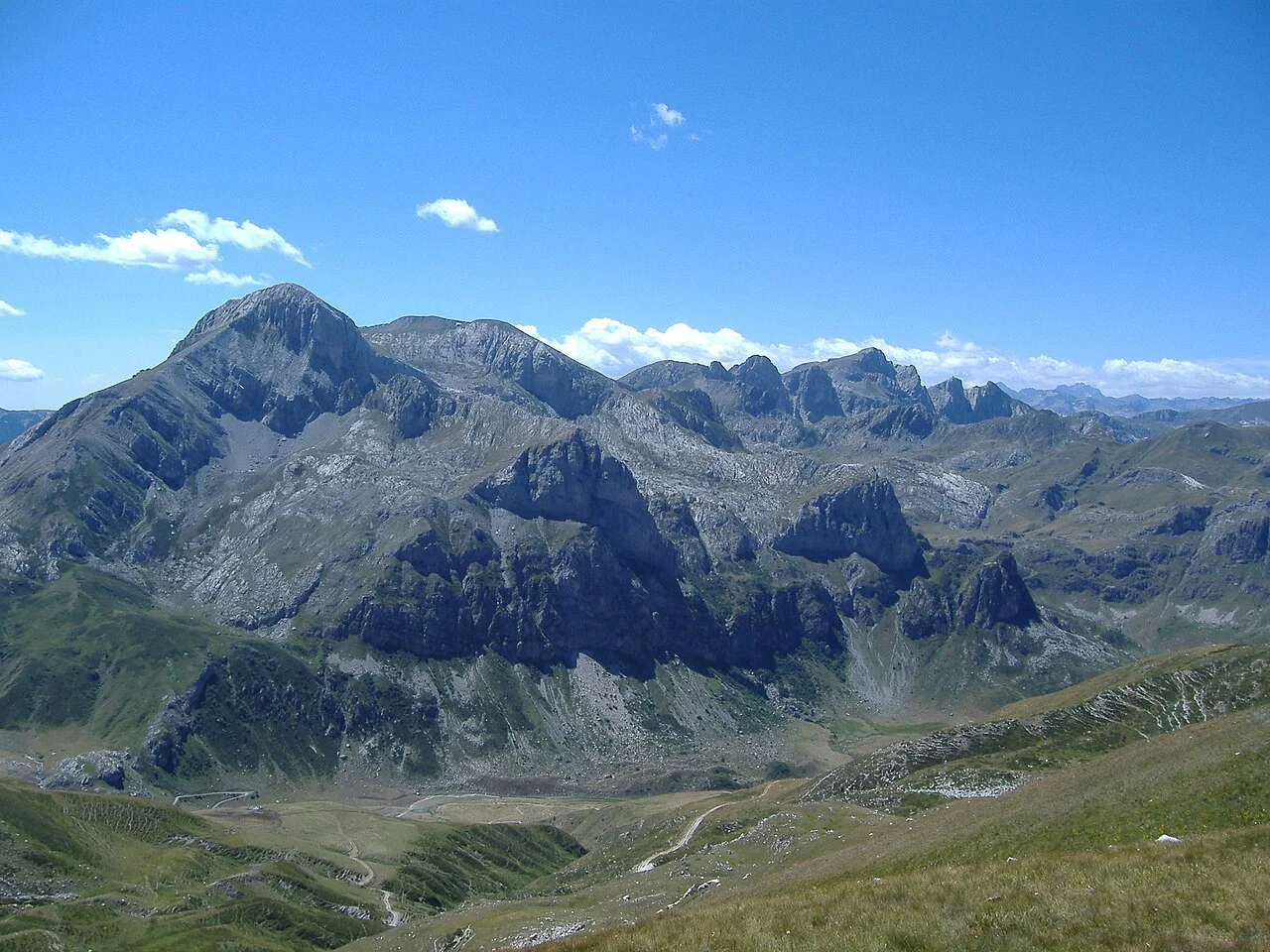
In northern Piedmont’s mountains bordering Valle d’Aosta, the semi-hard cheese Fontina has long been made. It comes from the milk of cows that spend summer in high mountain pastures.
Bava means “drool” in dialect. The dish simply takes its name from the strings formed by melted cheese, reflecting the mountain table’s unadorned language. Its structure is just potato gnocchi topped with this melted cheese, with almost no other ingredients adding color.
It is still served as a cold-season staple in mountain huts and trattorias of northern Piedmont. The plate is monochrome, from white to pale yellow, punctuated only by black pepper.

Bring the full course home next weekend.
Bring every dish to the table at its best.
Choose the dishes you want to cook, and Chef Authen handles the shopping list and the day-of schedule. The Tabelia app turns everything from starter to main into one coordinated course in your kitchen.
- One shopping listBuilt automatically from your menu and any substitutions, ready to check off.
- One timelineEvery dish’s waiting and cooking time combined into a single schedule.
- Answers beyond the recipeFrom judging the heat to adapting on the fly, Chef Authen answers with concrete criteria, not guesses.