 TABELIA
AUTHENTIC RECIPE
Galette Complète
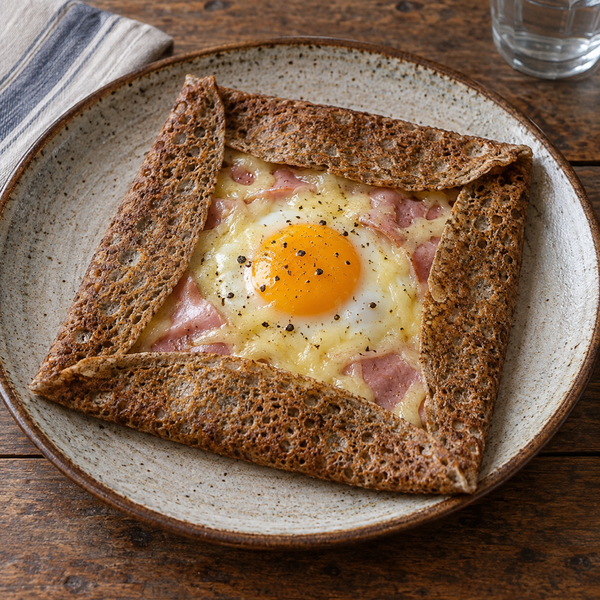
A savory buckwheat galette passed down as a Breton staple. The complète, topped with ham, cheese and egg, is the classic of classics. The basic batter is only buckwheat flour, water and salt; with high-quality buckwheat flour available in Japan, it is a rare dish whose local flavor can be recreated without substitutions. Folded square edges and a soft yolk define its appearance.
AUTHENTICITY SCORE
Authenticity Score
This is the standard recipe, exactly as it’s made where it comes from — the highest Authenticity Score possible. Substituting ingredients changes this score; the app shows exactly how, ingredient by ingredient.
Ingredients (4 servings)
- Buckwheat flourJapanese stone-ground flour is fine; either fine or coarse grinding works.250 g
- WaterFor the batter and adjusting its consistency after resting.550 ml
- SaltFor the batter.5 g
- Egg for the batterBinds the batter and helps prevent tearing.1 piece
- Sliced loin hamThick slices, around 2 mm, are preferable.4 slices
- Gruyère, gratedGrate from a block.120 g
- Eggs for topping1 egg per galette, cooked with a soft yolk.4 pieces
- ButterFor cooking; salted is fine.40 g
- Black pepperGrind at the end.0.5 tsp
Method
Make the buckwheat batter
- 1 Mix 250 g buckwheat flour and 5 g salt in a bowl.
- 2 Add 550 ml water in 3 batches, whisking from the center outward after each addition to remove lumps.
- 3 Crack in 1 egg and mix. Continue when the batter is smooth and lump-free and flows in an unbroken, thick stream when lifted.
Rest in the refrigerator
- 1 Cover the bowl with plastic wrap and refrigerate for 2 hours.
- 2 The buckwheat absorbs water, binding the batter so it tears less easily during cooking.
Prepare toppings and adjust the batter
- 1 Grate 120 g Gruyère.
- 2 Halve large slices of ham.
- 3 Stir the batter from the bottom and check its consistency: it should flow from the ladle in an unbroken, thick stream. If heavy, add 1–2 tbsp water.
Spread thinly and cook
- 1 Heat a frying pan about 26 cm across thoroughly over medium heat, melt 1 tsp butter and coat the pan.
- 2 Pour in 1 ladle of batter, about 120 ml, and quickly tilt the pan to spread it thinly over the whole surface.
- 3 Cook for about 2 minutes. Continue when the edges dry and lift and the underside is deeply browned; do not flip a buckwheat galette.
Top with egg and cheese
- 1 Reduce to low heat and spread a little butter over the galette.
- 2 Crack 1 egg in the center and lightly prod only the white with a fork to spread it out.
- 3 Scatter 1/4 of the Gruyère over the white, tear up 1 ham slice and add it, cover and cook for 2–3 minutes.
- 4 When the white is opaque and set and the soft yolk jiggles when shaken, fold the 4 edges inward to form a square frame.
- 5 Grind over black pepper and slide onto a plate.
Cook the remaining galettes
- 1 Cook the remaining 3 galettes in the same way.
- 2 For each 1 galette, add 1 tsp butter and thoroughly reheat the pan before pouring in batter; a cool pan prevents spreading and makes a thick galette.
- 3 Repeat for all 4 galettes, folding and plating when the edges are golden, the white set and the yolk soft.
About this dish
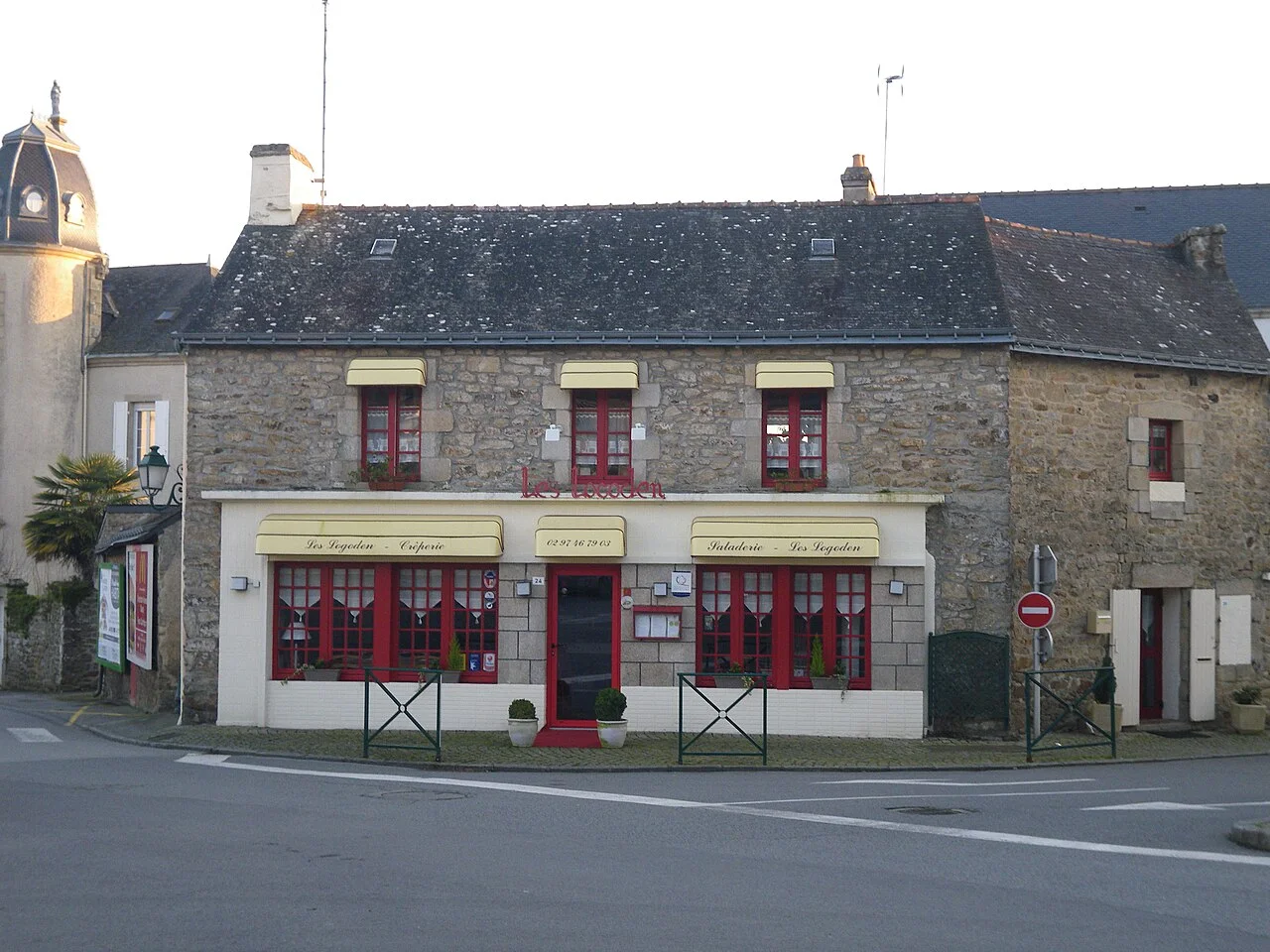
Brittany is a peninsula projecting into the Atlantic in northwestern France. Wheat struggled in its poor soil and cool climate, so buckwheat was widely grown instead. Thinly cooked buckwheat galettes were eaten almost as a staple.
Families cooked them on a dedicated round iron griddle called a billig, topping them with whatever was at hand—butter, cheese or eggs—to make a meal. The complète, with ham, cheese and egg together, is the representative version, traditionally paired with local apple cider.
Breton-run crêperies are now established in Paris and across France, making galettes everyday food beyond regional boundaries. Yet their square folded shape remains a familiar face of the Breton table.

Bring the full course home next weekend.
Bring every dish to the table at its best.
Choose the dishes you want to cook, and Chef Authen handles the shopping list and the day-of schedule. The Tabelia app turns everything from starter to main into one coordinated course in your kitchen.
- One shopping listBuilt automatically from your menu and any substitutions, ready to check off.
- One timelineEvery dish’s waiting and cooking time combined into a single schedule.
- Answers beyond the recipeFrom judging the heat to adapting on the fly, Chef Authen answers with concrete criteria, not guesses.