 TABELIA
AUTHENTIC RECIPE
Foie Gras Poêlé aux RaisinsPan-Seared Foie Gras with Grapes
- Total
- 1 hr 5 min
- Difficulty
- ★★★★☆
- Serves
- 2 servings
- Prep 30 min
- Cook 35 min
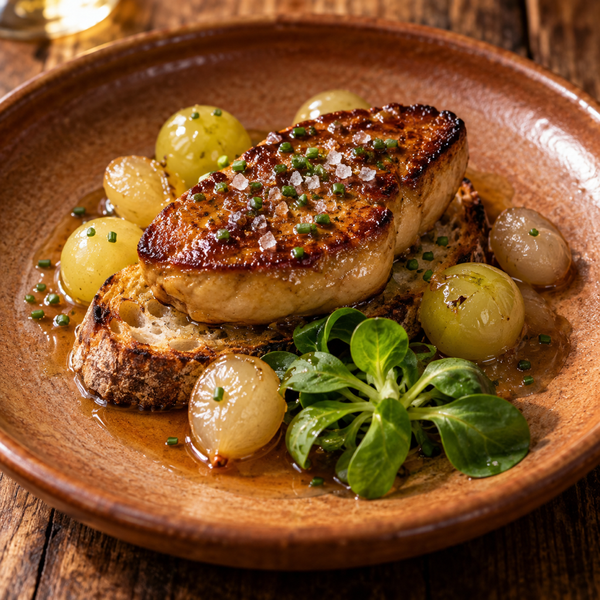
A warm appetizer of duck foie gras seared until browned and cooked through to the center, served with grapes and a sweet-wine sauce.
AUTHENTICITY SCORE
Authenticity Score
This is the standard recipe, exactly as it’s made where it comes from — the highest Authenticity Score possible. Substituting ingredients changes this score; the app shows exactly how, ingredient by ingredient.
Ingredients (2 servings)
100Authenticity- Thick slices of raw duck foie gras160 g2 slices, 80 g per 1 slice and 1.5–2 cm thick. Thaw frozen products in the refrigerator according to their instructions.
- White Muscat grapes180 gSeedless. Blanch and peel half; detach the remaining half from the stems with skins on.
- Sauternes sweet white wine80 mlFor deglazing the pan and as the base of the sauce.
- Brown chicken stock120 mlUnsalted or low-salt; reduce to give the sauce body.
- Verjuice, juice of unripe grapes20 mlFor balancing the sauce’s acidity.
- Shallot1 pieceAbout 25 g. Mince very finely (ciseler).
- Unsalted butter20 g10 g for the sauce base and 10 g for finishing.
- Armagnac15 mlDo not ignite; boil to drive off the alcohol.
- Fleur de sel3 gDivide between seasoning just before searing and finishing after plating.
- Coarsely ground black pepper1 gGrind just before searing.
- Granulated sugar5 gFor lightly glazing the grapes.
- Cake flour8 gDust lightly over the foie gras to help it hold its shape during searing.
- Country bread2 slicesSlice 1 cm thick and toast as a base for the foie gras.
- Chives3 gFinely sliced for finishing.
- Lamb’s lettuce20 gWash and dry completely. Add to the plate for color.
Method
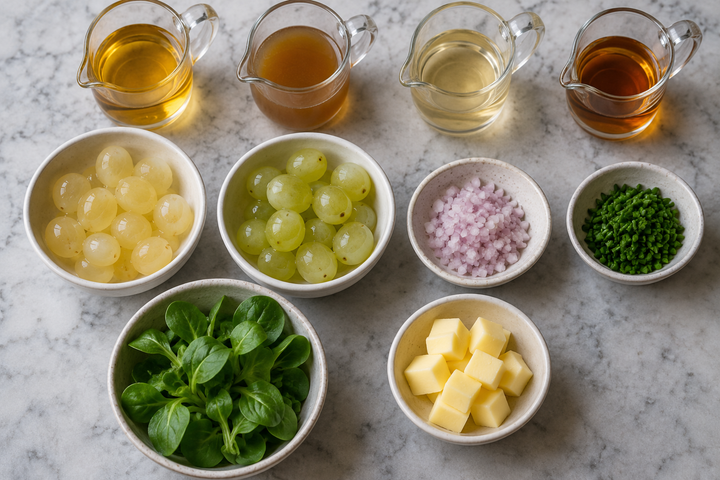
Prepare grapes, aromatics and accompaniments
- 1 Detach 180 g white Muscat grapes from their stems. Immerse 90 g in boiling water for 10 seconds, transfer to ice water and peel with your fingers.
- 2 Leave the remaining 90 g unpeeled and dry with paper towels.
- 3 Peel 1 shallot, about 25 g, and mince very finely, or ciseler.
- 4 Slice 3 g chives into 2 mm pieces.
- 5 Wash 20 g lamb’s lettuce in cold water, spin completely dry in a salad spinner and refrigerate.
- 6 Measure 80 ml Sauternes, 120 ml brown chicken stock, 20 ml verjuice and 15 ml Armagnac separately and arrange beside the stove.
- 7 Cut 20 g unsalted butter into 1 cm cubes and return to the refrigerator to keep cold.
Ready when
The grapes are divided into 90 g peeled and 90 g unpeeled, with all liquids and butter assembled beside the stove.
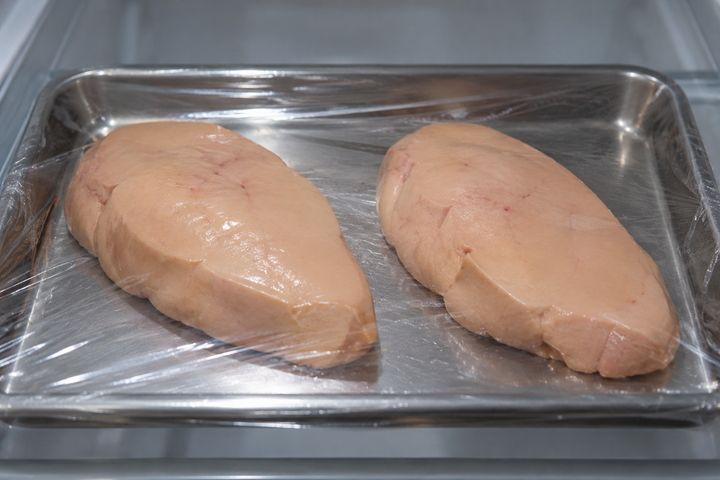
Trim and chill the foie gras
- 1 Use the tip of a knife to remove large blood vessels visible on the cut surfaces of the 2 chilled foie gras slices, keeping the flesh intact.
- 2 Pat dry, arrange on a clean tray, cover with plastic wrap and refrigerate until just before searing.
Ready when
There are 2 chilled escalopes, 1.5–2 cm thick and about 80 g each.
Caution
Leaving foie gras at room temperature too long softens its fat.
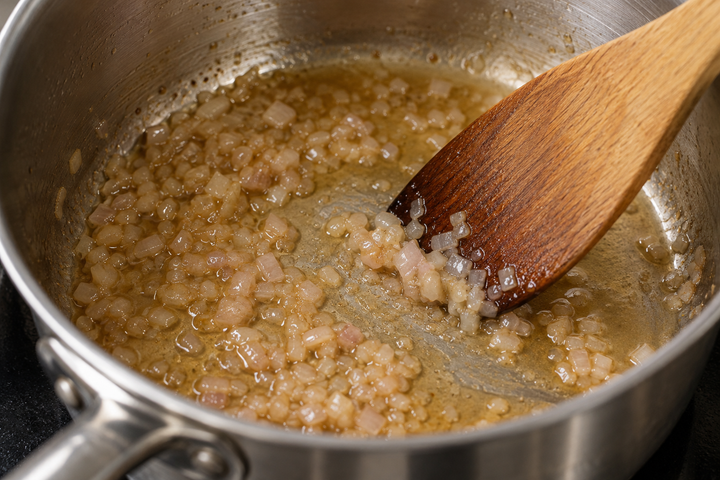
Make the sweet-wine sauce base
- 1 Melt 10 g butter in a small saucepan and sauté the minced shallot for 1 minute 30 seconds.
- 2 Turn off the heat briefly and pour in 15 ml Armagnac.
- 3 Return to medium heat and boil for 40–50 seconds to remove the alcohol smell.
- 4 Pour in 80 ml Sauternes and deglaze, scraping the bottom with a wooden spoon to dissolve the flavorful browned deposits in the liquid.
- 5 Reduce over medium heat for 2–3 minutes until half the liquid remains.
Ready when
The browned deposits are completely dissolved and the liquid barely covers the pan’s bottom.
Caution
Do not ignite the spirit.
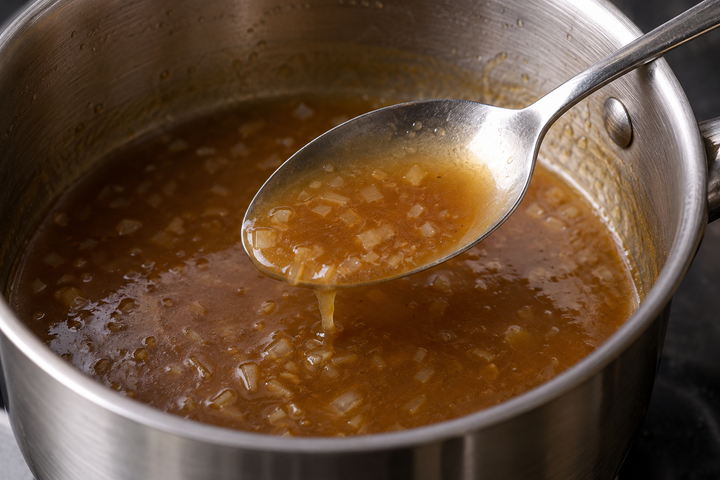
Reduce with stock and verjuice
- 1 Pour in 120 ml brown chicken stock and reduce over medium heat for 4–5 minutes to about 60 ml.
- 2 Add 20 ml verjuice, boil for 20 seconds, taste and season with 0.5 g fleur de sel.
- 3 Turn off the heat, cover and keep warm. Do not add the remaining 10 g butter yet.
Ready when
Continue when the sauce is lightly thickened and no sharp alcohol smell remains.
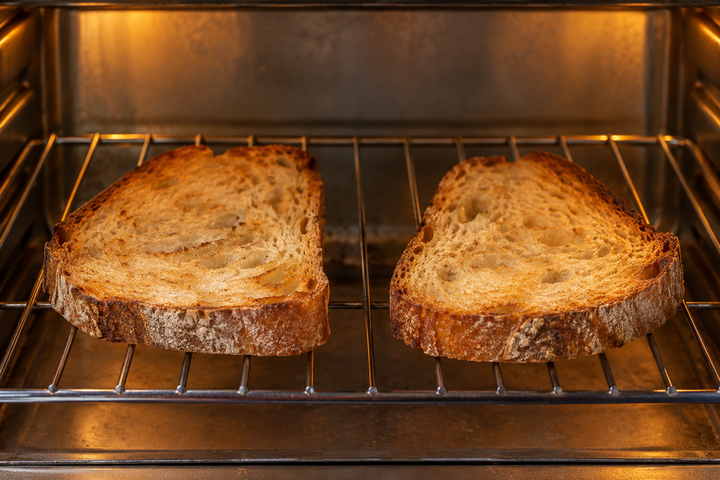
Toast the bread bases
- 1 MeanwhileWhile the bread toasts, warm 2 serving plates.
- 2 Prepare 2 slices of country bread, 1 cm thick.
- 3 Toast in a toaster oven or under a broiler for 1 minute 30 seconds per side, until the edges are golden.
Ready when
The surfaces are dry, the edges golden, and the slices feel lightly firm when lifted.
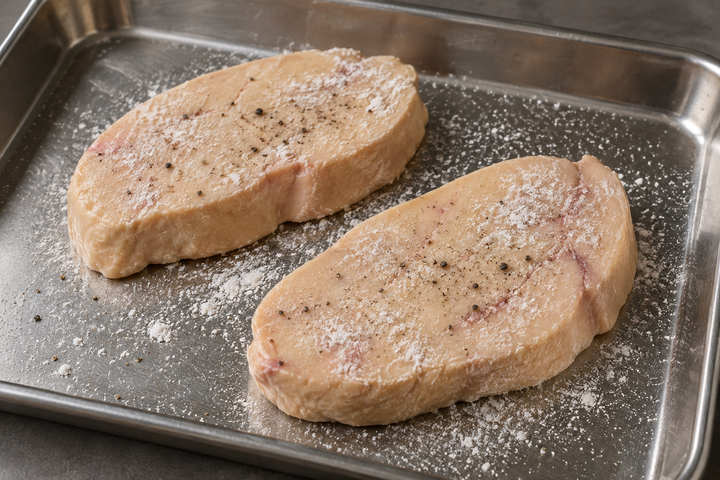
Season and lightly flour the foie gras
- 1 Preheat a cast-iron or heavy frying pan over medium heat without oil for 2 minutes 30 seconds.
- 2 Meanwhile, take the 2 escalopes from the refrigerator and lightly blot both sides with paper towels to remove moisture and seeped fat.
- 3 Season both sides evenly with 1.5 g fleur de sel and 0.5 g black pepper.
- 4 Sift 8 g cake flour lightly over both sides and edges through a tea strainer, then brush off the excess by hand.
Ready when
Both sides have a faint white flour coating and a slight heat shimmer rises from the pan.
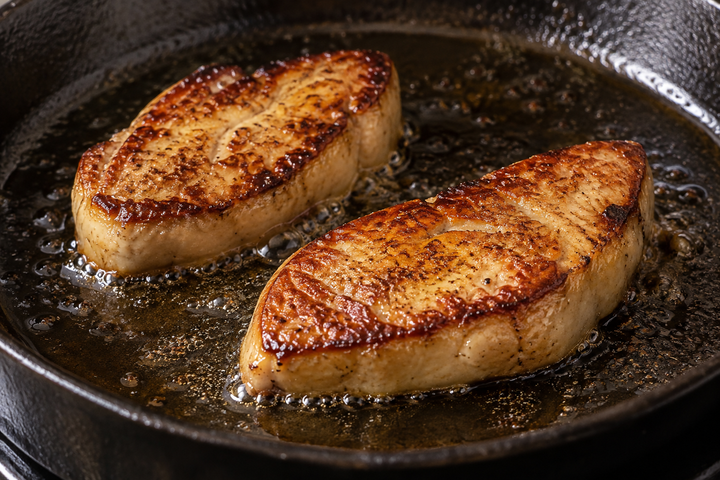
Brown and cook the foie gras through
- 1 Set the preheated pan over medium-high heat and place the 2 escalopes apart in it without adding oil.
- 2 Cook undisturbed for 45–60 seconds on the first side, then lift an edge with a spatula to check the color.
- 3 Once browned, turn over and reduce the heat. Cut into a thick part and cook until it is hot through the center with no pink remaining.
- 4 Transfer to a warmed tray and cover loosely with foil.
- 5 Leave only about 2 tsp rendered fat in the pan, transferring the rest to a heatproof container.
Ready when
Continue when both sides are browned and the cut surface has no pink remaining, with the center hot through.
Caution
Do not judge whether the center is cooked from the surface browning alone.
Tips
Cooking through to the center gives a firmer texture than the traditional lightly cooked finish.
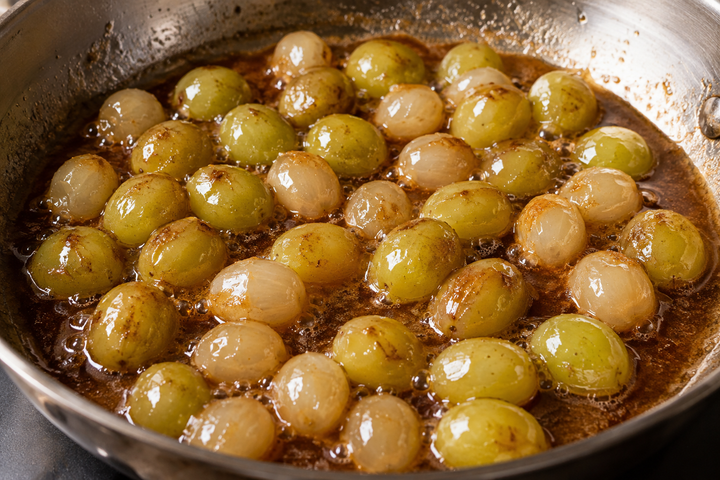
Combine the grapes and sauce
- 1 Return the foie gras pan to medium heat. Add 90 g unpeeled and 90 g peeled grapes and warm for 60 seconds, rolling them with a wooden spoon.
- 2 Sprinkle over 5 g granulated sugar and shake the pan for another 60–90 seconds to glaze the grapes.
- 3 Add the prepared warm sauce, stir and turn off the heat. Melt in the remaining 10 g butter and coat the grapes.
Ready when
The grapes are glossy, with very faint browned spots on their skins.
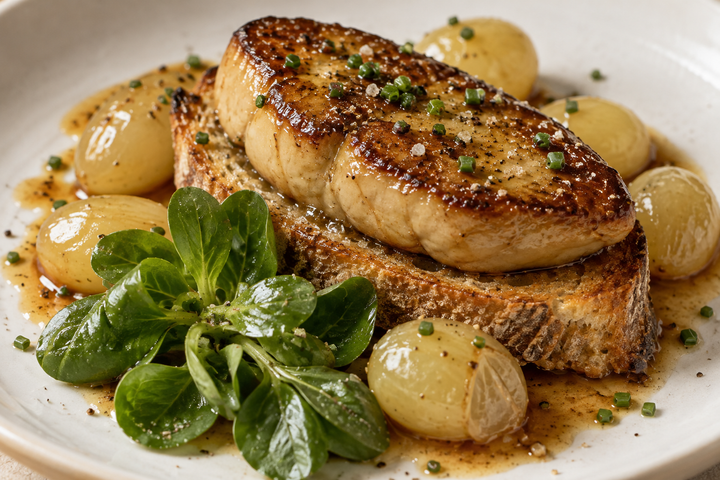
Assemble and finish the plates
- 1 Place 1 slice of toast in the center of each warmed plate.
- 2 Put 1 seared foie gras slice on each toast.
- 3 Distribute grapes evenly around the foie gras and spoon sauce along the edges of the foie gras and bread.
- 4 Place half of the 20 g lamb’s lettuce at the front of each plate.
- 5 Scatter 1 g fleur de sel over the foie gras with your fingers and grind over 0.5 g black pepper.
- 6 Sprinkle the 3 g sliced chives over everything.
Ready when
The seared foie gras surface is glossy and the sauce stays around its edges instead of spreading across the plate.
About this dish
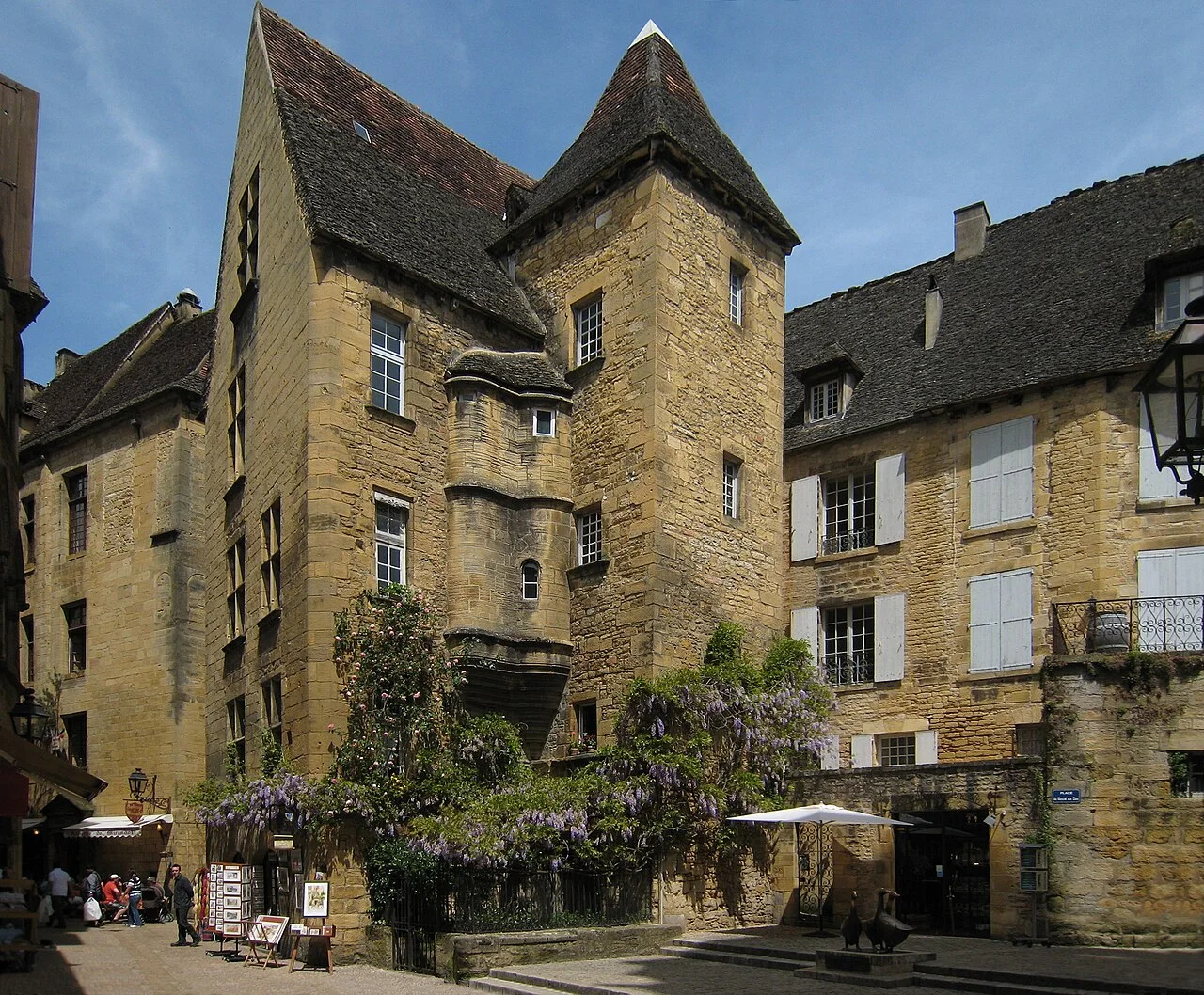
On Wednesday and Saturday mornings from November through February, producers from across Dordogne gather in Place Saint-Louis in Périgueux for a marché au gras, selling whole foie gras, confit and magret. Similar winter markets are held in Sarlat and Ribérac, with a day once a month devoted to rewarding outstanding products.
The history of the livers on these market stalls is tied to corn, which reached southwestern France in the 16th century. On small tenant farms, cattle could not provide meat. Poultry, regarded as the responsibility of the women of the household, was the only source of animal protein, and corn was the grain used to fatten it. Foie gras merchants appeared in southwestern towns in the 19th century, and faster transport allowed regular shipments to Paris.
Foie gras remains a symbol of celebration. In the southwest, it is traditionally paired with Sauternes, made from noble-rot grapes on the left bank of the Garonne.

Bring the full course home next weekend.
Bring every dish to the table at its best.
Choose the dishes you want to cook, and Chef Authen handles the shopping list and the day-of schedule. The Tabelia app turns everything from starter to main into one coordinated course in your kitchen.
- One shopping listBuilt automatically from your menu and any substitutions, ready to check off.
- One timelineEvery dish’s waiting and cooking time combined into a single schedule.
- Answers beyond the recipeFrom judging the heat to adapting on the fly, Chef Authen answers with concrete criteria, not guesses.