 TABELIA
AUTHENTIC RECIPE
Flan di Zucca con FondutaPumpkin Flan with Fontina Fonduta
- Total
- 4 hr 37 min
- Difficulty
- ★★★☆☆
- Serves
- 4 servings
- Prep 47 min
- Cook 1 hr 50 min
- Rest 2 hr
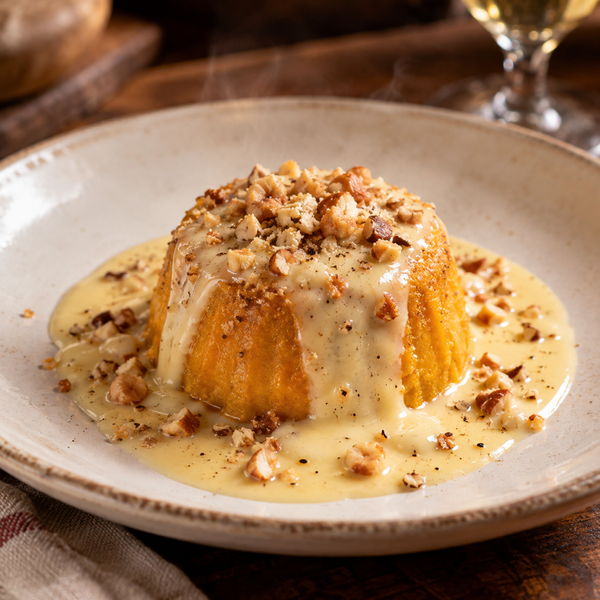
A classic autumn antipasto from Piedmont’s Langhe: sweet, floury squash is cut into thick wedges and roasted skin-on in a hot oven to remove moisture, then sieved and set with eggs and cream. Its fonduta topping is a rich cheese sauce of milk-soaked Fontina melted with butter over a water bath and emulsified with egg yolks; a smooth sauce without separation determines the dish’s success. The essential effort lies in roasting rather than boiling the squash to concentrate sweetness, gently baking the flans in a water bath without bubbles forming inside, and serving them warm.
AUTHENTICITY SCORE
Authenticity Score
This is the standard recipe, exactly as it’s made where it comes from — the highest Authenticity Score possible. Substituting ingredients changes this score; the app shows exactly how, ingredient by ingredient.
Ingredients (4 servings)
100Authenticity- Floury winter squash600 g600 g after removing seeds and fibers, yielding about 400 g cooked flesh; cut skin-on into wedges 3 cm thick
- Whole egg1Bring to room temperature and beat thoroughly
- Egg yolk for the flan1Bring to room temperature
- Cream (35–38% fat)60 mlWarm to body temperature before combining with the eggs
- Grated Parmigiano Reggiano30 gGrate just before use
- Nutmeg0.5 gFreshly grate from whole nutmeg
- Extra virgin olive oil15 mlFor roasting the squash
- Fine salt4 g2 g for seasoning the squash and 2 g for the custard mixture
- Black pepper0.5 gFreshly ground, for seasoning the squash
- Butter for the molds15 gBring to room temperature and brush inside 4 molds
- Fine dry breadcrumbs15 gCoat the buttered molds to help release the flans
- Fontina120 gTrim off the rind and cut into 1 cm cubes
- Whole milk100 mlFor soaking the Fontina; use cold
- Egg yolks for the fonduta2Bring to room temperature
- Butter for the fonduta15 gCut into 1 cm cubes and refrigerate until just before placing over the water bath
- White peppera littleGrind into the fonduta to finish
- Raw blanched hazelnuts20 gDry-toast in a pan, then chop roughly
Method
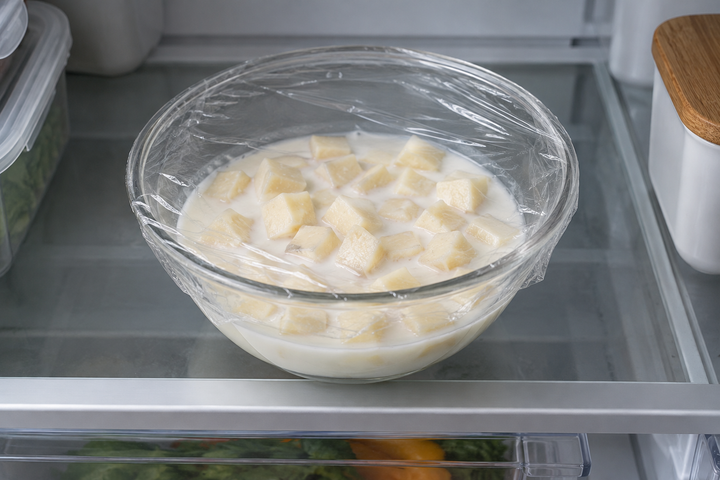
Soak the Fontina in milk for the fonduta
- 1 Prepare the fonduta, a Piedmontese and Valle d’Aosta cheese sauce made by soaking Fontina in milk, melting it with butter over a water bath and emulsifying with yolks: thinly trim the rind from 120 g Fontina and cut into 1 cm cubes.
- 2 Put the cubes in a bowl, pour over 100 ml cold milk to immerse the cheese, cover and soak for 2 hours in the refrigerator at 5°C or below.
Ready when
Soaking is complete when the corners soften and round off and 1 cube yields easily to gentle finger pressure.
Continue when enough milk has been absorbed that it flows only slowly between the cheese pieces when the bowl is tilted.
Caution
Keep cheese and eggs refrigerated until just before use; do not prepare egg-yolk sauce in advance.
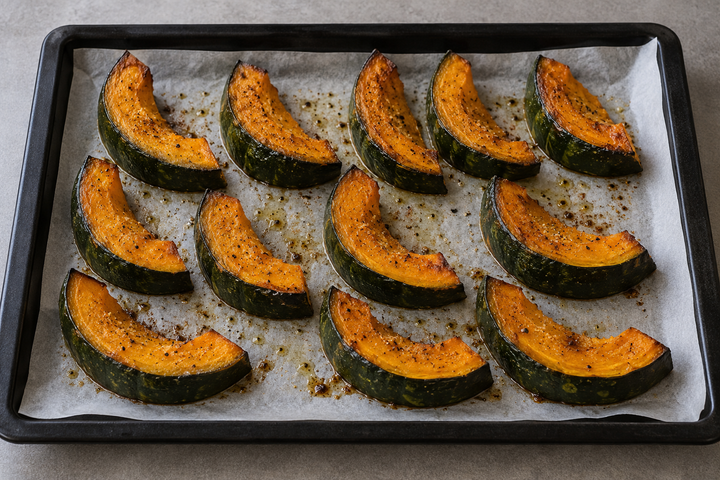
Roast the squash wedges to concentrate sweetness
- 1 Preheat the oven to 200°C.
- 2 Cut the squash, 600 g net after removing seeds and fibers, skin-on into wedges 3 cm thick.
- 3 Line a tray with baking parchment and arrange without overlapping, cut faces up.
- 4 Drizzle 15 ml extra virgin olive oil over the upward-facing cut surfaces, then season those same surfaces with 2 g salt and 0.3 g black pepper.
- 5 Bake at 200°C for 40–50 minutes.
Ready when
It is done when a skewer enters the flesh’s center without resistance, the cut edges are colored and the surface is dry.
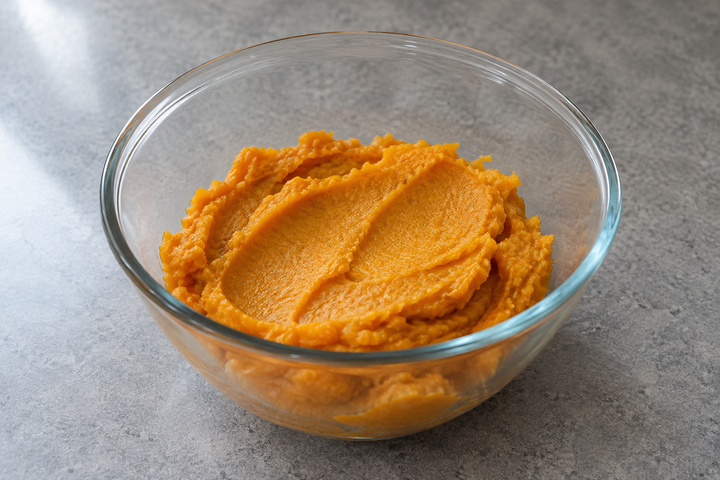
Sieve and reduce the purée
- 1 While the roasted squash is hot, slide a spoon between skin and flesh and scrape out only the flesh.
- 2 Press through a fine sieve with a wooden spoon to remove fibers and make a smooth purée.
- 3 Spread thinly in a frying pan and cook over medium heat for 3–5 minutes, stirring constantly to evaporate moisture.
- 4 Remove from the heat, transfer to a bowl and cool, stirring occasionally, to about body temperature, around 35°C.
Ready when
Continue when a spoon track remains instead of closing immediately and the net purée weighs about 400 g.
Combine and strain the squash batter
- 1 Warm 60 ml cream in a small saucepan over low heat to about 35°C.
- 2 In a bowl, loosen 1 whole egg and 1 yolk with a whisk without aerating, then pour in the warm cream and mix evenly.
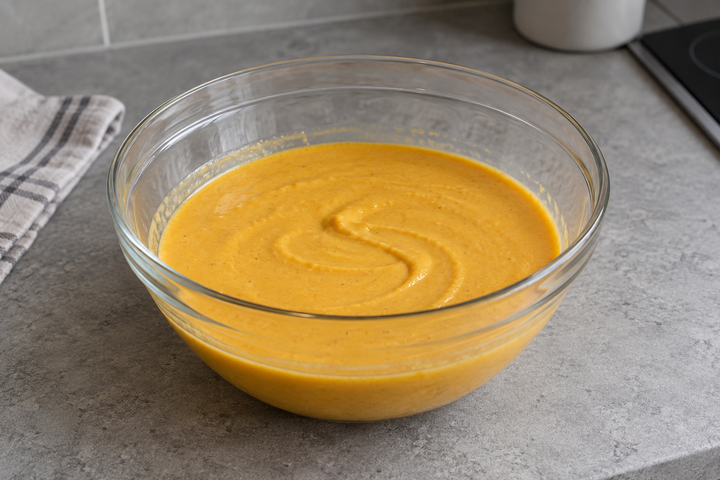
- 3 Add the egg mixture to the body-temperature squash purée in 3 additions, folding from the bottom with a spatula after each to make an appareil, a fluid egg-and-cream batter.
- 4 Add 30 g freshly grated Parmigiano, 0.3 g grated nutmeg and 2 g salt and mix thoroughly with a spatula.
- 5 Pass the batter once through a chinois, a fine conical sieve, into a bowl, pressing gently with the spatula.
Ready when
Continue when evenly deep orange and thick enough to fall in an unbroken ribbon from the spatula.
The strained batter should measure about 520 ml, enough for 4 molds.
Caution
Adding eggs to hot purée makes them set and become grainy.
Fill 4 molds and bake gently in a water bath
- 1 Meanwhile(While the flans bake.) Dry-toast 20 g hazelnuts in a frying pan over medium heat for 3–4 minutes, shaking constantly until fragrant and lightly colored, then chop roughly on a board.
- 2 Preheat the oven to 150°C.
- 3 Brush 15 g room-temperature butter over every part of the interiors of 4 molds of 150 ml capacity, from base to rim.
- 4 Add 15 g breadcrumbs successively to the molds, turning to coat all the insides, then invert to remove excess.
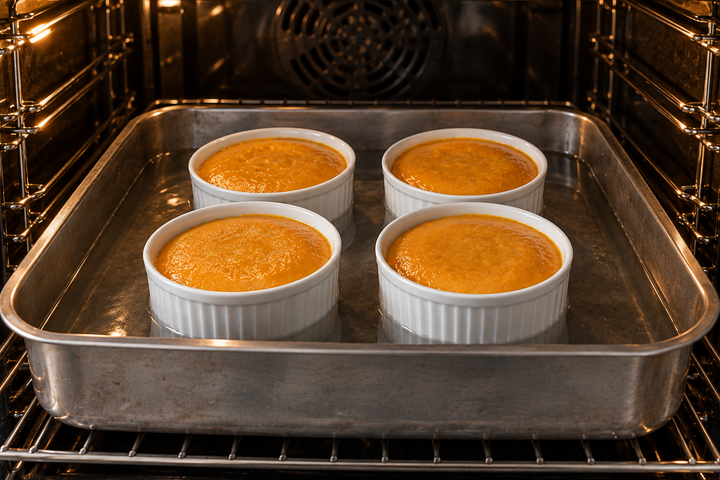
- 5 Divide the batter equally among the 4 molds, approximately 130 ml per mold, to 5 mm below the rim. Tap the bases gently on the worktop 2–3 times to release air bubbles.
- 6 Arrange the 4 molds in a deep ovenproof tray and gently pour in water at 60°C to 2/3 of their height: bagno maria, baking in a water bath.
- 7 Bake the tray in the oven at 150°C for 35–40 minutes.
Ready when
They are done when the centers wobble slightly under light finger pressure without batter sticking, and the surfaces are glossy.
Caution
A boiling water bath creates holes from bubbles inside the flans.
Let the flans settle in their molds
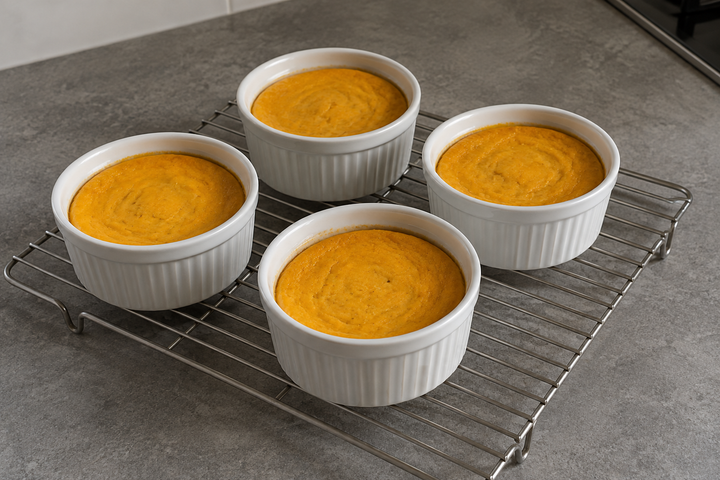
- 1 Use tongs to lift the 4 molds from the tray, set on a rack and rest for 15 minutes.
Ready when
Continue when the mold sides are warm rather than hot and the mixture does not move when tilted slightly.
Keep the flans warm and finish the fonduta
- 1 Lower the oven setting to 60°C and confirm with an oven thermometer that it has cooled to that temperature.
- 2 Put the 4 flans, still in their molds, on a tray and return to the 60°C oven with 4 serving plates to keep warm until plating.
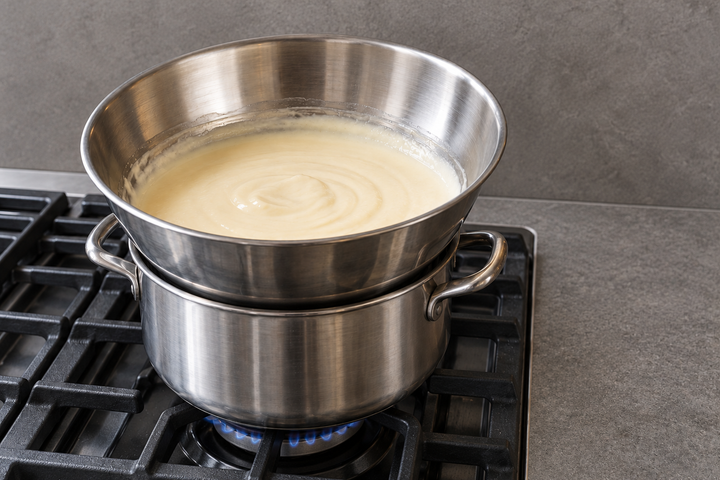
- 3 Heat a pot of water over low heat to around 70°C, with fine bubbles at the bottom but a still surface.
- 4 Transfer the soaked Fontina and its milk to a heavy stainless-steel bowl, add 15 g chilled butter in 1 cm cubes and set over the water bath. Stir constantly with a wooden spoon for 6–8 minutes to melt cheese and butter.
- 5 Remove the bowl from the bath and stir for 30 seconds to cool slightly, then add 2 yolks at once and mix quickly to combine.
- 6 Return to the water bath and heat for 3–5 minutes, stirring constantly in a figure 8 to thicken. Grind in 0.2 g white pepper and stir.
Ready when
Continue when no cheese granules remain and the sauce leaves a smooth film on the wooden spoon.
Caution
Overheating the yolk-enriched fonduta makes it split.
Unmold the warm flans and finish with fonduta
- 1 Using oven gloves, take the 4 warm plates and 4 flan molds from the oven.
- 2 Run a palette knife around the inside edge of a mold, invert onto the center of a warm plate and gently lift away. Repeat for the remaining 3.
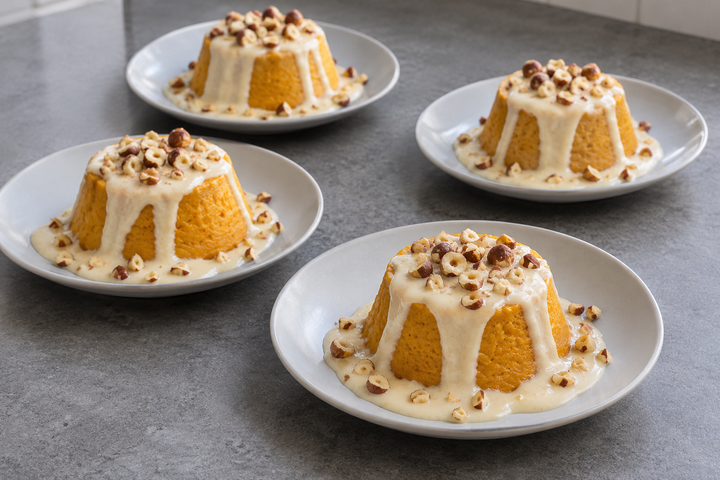
- 3 Divide all the warm fonduta equally among the 4 plates, pouring from the tops of the flans.
- 4 Divide the 20 g chopped hazelnuts equally among the 4 plates, scattering on the flans and over the sauce.
Ready when
It is ready when the flans stand intact and fonduta flows down their sides into a thin pool on the plates.
About this dish
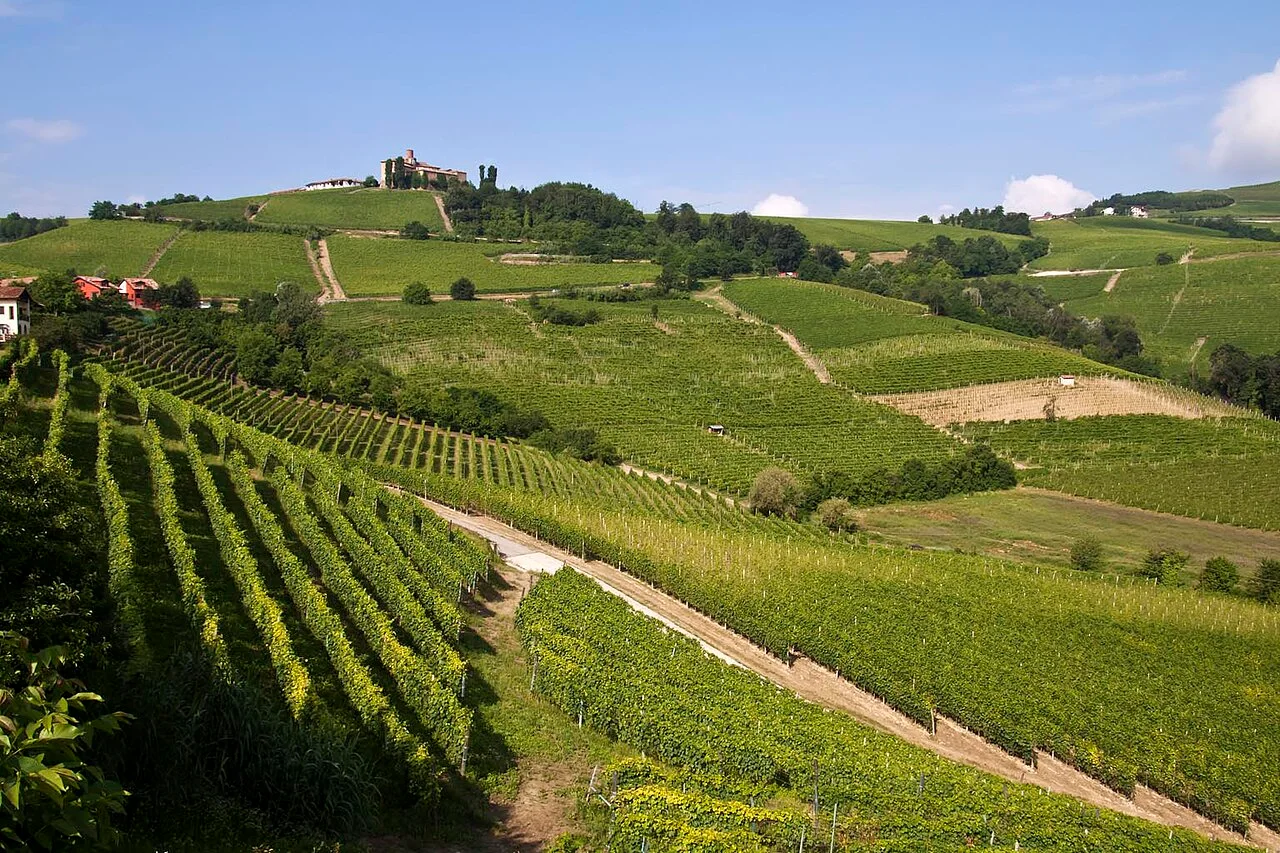
In Piedmontese trattorias, antipasti arrive one after another once guests sit down. The choice of primi is small, and some places do not serve secondi at all. Among more than 30 traditional antipasti is sformato, vegetables baked with eggs and milk, commonly served with warm cheese fonduta.
Squash is an autumn harvest in rural Piedmont. The October squash fair in Piozzo, in Cuneo province, displays more than 600 varieties. People in the village once hollowed out squash to use as wine containers.
Fonduta appeared in the 1854 cookbook of Giovanni Vialardi, a cook at the House of Savoy’s court, and Artusi also presented it under the name cacimperio. The Fontina used in it comes from neighboring Valle d’Aosta and is made from the milk of cows grazing at high altitude in summer.

Bring the full course home next weekend.
Bring every dish to the table at its best.
Choose the dishes you want to cook, and Chef Authen handles the shopping list and the day-of schedule. The Tabelia app turns everything from starter to main into one coordinated course in your kitchen.
- One shopping listBuilt automatically from your menu and any substitutions, ready to check off.
- One timelineEvery dish’s waiting and cooking time combined into a single schedule.
- Answers beyond the recipeFrom judging the heat to adapting on the fly, Chef Authen answers with concrete criteria, not guesses.