 TABELIA
AUTHENTIC RECIPE
Castagnaccio
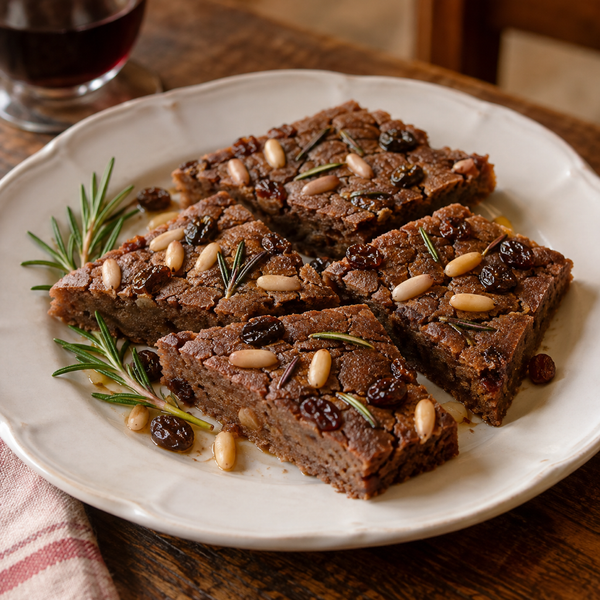
A Tuscan autumn cake with a batter of chestnut flour, water, olive oil and salt, scattered with soaked pine nuts, raisins and rosemary, drizzled with olive oil and baked thin at 200°C. With no sugar, eggs or raising agents, its flavor rests on 3 points: sift the flour 2 times, add water gradually to eliminate lumps, and use the surface oil film to form a dry, cracked crust. The authentic finish contrasts a chewy interior with a thin, dry, cracked surface.
AUTHENTICITY SCORE
Authenticity Score
This is the standard recipe, exactly as it’s made where it comes from — the highest Authenticity Score possible. Substituting ingredients changes this score; the app shows exactly how, ingredient by ingredient.
Ingredients (6 servings)
- Chestnut flourAlways sift 2 times through a fine sieve; remaining lumps leave hard centers after baking150 g
- WaterAt room temperature; add gradually to dissolve the chestnut flour250 ml
- Water for soakingDivide into 150 ml lukewarm water at 40°C for soaking raisins and 100 ml room-temperature water for pine nuts250 ml
- Extra virgin olive oil20 ml in the batter, 15 ml over the entire inside of the tin and 15 ml over the surface before baking. The oil film creates the cracked thin crust and protects the nuts from burning50 ml
- Sultana raisinsSoak in lukewarm water at 40°C for 15 minutes and squeeze dry30 g
- Pine nutsSoak in room-temperature water for 10 minutes, pat dry, mix 10 g into the batter and scatter 10 g over the surface20 g
- Fresh rosemaryChop the leaves from 1 sprig for the batter; leave the leaves from the other 1 sprig whole for the surface2 pieces
- Fine saltSift together with the chestnut flour2 g
Method
Soak the raisins and pine nuts and divide the rosemary
- 1 Meanwhile(During the 15 minutes while the raisins and pine nuts soak) strip the leaves from 1 rosemary sprig and roughly chop with a knife.
- 2 Meanwhile(During the same 15 minutes) strip the remaining 1 sprig and set the leaves aside on a small plate, whole, for the surface.
- 3 Prepare 150 ml lukewarm water at 40°C in a bowl and soak 30 g raisins for 15 minutes.
- 4 Put 100 ml room-temperature water in a separate small bowl and soak 20 g pine nuts for 10 minutes.
- 5 After 10 minutes, drain the pine nuts in a sieve, gently pat the surface moisture off with paper towels and divide onto small plates into 10 g for the batter and 10 g for the surface.
- 6 After 15 minutes, drain the raisins and squeeze gently but thoroughly in your hand.
Ready when
Proceed when the raisins feel plump and soft between your fingers and no water sits on their surface after squeezing.
The pine nuts should be moist without dripping when pinched.
Sift twice and gradually mix in water for a lump-free batter
- 1 Set a fine sieve over a bowl and sift together 150 g chestnut flour and 2 g salt. Return the sifted flour to the sieve and sift again, for a total of 2 times.
- 2 Whisking from the center, pour in just the first 50 ml of the 250 ml water and work into a stiff paste, crushing any lumps.
- 3 Add the remaining 200 ml water in 4 additions of 50 ml, whisking until even after each addition.
- 4 Add 20 ml extra virgin olive oil in a thin stream and mix for about 30 seconds, until fully incorporated with no oil floating on the surface.
- 5 Add the chopped rosemary, 10 g batter pine nuts and 30 g squeezed raisins, folding from the bottom with a rubber spatula to distribute evenly.
Ready when
Proceed when the batter flows thickly but is slightly looser than cream, and a track drawn with a wooden spoon remains briefly before disappearing.
No flour lumps should be visible in the batter falling from a raised whisk.
Caution
Adding all the water at once makes lumps more likely.
Rest so the chestnut flour absorbs the water
- 1 Cover the bowl with plastic wrap and rest at room temperature for 30 minutes.
- 2 After 15 minutes of resting, start preheating the oven to 200°C with a baking sheet on the lower rack.
Ready when
Proceed when the large surface bubbles have disappeared and the batter has thickened slightly as the flour absorbs water.
Oil the tin, pour 1.5 cm deep and finish the surface
- 1 Brush 15 ml extra virgin olive oil over the entire base and sides of a round tin 20 cm in diameter.
- 2 Stir the batter once more with a rubber spatula and pour it all into the oiled tin to a depth of about 1.5 cm.
- 3 Tap the tin gently on the worktop 2–3 times to level the surface.
- 4 Scatter the reserved 10 g pine nuts and whole rosemary leaves evenly over the entire surface.
- 5 Drizzle the remaining 15 ml extra virgin olive oil in a thin moving stream over the whole surface.
Ready when
The batter should be about 1.5 cm deep throughout, with pine nuts and rosemary evenly distributed.
Bake when the whole surface is wet and shiny with an oil film, with no dry batter exposed.
The oven must have reached 200°C.
Caution
If the batter is too thick, the center will not cook easily.
Bake at 200°C to form a dry, cracked crust
- 1 Bake on the lower rack of the preheated 200°C oven for 35–40 minutes.
- 2 Check after 20 minutes; if the surface is browning unevenly on one side, rotate the tin 180 degrees.
- 3 At 35 minutes, if the surface pine nuts or raisins are too dark, loosely cover with foil and continue for the remaining time.
Ready when
It is baked when the surface is dry and deep brown with fine cracks throughout.
A bamboo skewer inserted in the center should come out without wet batter.
Cool in the tin until stable enough to slice
- 1 Transfer the baked tin to a rack and cool in the tin for 15 minutes.
Ready when
Proceed when the base of the tin is cool enough to touch and hold, about 50°C.
The cracked crust should remain dry and the center should not sink when pressed.
Caution
It is fragile straight from the oven, so do not skip the cooling time.
Unmold, cut into diamonds and serve warm
- 1 Run a palette knife around the sides, release the cake from the tin and transfer to a plate.
- 2 Cut into diamonds with sides of about 5 cm and arrange with the cracked surface facing up.
Ready when
It is ready when the cut faces remain intact with distinct edges.
About this dish
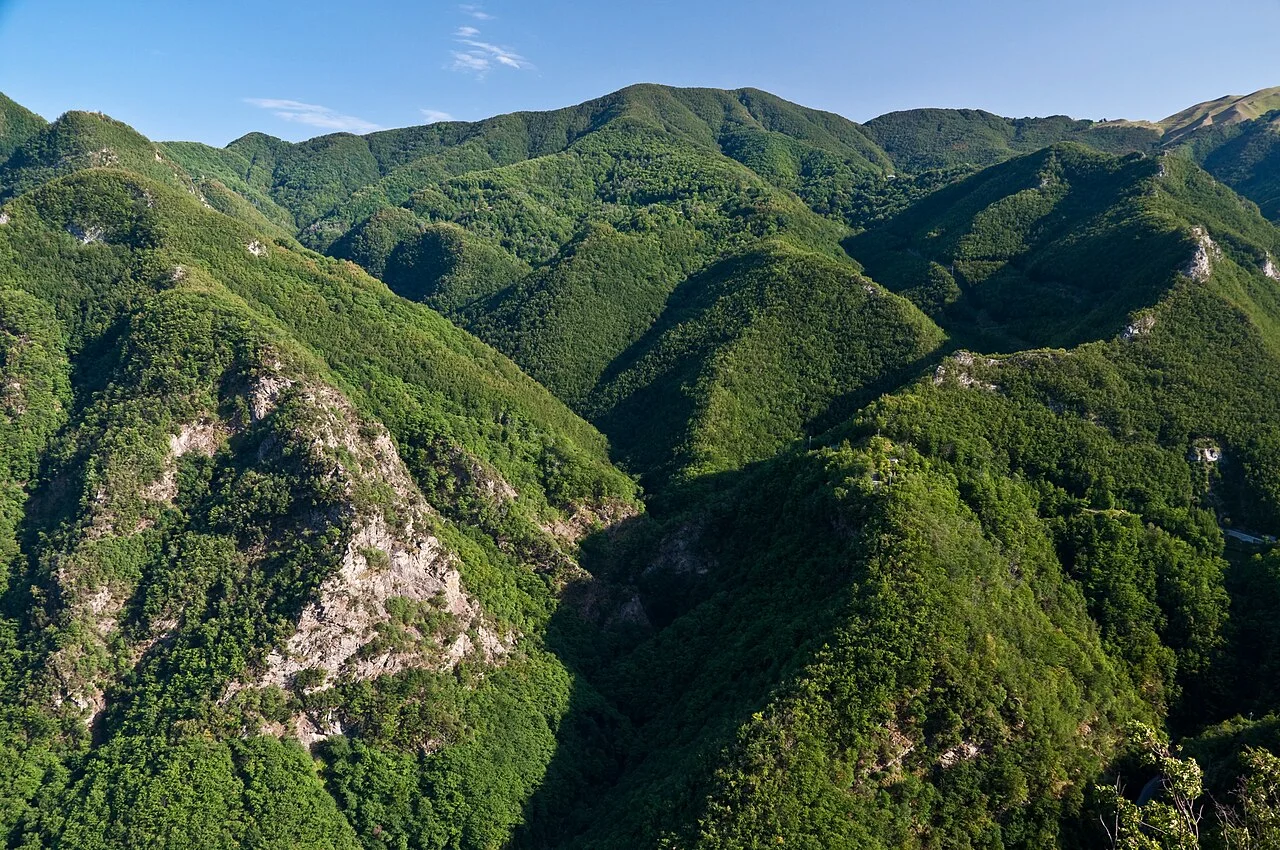
In the Garfagnana valleys north of Lucca, chestnut woods on the slopes have sustained daily life for centuries. In mountains where wheat grows poorly, flour ground from dried chestnuts became bread and porridge, and chestnut trees came to be known as “bread trees.”
Chestnuts gathered in October are dried for several weeks in huts called metati, using the heat and smoke of a fire below. The newly milled flour appears in late autumn, and castagnaccio is a seasonal cake baked with this fresh flour.
Its formula without sugar or eggs directly reflects life in mountain households. Today it appears in bakeries and pastry shops throughout Tuscany from autumn to winter, with some local traditions adding citrus zest or walnuts. This version follows the rustic form scattered only with rosemary, pine nuts and raisins.

Bring the full course home next weekend.
Bring every dish to the table at its best.
Choose the dishes you want to cook, and Chef Authen handles the shopping list and the day-of schedule. The Tabelia app turns everything from starter to main into one coordinated course in your kitchen.
- One shopping listBuilt automatically from your menu and any substitutions, ready to check off.
- One timelineEvery dish’s waiting and cooking time combined into a single schedule.
- Answers beyond the recipeFrom judging the heat to adapting on the fly, Chef Authen answers with concrete criteria, not guesses.