 TABELIA
AUTHENTIC RECIPE
Cantucci e Vin SantoCantucci and Vin Santo
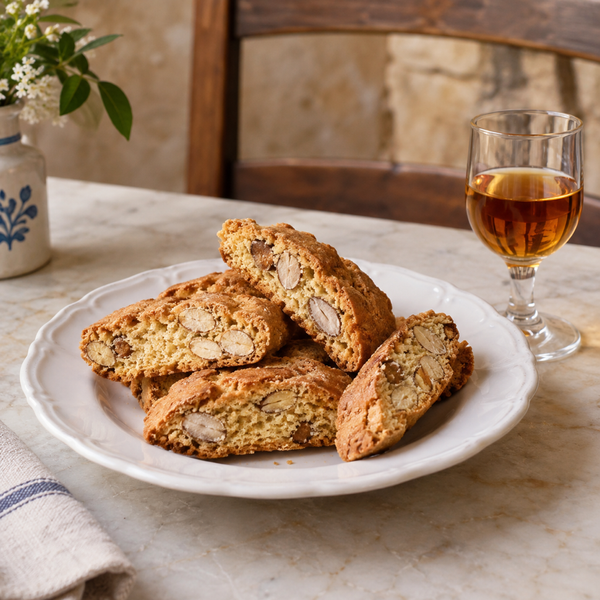
Crisp almond biscotti originating in Prato. Baking twice creates their distinctive texture. The Tuscan way is to eat them dipped in the dessert wine Vin Santo.
AUTHENTICITY SCORE
Authenticity Score
This is the standard recipe, exactly as it’s made where it comes from — the highest Authenticity Score possible. Substituting ingredients changes this score; the app shows exactly how, ingredient by ingredient.
Ingredients (8 servings)
- Cake flour300 g
- Sugar200 g
- Whole unpeeled almondsRaw or roasted; roasted almonds are more fragrant200 g
- Eggs3
- Baking powder5 g
- Orange zestUse a Japanese-grown, unwaxed orange; grate only the colored outer peel, avoiding the white pith1 orange, zested
- Salt1 g
- Vin Santo dessert wineServe alongside; dipping the biscuits is traditional100 ml
Method
Mix the dry ingredients
- 1 Preheat the oven to 180°C.
- 2 Finely grate only the colored outer peel of the orange.
- 3 Mix the flour, sugar, baking powder, salt and grated orange zest in a bowl.
Ready when
Continue when evenly mixed.
Bring the dough together
- 1 Add 2 eggs and bring the dough together; reserve the remaining 1 egg for the egg wash.
- 2 Fold 200 g almonds into the dough.
Ready when
Continue when the almonds are evenly distributed throughout.
Caution
Fold gently so the almonds do not break.
Shape into logs
- 1 Shape the dough into 2 sausage-like logs, 4–5 cm in diameter and 25–30 cm long.
- 2 Place on a baking tray lined with baking parchment.
- 3 Brush the surface with egg wash.
Ready when
Continue when the logs are evenly shaped.
First bake
- 1 Bake at 180°C for 20–25 minutes.
- 2 Once baked, leave to cool for 15 minutes.
Ready when
Continue when the surface is golden and the dough is set.
Second bake
- 1 Cut diagonally into slices 1.5–2 cm wide.
- 2 Arrange on the baking tray with a cut face up.
- 3 Bake again at 150°C for 15–20 minutes.
Ready when
They are done when crisp.
Serve
- 1 Cool completely and place in a storage container.
- 2 To serve, pour Vin Santo into glasses and offer alongside.
About this dish
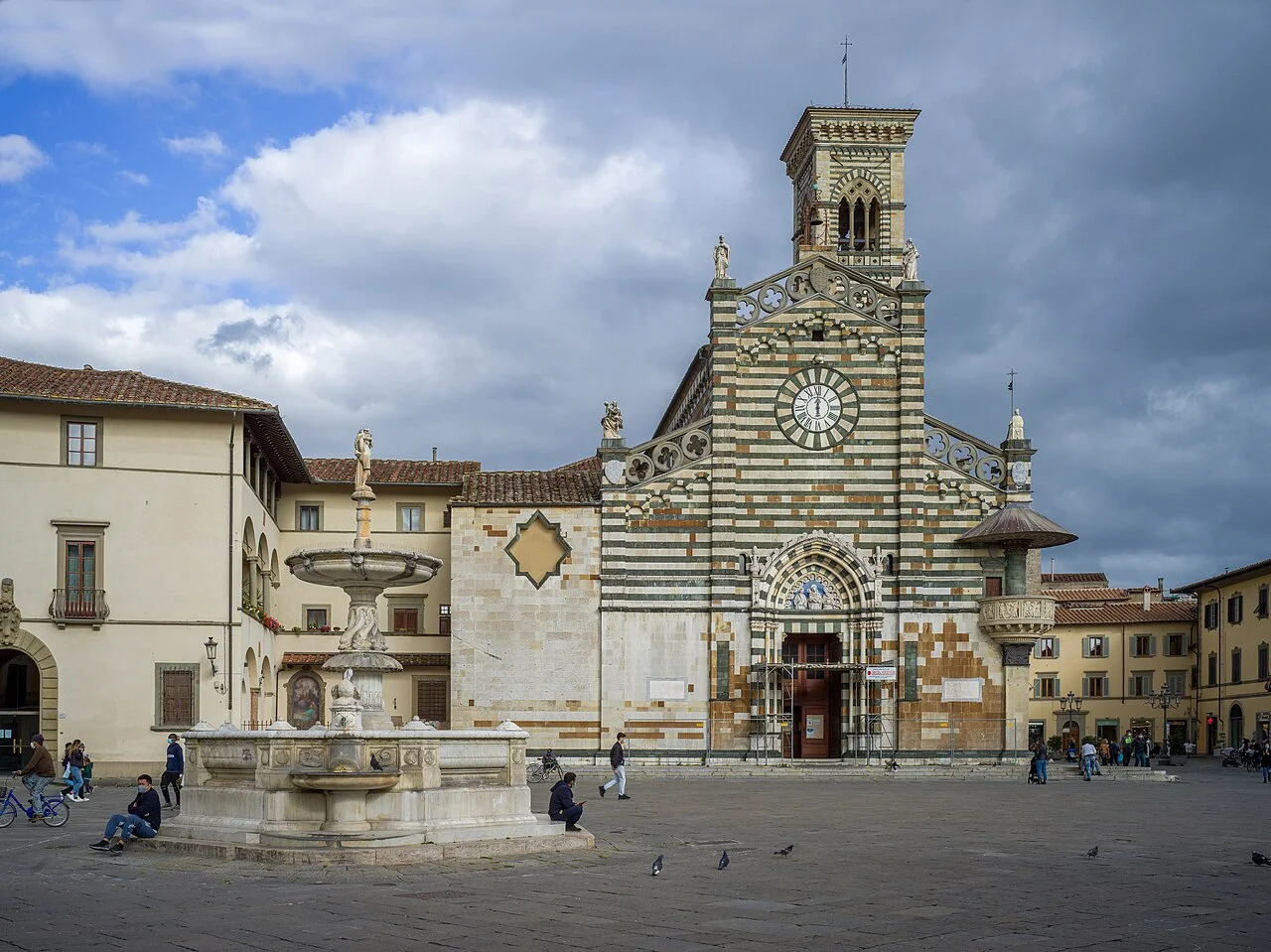
Cantucci, established in the 19th century by Prato pastry maker Antonio Mattei, have now spread throughout Italy. An IGP application has also been made under the name Biscotti di Prato, and some people in Prato regard the name cantucci as strictly referring to products from other areas.
One theory traces the name cantucci to the Latin cantus, meaning corner. Baking twice removes moisture thoroughly, allowing the biscuits to keep for several weeks; they were also valued as food for travelers and sailors.
Vin Santo means “holy wine.” Its grapes are partially dried before winemaking and the wine matures for several years in small barrels. Dipping cantucci in Vin Santo remains a distinctively Tuscan custom: only this combination completes the eating experience.

Bring the full course home next weekend.
Bring every dish to the table at its best.
Choose the dishes you want to cook, and Chef Authen handles the shopping list and the day-of schedule. The Tabelia app turns everything from starter to main into one coordinated course in your kitchen.
- One shopping listBuilt automatically from your menu and any substitutions, ready to check off.
- One timelineEvery dish’s waiting and cooking time combined into a single schedule.
- Answers beyond the recipeFrom judging the heat to adapting on the fly, Chef Authen answers with concrete criteria, not guesses.