 TABELIA
AUTHENTIC RECIPE
Canelé de BordeauxBordeaux Canelés
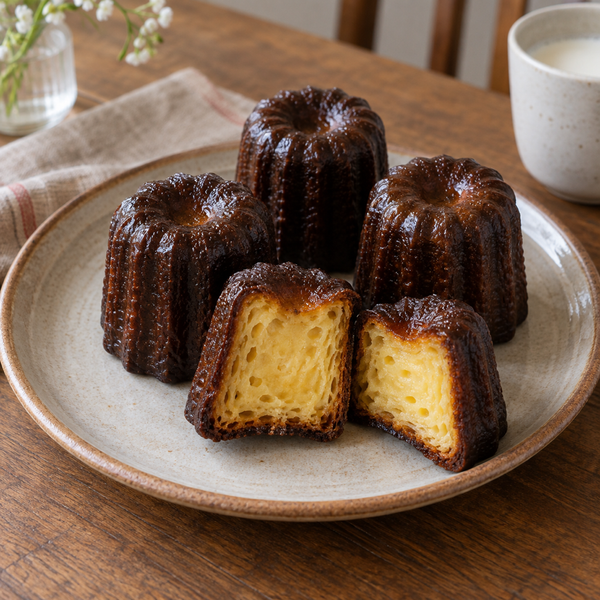
Originating in a Bordeaux convent, these pastries use a crêpe-like rum-and-vanilla batter rested for 24 hours, then baked in fluted molds in 2 stages, at high and lower temperatures. An almost black mahogany-colored crisp shell surrounds a golden, chewy, honeycombed interior. This dramatic contrast comes entirely from resting the batter and controlling baking temperatures: the timing skills of pastry making condensed into a small cake.
AUTHENTICITY SCORE
Authenticity Score
This is the standard recipe, exactly as it’s made where it comes from — the highest Authenticity Score possible. Substituting ingredients changes this score; the app shows exactly how, ingredient by ingredient.
Ingredients (4 servings)
- Whole milkWarm with butter and vanilla500 ml
- Unsalted butter (for batter)Melt together with the milk40 g
- Vanilla beanSplit lengthwise, scrape out the seeds and add both seeds and pod to the milk1 piece
- Cake flour100 g
- Granulated sugarThe generous sugar content creates the caramelized outer shell220 g
- Whole egg1 piece
- Egg yolksCombine with the whole egg for richness2 pieces
- Dark rumA defining aroma of canelés; the alcohol evaporates during baking40 ml
- Unsalted butter (for the molds)Melt and brush inside the molds20 g
Method
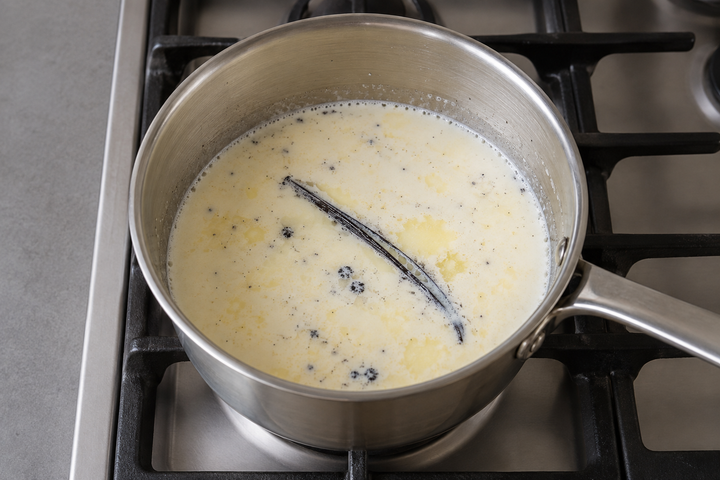
Warm the vanilla milk
- 1 Split 1/2 vanilla pod lengthwise and scrape out the seeds with the back of a knife.
- 2 Put 500 ml milk, 40 g batter butter, the vanilla seeds and pod in a saucepan over medium heat. Turn off the heat just before boiling, when the butter has melted and small bubbles appear around the edge.
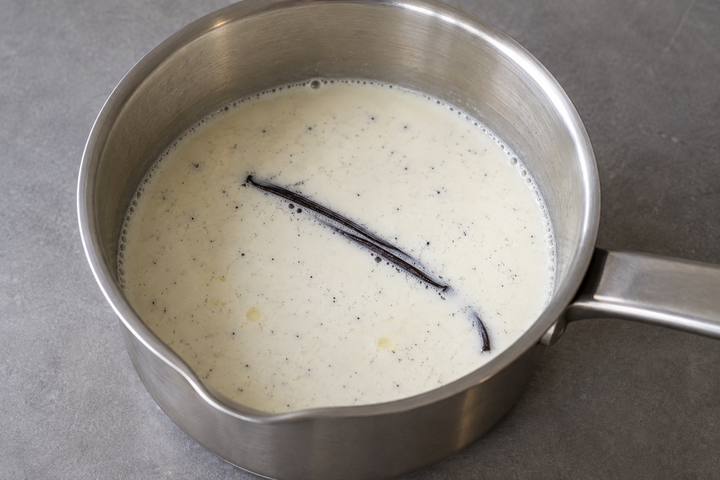
Cool the milk to body temperature
- 1 Let the warmed milk cool to about body temperature.
Ready when
Proceed when it has reached around 36°C and does not feel hot when a finger is dipped in it.
Caution
Continuing while it is hot will cook the eggs.
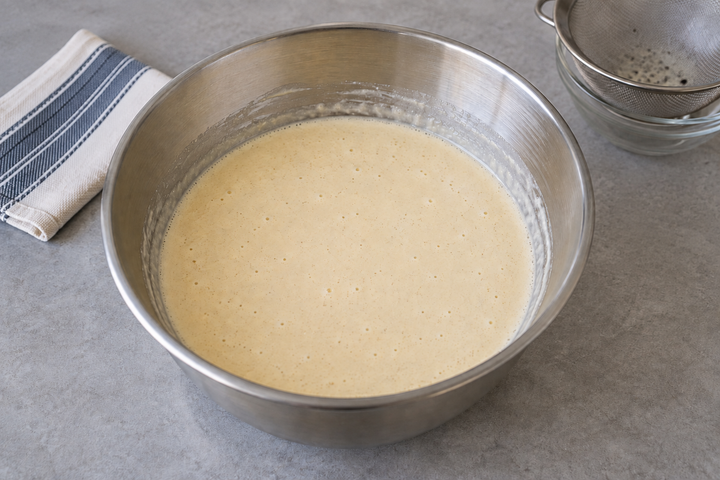
Make the canelé batter
- 1 Mix 100 g cake flour and 220 g granulated sugar in a bowl.
- 2 Beat 1 whole egg and 2 egg yolks in a separate container, add to the flour bowl and mix roughly.
- 3 Gradually pour in the milk cooled to body temperature through a strainer to loosen the mixture, then add 40 ml rum. Stop mixing when it is lump-free and fluid like crêpe batter. Kneading-like mixing develops gluten and makes the baked cakes tough.
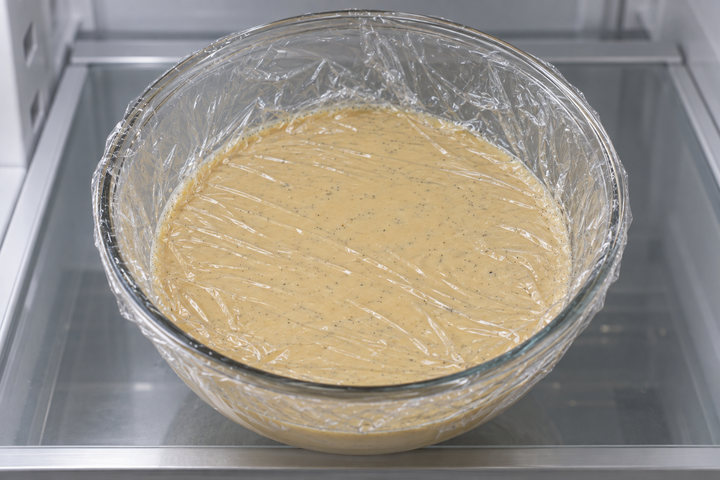
Rest the batter for 24 hours
- 1 Strain the batter into a container, press plastic wrap against its surface and mature in the refrigerator for 24 hours.
- 2 This resting relaxes the gluten and prevents collapse and excessive rising during baking.
- 3 The canelé’s texture is created by this waiting time.
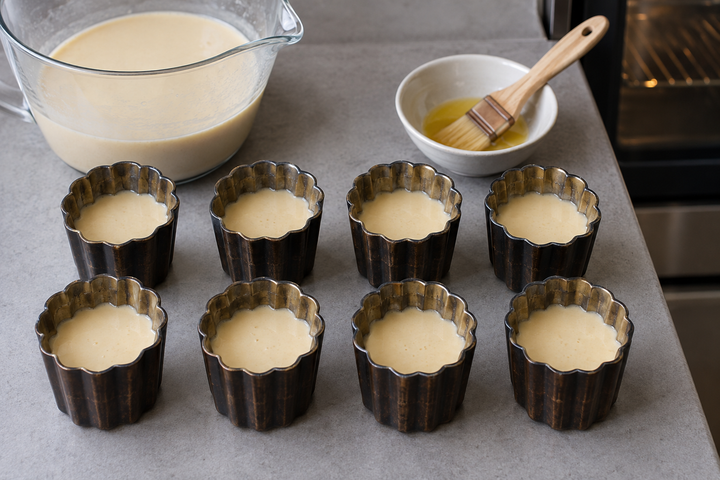
Fill the molds
- 1 Start preheating the oven to 230°C.
- 2 Meanwhile(While the oven heats) melt 20 g mold butter and brush evenly inside 8 canelé molds.
- 3 Remove the batter from the refrigerator, gently stir from the bottom to reincorporate settled flour and fill the molds to 8/10 of their height.
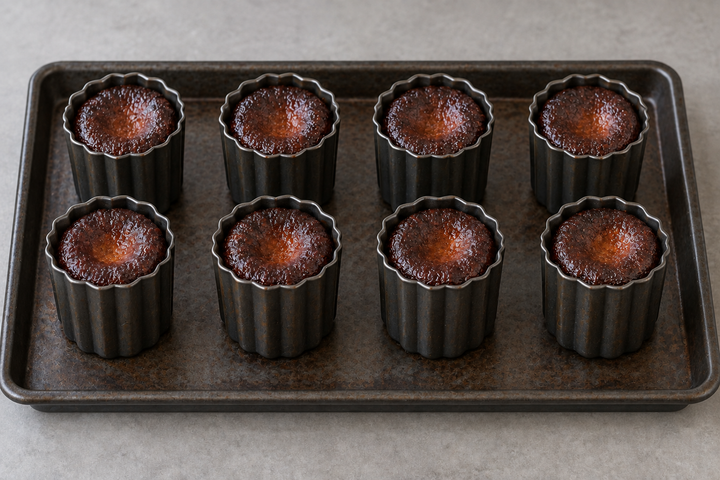
Bake at high and lower temperatures
- 1 Bake at 230°C for 15 minutes, then lower to 180°C without opening the door and bake for another 45–50 minutes.
- 2 They are baked when the entire surface is a very dark, almost black mahogany and the canelés move inside the molds when tilted gently.
- 3 Taking them out while pale makes the shell quickly become damp.
Caution
The right color is dark enough to make you wonder whether they are burnt. Stopping at golden brown will not create the characteristic contrast between a crisp shell and chewy center.
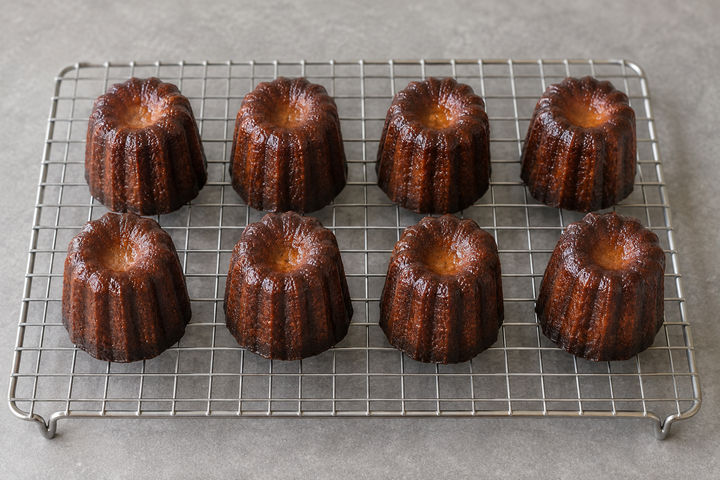
Unmold and firm the shells
- 1 Immediately after baking, invert the molds to release the canelés and cool on a rack for 1 hour.
- 2 They taste best eaten on the day of baking, before the shells become damp.
Ready when
The outer shell firms and becomes crisp as it cools.
About this dish
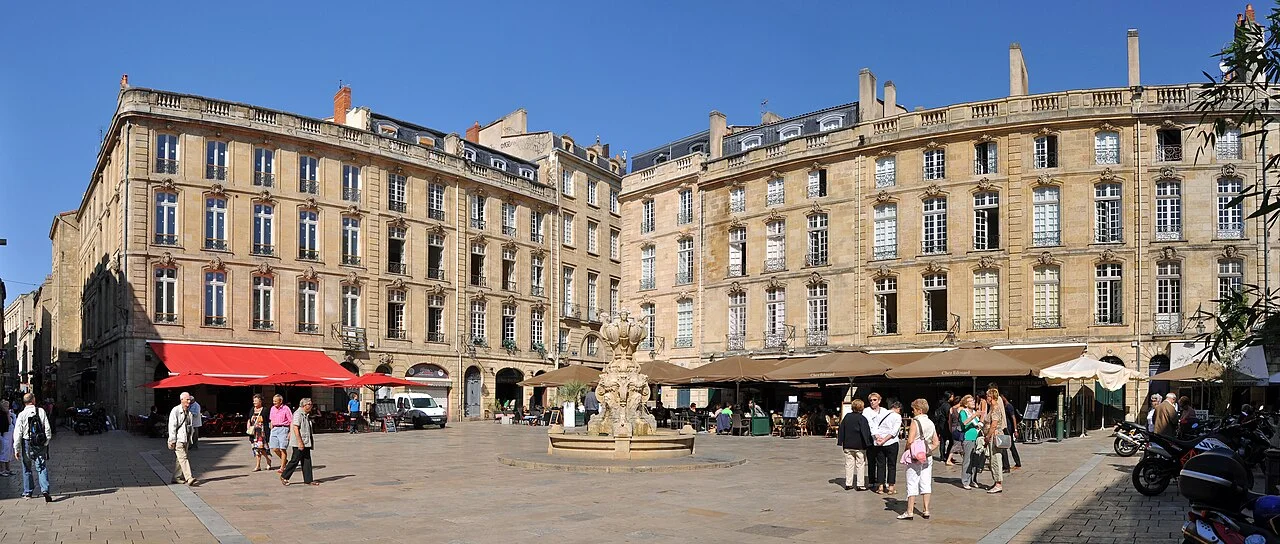
Bordeaux is a wine capital in southwestern France, spread along the Garonne. Canelés are said to have originated at the city’s Annonciades convent, with an early version already being baked in the 18th century.
Bordeaux winemaking has long used large amounts of egg whites for collage, or fining, to settle sediment and clarify wine. According to tradition, the leftover yolks were delivered to the convent and used for canelé batter, a story that reveals the pastry’s bond with the wine city.
Today specialist canelé shops line the streets throughout Bordeaux, and the pastries are woven into daily life, from a single cake with morning coffee to boxed assortments as souvenirs. Even the shape of their little fluted molds is part of their enduring identity as a beloved symbol of Bordeaux.

Bring the full course home next weekend.
Bring every dish to the table at its best.
Choose the dishes you want to cook, and Chef Authen handles the shopping list and the day-of schedule. The Tabelia app turns everything from starter to main into one coordinated course in your kitchen.
- One shopping listBuilt automatically from your menu and any substitutions, ready to check off.
- One timelineEvery dish’s waiting and cooking time combined into a single schedule.
- Answers beyond the recipeFrom judging the heat to adapting on the fly, Chef Authen answers with concrete criteria, not guesses.