 TABELIA
AUTHENTIC RECIPE
Cacio e Pepe
- Total
- 20 min
- Difficulty
- ★★★☆☆
- Serves
- 2 servings
- Prep 5 min
- Cook 15 min
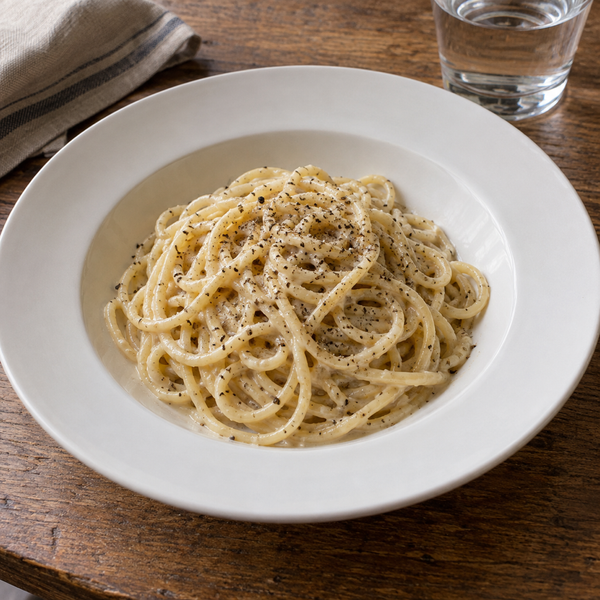
Rome’s oldest pasta dish, made with just cheese and black pepper. The ingredients are simple, but the technique of emulsification is put to the test.
AUTHENTICITY SCORE
Authenticity Score
This is the standard recipe, exactly as it’s made where it comes from — the highest Authenticity Score possible. Substituting ingredients changes this score; the app shows exactly how, ingredient by ingredient.
Ingredients (2 servings)
100Authenticity- Tonnarelli or spaghetti200 gSquare-cut tonnarelli are traditional; spaghetti may also be used
- Pecorino Romano70 gFinely grated
- Coarsely ground black pepper0.5 tspLightly toast in a frying pan before using
Method
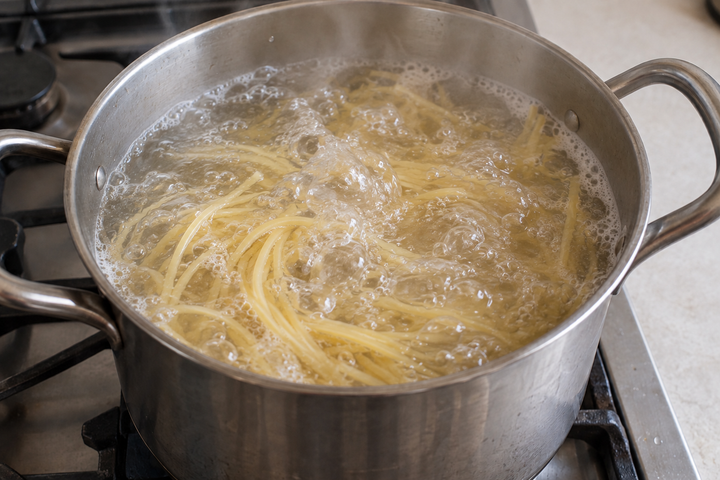
Boil the water and cook the pasta
- 1 Bring a large pot of water to the boil and add salt, approximately 0.7–0.8% of the water quantity.
- 2 When boiling, add 200 g pasta.
Ready when
After about 10 minutes, continue when the pasta is 2 minutes short of the package cooking time.
Caution
Use less salt than usual in the cooking water because the cheese is salty.
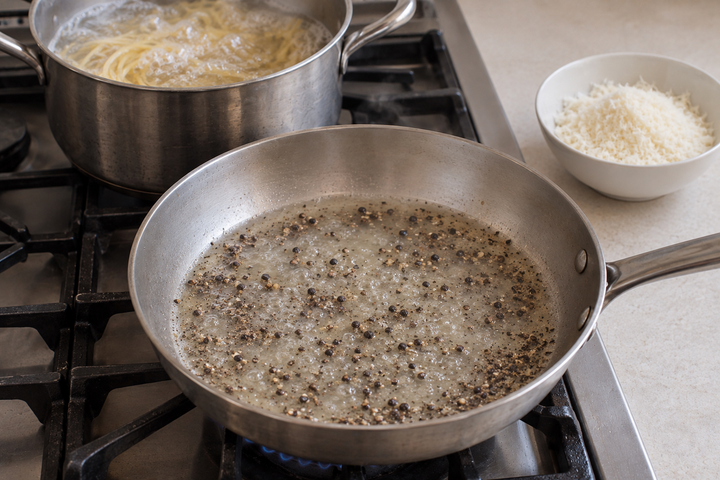
Prepare the sauce
- 1 When the pepper starts to dance in the pan, add 100 ml pasta cooking water and reduce the heat to low.
- 2 Finely grate the Pecorino Romano using a fine grater.
- 3 Dry-toast the black pepper in a frying pan over medium heat for 1 minute to release its aroma fully.
- 4 MeanwhileWhile the pasta cooks, grate the Pecorino and dry-toast the black pepper.
Ready when
After about 1 minute, continue when the pepper smells strongly fragrant and the cooking water trembles gently over low heat.
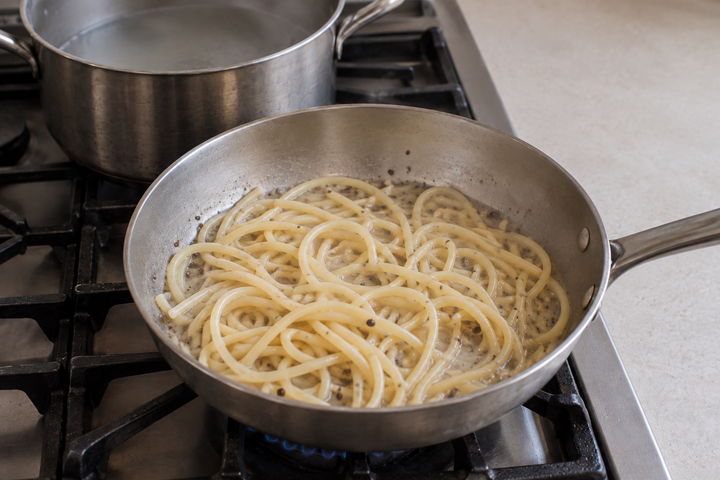
Transfer the pasta and emulsify
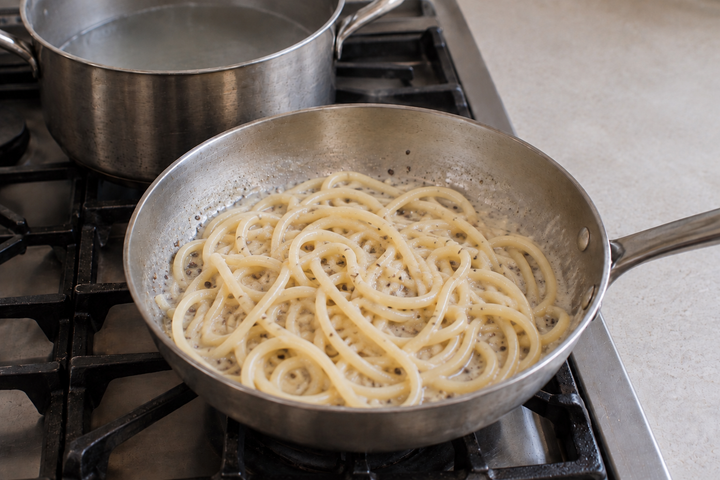
- 1 Lift out the pasta 2 minutes before the indicated cooking time and add it to the frying pan.
- 2 Cook over medium heat, gradually adding pasta water to release starch from the pasta and create an emulsion.
Ready when
After about 4 minutes, continue when the sauce begins to thicken.
Melt in the cheese
- 1 Turn off the heat and add the grated Pecorino in 3 additions.
- 2 Mix quickly after each addition, adding cooking water as you go.
Ready when
It is ready when the cheese has melted evenly and the sauce is smooth and creamy.
Caution
If the cheese sets into lumps, warm over very low heat for a few seconds, add a little cooking water and mix again.
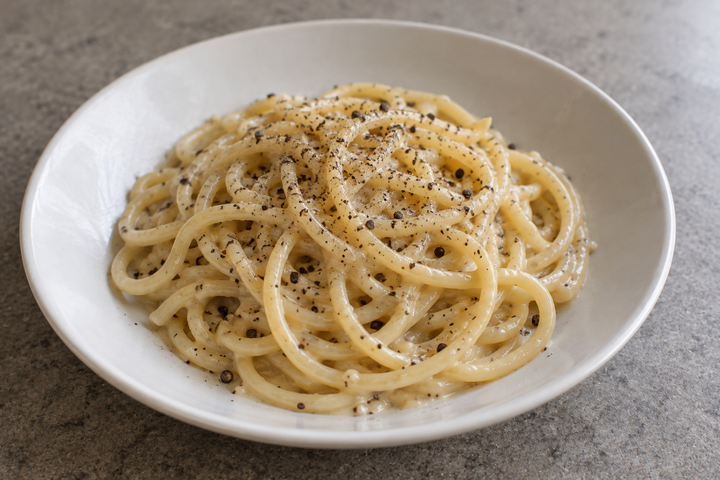
Plate and finish
- 1 Plate while the creamy sauce coats all the pasta.
- 2 Add more black pepper and serve.

About this dish
Just 3 ingredients: pasta, Pecorino Romano and black pepper. Cacio e pepe, sometimes described as Rome’s oldest pasta, concentrates technique within its simplicity.
The simpler a dish, the less room there is to hide. Will the Pecorino melt evenly into creaminess, or seize into lumps? Temperature and moisture determine the answer. The moment the pan leaves the heat, the amount of pasta water and the speed at which the cheese is added must all work together to produce that smooth sauce.
Roman chefs call this emulsifying technique mantecare. Literally, it means to mix in butter, but cacio e pepe must achieve the same texture without any butter. That is what makes it demanding.

Bring the full course home next weekend.
Bring every dish to the table at its best.
Choose the dishes you want to cook, and Chef Authen handles the shopping list and the day-of schedule. The Tabelia app turns everything from starter to main into one coordinated course in your kitchen.
- One shopping listBuilt automatically from your menu and any substitutions, ready to check off.
- One timelineEvery dish’s waiting and cooking time combined into a single schedule.
- Answers beyond the recipeFrom judging the heat to adapting on the fly, Chef Authen answers with concrete criteria, not guesses.