 TABELIA
AUTHENTIC RECIPE
Bisque de HomardClassic Lobster Bisque Thickened with Rice
- Total
- 1 hr 55 min
- Difficulty
- ★★★☆☆
- Serves
- 8 servings
- Prep 45 min
- Cook 1 hr 10 min
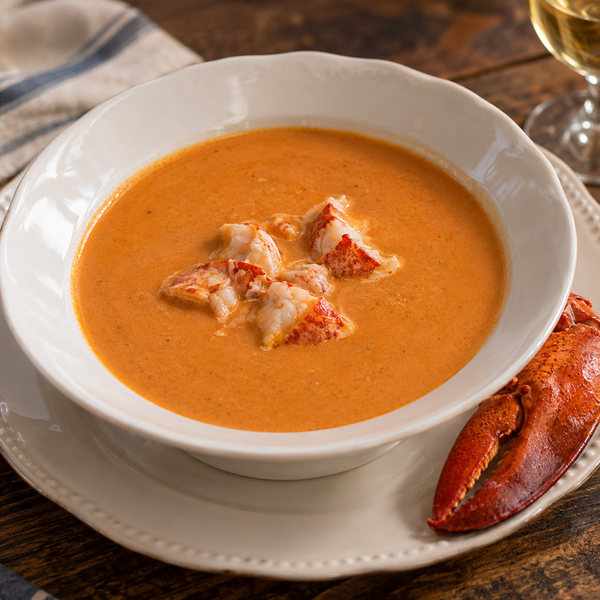
A classical lobster bisque thickened with rice. Lobster is sautéed and simmered in its shell, then crushed with cooked rice and strained thoroughly to extract its flavor. Finish with butter and cream without boiling.
AUTHENTICITY SCORE
Authenticity Score
This is the standard recipe, exactly as it’s made where it comes from — the highest Authenticity Score possible. Substituting ingredients changes this score; the app shows exactly how, ingredient by ingredient.
Ingredients (8 servings)
100Authenticity- Raw Maine lobsters, split lengthwise2 lobstersAbout 450–500 g each before splitting, about 1 kg total. Have the fishmonger split them raw; retain both head halves, claws, legs and all shells. Keep chilled and cook the same day.
- Carrot50 gDice very finely
- Onion50 gDice very finely
- Fresh thyme1 sprig
- Bay leaf0.5 leaves
- Parsley stems3 stemsUse the stems from a fresh flat-leaf parsley bunch.
- Unsalted butter for cooking40 gFor sautéing the aromatics and lobster
- Fine salt12 g
- Ground white pepper0.5 g
- Cognac5 ml1 teaspoon; reduce with the white wine without igniting
- Dry white wine200 ml
- Plain white short-grain rice180 gUse dry plain white short-grain non-glutinous rice; rinse and drain. Do not use prepared or seasoned sushi rice.
- Unsalted chicken stock1500 ml250 ml for the lobster, 750 ml to cook the rice and 500 ml to thin the soup. Use undiluted unsalted liquid chicken stock.
- Unsalted butter for finishing150 gKeep cold and cut into 1cm cubes
- Heavy cream, at least 35% milk fat100 mlFor finishing
- Cayenne peppera littleA pinch
Method
Check and weigh the chilled raw lobster pieces
- 1 Check that the fishmonger has supplied 2 freshly split raw lobsters, each weighing about 450–500 g before splitting, with all head halves, claws, legs and shells retained. Keep chilled and prepare the same day.
Ready when
Continue when the uncooked chilled pieces from both lobsters are present and total about 1 kg.
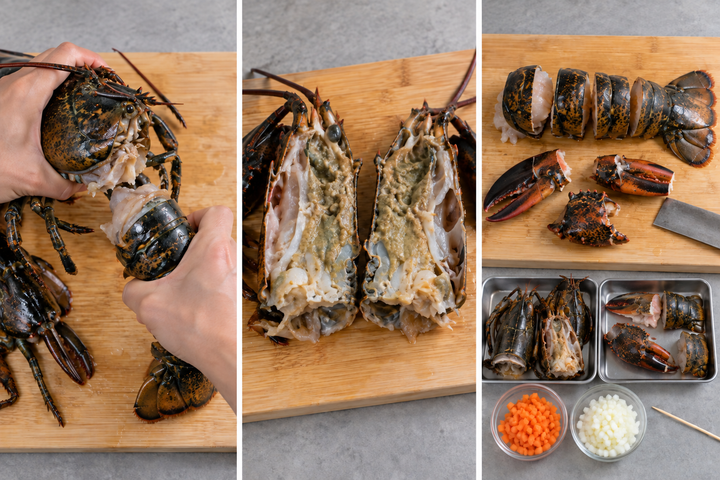
Cut the lobster in its shell and remove stomach sacs and intestinal veins
- 1 Separate the head halves from the tail halves at their join.
- 2 Remove the stomach sac behind the eyes. Remove and discard all tomalley, the soft green material in the body cavity; do not add it to the bisque.
- 3 Remove the exposed intestinal vein from the split tail, then cut each tail half crosswise into 4 shell-on sections.
- 4 Remove the claws at their bases and crack the shells with the back of a knife.
- 5 Cut 50 g carrot and 50 g onion into brunoise, very fine dice.
Ready when
Continue when each lobster is divided into head halves, tail sections and claws, with stomach sacs, intestinal veins and all tomalley removed.
Caution
Leaving the stomach sac gives the bisque a sandy texture and bitterness.
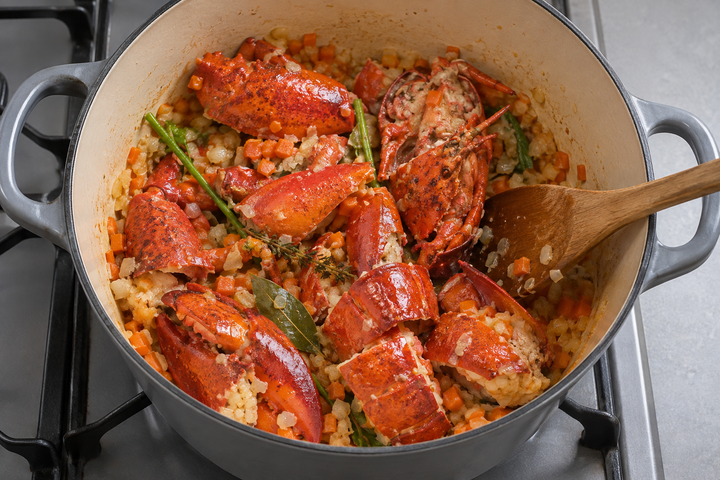
Sauté aromatics and lobster in butter until the shells turn red
- 1 Melt the 40g cooking butter in a large heavy pot over medium heat. Add carrot, onion, 1 thyme sprig, 1/2 bay leaf and 3 parsley stems and cook for 3–4 minutes without browning.
- 2 Add the lobster, increase to medium-high heat and cook for 5–6 minutes, turning with a wooden spatula.
- 3 Sprinkle with 12g salt and 0.5g white pepper and mix.
Ready when
Continue when all the shells are bright red and fragrant.
Caution
Scorched shells give the bisque a burnt bitterness.
Reduce Cognac and wine and simmer in broth for 10 minutes
- 1 Pour in 5ml Cognac and 200ml white wine. Boil over medium heat for 3–4 minutes to reduce by half.
- 2 Add 250ml chicken broth, cover and simmer over medium-low heat for 10 minutes.
- 3 MeanwhileWhile reducing, put 180g rice and 750ml chicken broth in another saucepan over medium heat. Once boiling, reduce to low heat, cover and cook for 20 minutes.
Ready when
The wine is sufficiently reduced when its volume has halved.
Continue after 10 minutes of simmering, when the tail meat lifts away from its shell and turns white and firm.
Reserve and dice tail meat for the garnish
- 1 Remove the tail rounds and claws from the pot and take the meat out of the shells.
- 2 Cut half the tail meat into 1cm cubes and reserve for garnish; return all remaining meat and removed shells to the pot.
Ready when
Continue when the garnish is set aside and all remaining meat and shells are back in the pot.
Crush shells and rice, strain, dilute with broth and strain again
- 1 Remove the thyme, bay leaf and parsley stems.
- 2 Lift the hard claw and head shells from the pot, put them in a sturdy plastic bag and break them with a rolling pin.
- 3 Combine all the crushed shells from the bag, the other shells and legs, all remaining lobster meat and the cooked aromatics from the pot with the cooked rice and only 2 ladlefuls of cooking liquid. Process in 3 batches, filling the food processor no more than halfway, until the shells are finely crushed.
- 4 Combine with the remaining liquid in the pot, transfer to a chinois, a fine conical strainer, and press firmly with the bottom of a ladle into another pot.
- 5 Pour the remaining 500ml chicken broth over the shell residue as if rinsing it, then add to the pot and stir.
- 6 Bring briefly to a boil over medium heat and strain again through the chinois.
Ready when
Continue when the bisque is smooth and lightly coats the back of a spoon.
Caution
Processing too much hot liquid can make it erupt through gaps in the lid and cause burns.
Tips
Pressing the shells and legs thoroughly extracts their flavor into the bisque.
Finish with butter, cream and cayenne
- 1 Warm the bisque over low heat and take off the heat just before boiling.
- 2 Add the 150g cold finishing butter in several additions, whisking until incorporated.
- 3 Mix in 100ml cream and 0.2g cayenne pepper and taste.
- 4 Add the reserved meat to the bisque, warm for 1 minute and pour into warmed bowls.
Ready when
The bisque is ready when the butter is incorporated, the surface is glossy and no oil floats on top.
Caution
Boiling after adding butter and cream makes the soup separate, leaving fat on top.

About this dish
In 17th-century France, bisque meant a squab soup. The 1652 edition of La Varenne’s cookbook placed squab bisque first among its soups, decorating the broth-cooked birds with cockscombs and pistachios. It was also served on Saint Louis’s Day, August 25, 1690, when the minister Louvois hosted Louis XIV.
The custom of calling chicken or squab soups bisque lasted until the end of the 18th century. The name later came to mean a purée of crustaceans such as crayfish and lobster. Its origin is uncertain: explanations connect it either with the Bay of Biscay or with a term meaning “cooked twice.”
The Breton coast once had plentiful lobster, but numbers are said to have declined by the end of the 20th century. France now lands about 500–700 metric tons annually. In Brittany, lobsters with a carapace under 87mm may not be caught, and landing claws alone is also forbidden.

Bring the full course home next weekend.
Bring every dish to the table at its best.
Choose the dishes you want to cook, and Chef Authen handles the shopping list and the day-of schedule. The Tabelia app turns everything from starter to main into one coordinated course in your kitchen.
- One shopping listBuilt automatically from your menu and any substitutions, ready to check off.
- One timelineEvery dish’s waiting and cooking time combined into a single schedule.
- Answers beyond the recipeFrom judging the heat to adapting on the fly, Chef Authen answers with concrete criteria, not guesses.